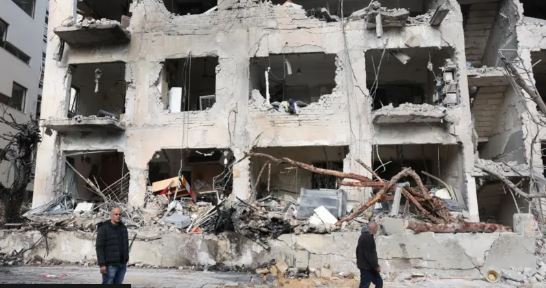
Iran has resumed its air strikes on Arab Gulf countries, continuing to target US bases across the region. We heard a heavy round of explosions this morning in Doha and a plume of smoke is visible from the city.
The interior ministry said it was responding to a limited fire in an industrial zone caused by debris from an intercepted missile.
In a press conference around midnight, Qatari officials said Iran had launched 65 missiles and 12 drones yesterday – most of them were intercepted, but there has been some damage and eight people were injured by the fallout.
Explosions have also been heard in Dubai and Manama this morning, and the Oman state news agency is reporting a drone attack on its commercial port. Oman has been a key mediator in the US-Iran talks for years and had so far been spared Iranian attacks.
Qatar and some other Arab governments have strongly condemned the strikes and reserved the right to respond.
The Gulf states had made efforts to ease tensions with Iran in recent years, they worked hard to mediate a diplomatic solution to the crisis and have refused to let the US launch attacks from its bases in their countries.
But that wasn’t enough to prevent direct military strikes on their territory. And now with the violent death of Iran’s supreme leader, the future looks uncertain not only for Iran, but for the region.
Israel believes it has reshaped the Middle East
Israel’s ability to reach out and kill its mortal enemies has been proved, repeatedly, over the past two years.
With and without US assistance, using everything from exploding pagers to precision missiles and bunker busting bombs, Israel has eliminated key opponents in Gaza, Lebanon, Yemen and Iran.
The leaderships of Hamas, Hezbollah, the Houthis and now the Islamic Republic of Iran have been devastated.
The impact on what Iran calls the “Axis of Resistance” and Israel dubs the “Axis of Evil”, cannot be underestimated.
Another key figure, the former Syrian dictator Bashar al-Asad, is in exile in Moscow.
For Israel, killing Ayatollah Khamenei marks the climax of this campaign: the removal of the lynchpin of the axis and everything that it represents.
Israel believes it has reshaped the Middle East. It has certainly rarely looked more powerful than it does right now.
But these are uncertain times. It would be rash to predict with any confidence what will emerge from the ashes of the axis.
From Iran, we see glimpses of both euphoria and grief in the videos emerging on social media. This huge, proud nation seems destined for a period of dangerous instability.
Killing your enemies is one thing. Making sense of the aftermath is another.
Iranian vice president says strategy to protect national cohesion - state media
Iranian state media outlet IRNA has shared a message from the first vice-president of Iran, Mohammad Reza Aref.
"Today, Islamic Iran is in mourning; but this mourning is not a mourning of passivity," he says. He says the US and Israel thought they could they could "shake the soul of a nation" by killing the country's supreme leader.
But the Islamic Revolution "becomes more alive and rooted through martyrdom," Aref says.
He says the strategy is protecting national stability and internal cohesion.