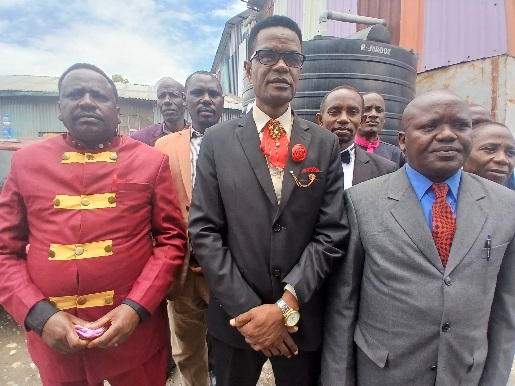
 Guza Mchungaji Welfare members, led by their chairperson Bishop Stephen Malonza (C) addressing the press at Jesus Glory Church in Athi River, Machakos county on March 1, 2026.
More than 100 clergy in Mavoko, Machakos County, say they are fed up with being used as political props while they struggle to make ends meet.
The men and women of the cloth, drawn from churches in Athi River, Mlolongo, Kinanie and Muthwani wards, say they are tired of being mobilised to attend political events, only to return home with little more than fare.
On Sunday, they launched Guza Mchungaji Welfare, an initiative they say is aimed at addressing their personal and family needs.
“This is a forum where we mobilise pastors so that their core needs can be realised by leaders—not brokering pastors to politicians,” said the welfare’s chairperson, Bishop Stephen Malonza.
He said some clergy had been rallying colleagues to attend political functions, only for them to be given transport reimbursement and left to continue “suffering and struggling with poverty”.
The group addressed journalists during the launch at Jesus Glory Church in Athi River.
Malonza said they formed the initiative after concluding that existing joint prayer fellowships had failed to tackle the clergy’s pressing concerns.
“We have been misused by politicians. We have become easy prey to broker the church for the gain of a few pastors,” he said. “We have been sold like firewood to politicians to create an image of support.”
He added that many pastors remained in financial distress, struggling to pay school fees and meet basic needs, while elected leaders—including MCAs, MPs, the woman representative, senator, governor and the president—were left with the impression that clergy were well facilitated.
“Those who mobilise us for leaders’ meetings end up selling out pastors,” he said.
“When money is given to facilitate clergy, they issue only transport reimbursement and keep the rest.”
He alleged that in some cases, funds meant for pastors were misappropriated.
“When Sh1m is given, they count the number of pastors present, give each Sh1,000, and remain with the balance,” he said.
The clergy described grassroots pastors as voiceless and overlooked.
They insisted that the new welfare group was not meant to undermine existing fellowships but to provide a united structure focused on poverty alleviation.
“We want to raise funds among ourselves to pay last rites insurance for every pastor and ensure that anyone wishing to support clergy reaches us directly through this forum,” Malonza said.
He said the group had lined up programmes and projects aimed at improving members’ welfare, including a health committee tasked with mobilising funds for a medical scheme and encouraging registration with the Social Health Authority.
Malonza stressed that the initiative was not politically driven.
“Guza is not represented anywhere by anyone other than this team. If anyone wants to approach us, they should do so directly—not through proxies,” he said.
The clergy also expressed frustration that some leaders they supported had not met them in the four years since taking office