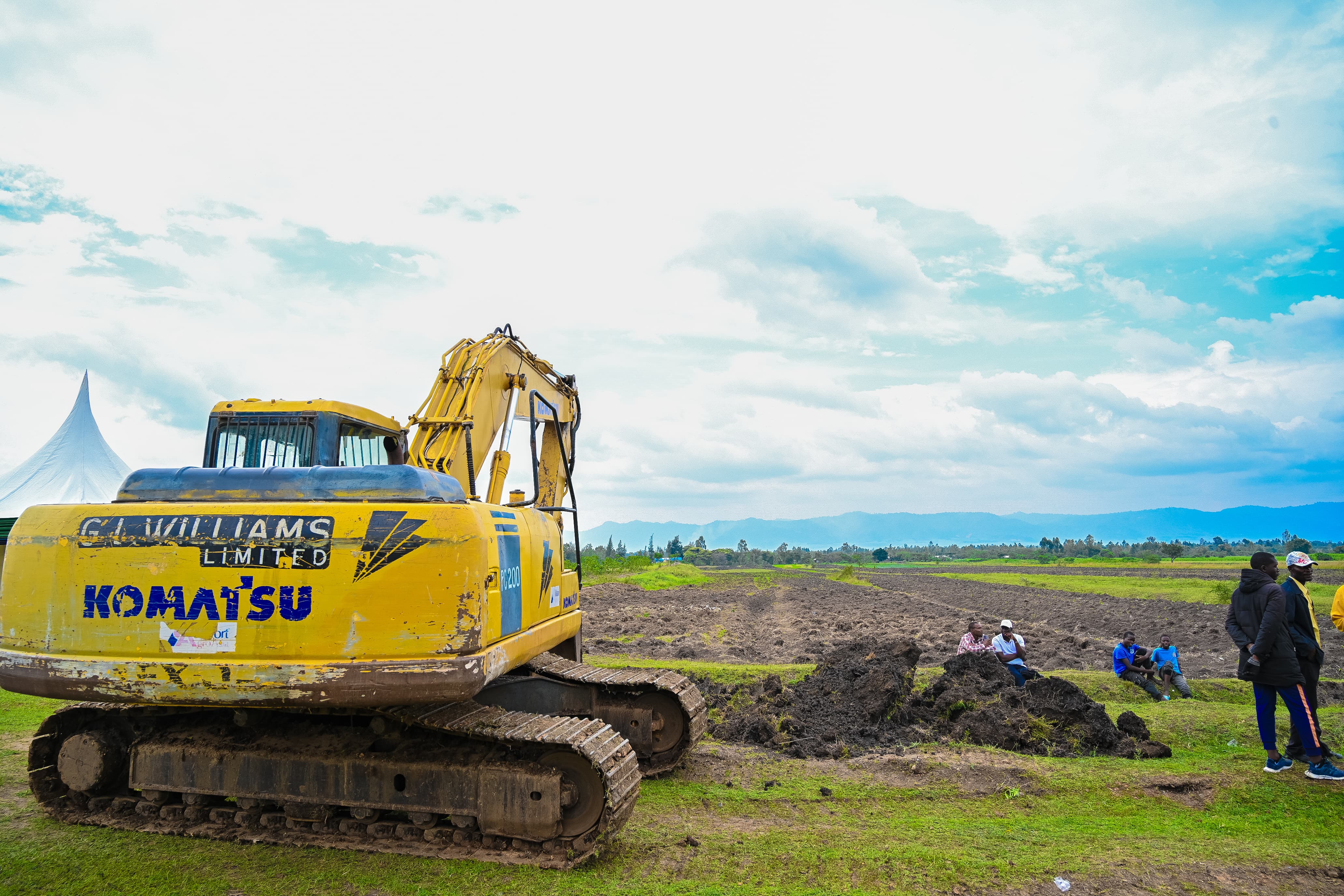
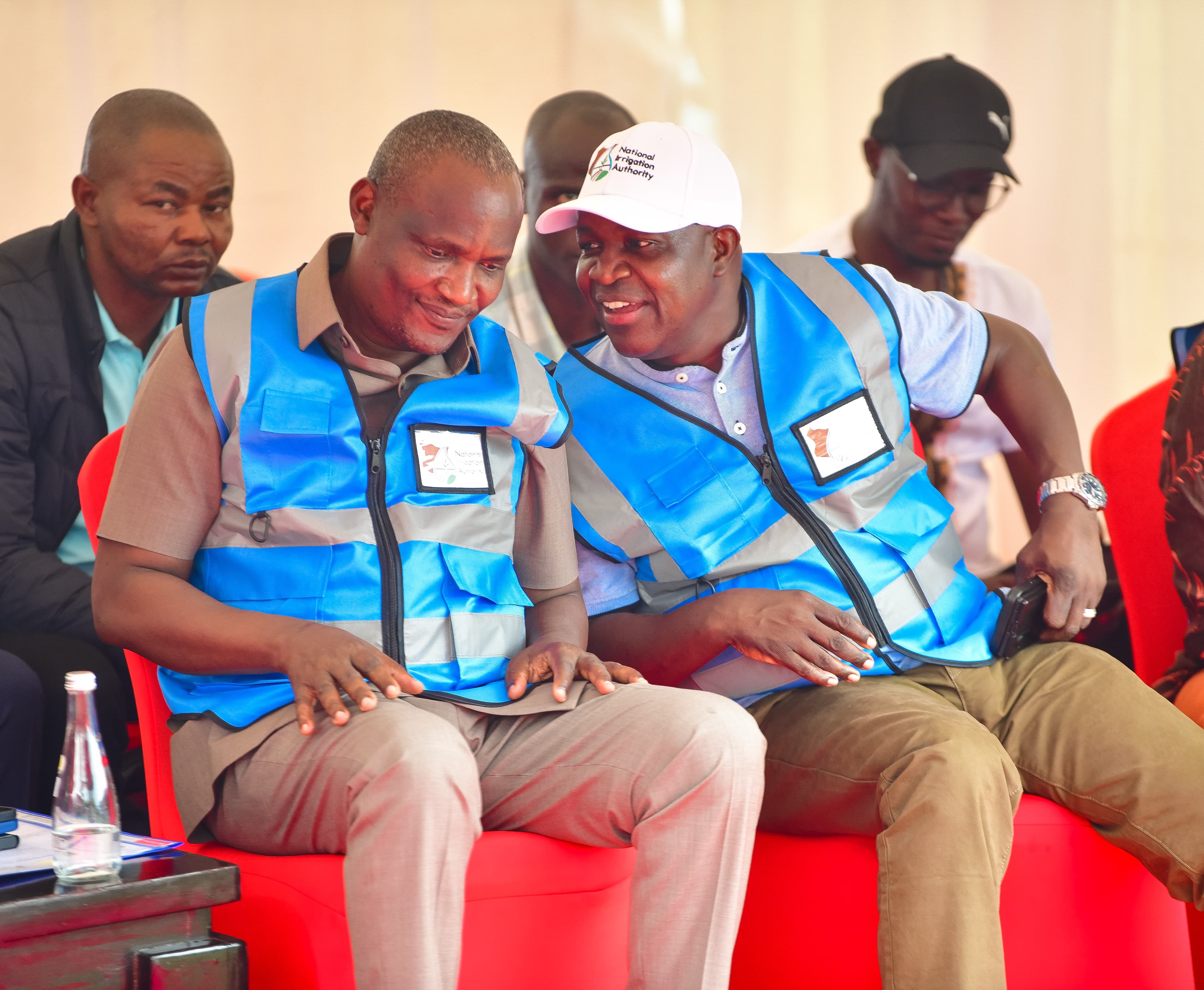
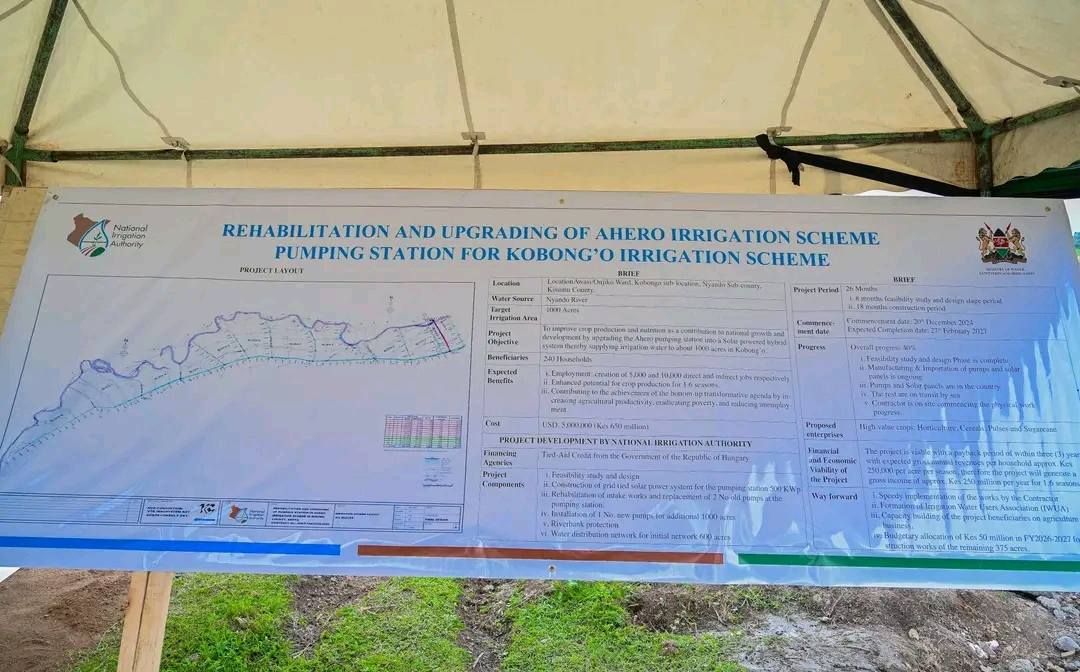
The national government has unveiled a Sh650 million project to rehabilitate and expand the Ahero pumping station in Nyando subcounty.
The move is expected to bring an additional 1,000 acres under irrigation in Kobong’o.
It also covers riverbank protection and development of a distribution network to serve the initial 625 acres.
It will transform the ageing Ahero station into a solar-powered hybrid facility, a shift aimed at reducing electricity expenses and ensuring a more reliable water supply for farmers.
For years, growers in the scheme have struggled with high power bills and erratic pumping services, factors that have pushed up production costs and limited acreage under cultivation.
Treasury CS John Mbadi said the investment forms part of a wider government plan to expand irrigated agriculture in the Nyanza region and cut dependence on imported rice.
Kenya records an estimated annual rice shortfall of 700,000 tonnes.
Officials say Nyanza alone has the capacity to produce up to 420,000 tonnes if irrigation systems are fully optimised.
“We have sufficient land and water resources. The missing link has been affordable and dependable infrastructure to support irrigation. By lowering energy costs, we expect farmers to increase acreage and improve returns,” Mbadi said.
Under the first phase, 625 acres will be developed for large-scale rice farming.
A further 375 acres are set to be added in the next financial year, backed by an additional Sh50 million allocation.
Water, Sanitation and Irrigation CS Eric Mugaa said the Kobong’o works are part of broader efforts to revitalise the larger Ahero irrigation scheme, which covers more than 2,300 acres.
Mugaa said similar gains in the West Kano scheme, where more than 1,000 acres have been opened up following installation of a new pump to manage backflow from Lake Victoria.
“Irrigation is more dependable compared to rain-fed agriculture, particularly amid changing weather patterns”.
The initiative is being undertaken by the National Irrigation Authority in partnership with Hungary.
The project financed by Hungary includes installation of a 500 kilowatt-peak grid-tied solar power system, refurbishment of intake works along River Nyando, replacement of two outdated pumps and addition of a high-capacity unit.
Hungary’s Ambassador Katalin Nyirati said the initiative is supported through a $5 million (Sh645 million) tied-aid credit facility.
She said irrigation is critical in cushioning farmers against climate shocks and enhancing food security.
Beyond infrastructure, the programme will incorporate farmer training on operation and maintenance of the new system, alongside promotion of climate-smart agriculture.
Irrigation PS Ephantus Kariuki said the region can narrow its rice production gap by strengthening market access, lowering input costs through solar power, expanding irrigated acreage and safeguarding water sources.
He said only about 40 per cent of irrigable land in parts of the region is currently under cultivation.
According to the project brief, the expanded scheme will directly benefit 240 households and generate up to 5,000 direct and 10,000 indirect jobs.
Farmers are projected to earn gross returns of about Sh250,000 per acre per season, translating to an estimated Sh250 million annually across 1.6 cropping cycles.
The 26-month project, which commenced in December 2024, is about 40 per cent complete. Feasibility studies and designs have been finalised, with key equipment already delivered as contractors begin on-site works.
Completion is slated for February 2027.