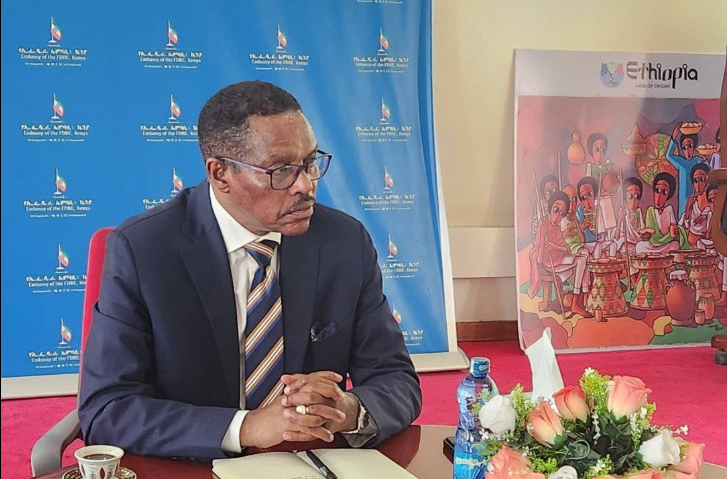
 Ambassador Bacha Debele Buta/HANDOUT
Ethiopia commemorated the 130th anniversary of the Victory of Adwa in a ceremony reflecting on the nation’s historic triumph over colonial forces.
The event, held under the motto “Glorious Past, Radiant Horizon,” highlighted Ethiopia’s enduring legacy of sovereignty, unity, and self-determination.
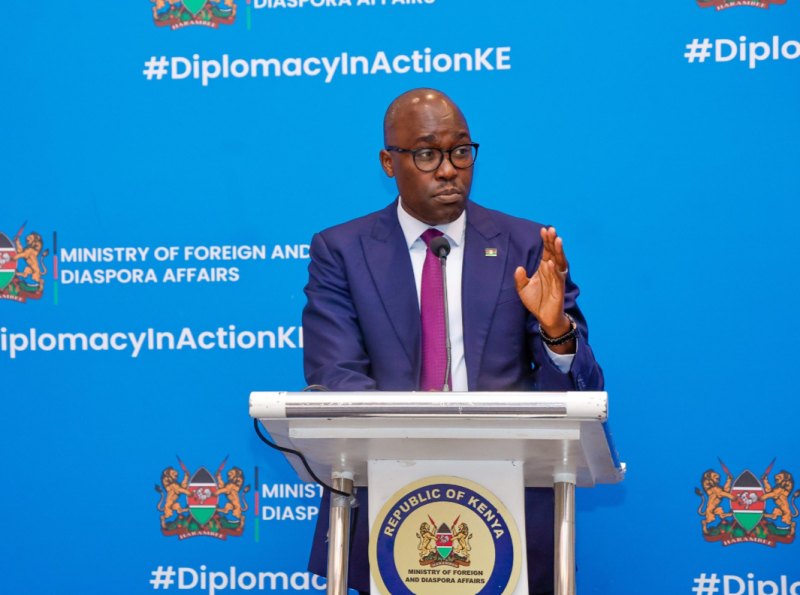
Speaking at the ceremony, Ambassador Bacha Debele Buta, Ambassador Extraordinary and Plenipotentiary of the Federal Democratic Republic of Ethiopia (FDRE) to Kenya, said the 1896 Battle of Adwa represented more than a military victory.
“The Victory of Adwa was not merely a military victory. It was a powerful declaration that Africa would not be subdued,” he said.
The battle, he noted, united Ethiopians across ethnic, linguistic, and religious lines in defence of their homeland against the invading Italian colonial army.
The ambassador described Adwa as a “beacon of hope for oppressed peoples across the continent and the African diaspora,” noting that it laid an early foundation for Pan-Africanism and collective self-determination.
He added, “Adwa is unparalleled because it was the first time in history that a modern-armed European power was completely defeated by an African force armed with psychology and unity. Adwa is a pathfinder because the victory did not remain Ethiopia's alone; it served as a 'Compass of Freedom' for all Black people.”
Ambassador Bacha emphasised that the victory was rooted in patriotism and sacrifice, not merely battlefield tactics.
“The history of the Victory of Adwa, which we celebrate today, did not begin on a battlefield; it began with the fire of patriotism ignited within the homes of Ethiopians. Ethiopia is a country kneaded with the blood of her children, not one drawn on a map with a colonial pencil. We say we have a country because we have mothers and children willing to die for that country. The victory we celebrate today is not merely the result of a war; it is the day the 'Certificate of Freedom' for all Black people was signed.”
The ambassador also highlighted the military sophistication behind the triumph. He noted that Ethiopian forces used advanced strategies that outsmarted European military science of the time.
“By feeding the enemy false information—stating that 'the Ethiopian army is depleted by hunger and the emperor is retreating'—the enemy was emboldened by overconfidence to leave their fortifications and move into unfavourable terrain,” he explained.
He credited Empress Taytu for her leadership in logistics, ensuring that the Ethiopian army marched over 100,000 strong from Addis Ababa to Adwa fully supplied and prepared, using the mountainous terrain to neutralise enemy artillery—a strategy still studied in military academies today.
The ambassador drew parallels between the historic Adwa victory and contemporary achievements in Ethiopia, highlighting the Grand Ethiopian Renaissance Dam (GERD) as a modern symbol of national sovereignty.
“The GERD represents more than infrastructure. It represents sovereignty by dismantling the colonial-era water treaty and paving the way for development and prosperity,” he said.
Built entirely with domestic contributions over 14 years, the dam claimed the lives of thousands of defence personnel protecting its construction.
“As our forefathers had shed their blood to secure Ethiopia’s sovereignty at Battle of Adwa, this generation also has endured hardship and sacrifice to safeguard our future through the realization of Grand Ethiopian Renaissance Dam,” he added.
Ambassador Bacha also praised Ethiopia’s strides in food security and environmental initiatives.
“Under the principle that 'Dependency is the enemy of sovereignty,' starting to provide wheat to the international market by becoming self-sufficient is our 'Adwa' of food security,” he said.
He further commended Prime Minister Abiy Ahmed Ali for his leadership, describing him as “the architect of a 'New Adwa' victory in the making,” guiding Ethiopia towards independence in food, energy, and spirit.
The celebration also honoured Ethiopia’s historical support for liberation movements across Africa. Ambassador Bacha highlighted the military training provided to Nelson Mandela and Ethiopia’s longstanding solidarity with Kenya during its struggle for independence, particularly during the Mau Mau Uprising.
He recalled the close friendship between Kenya’s first president, Mzee Jomo Kenyatta, and Emperor Haile Selassie, noting that “they were close friends who loved each other and worked together like brothers from the same womb.”
The ambassador underscored the enduring partnership between Ethiopia and Kenya, now reflected in agreements on defence, power supply, border trade, and economic cooperation.
“Today, our strategic relations have expanded and deepened across multiple sectors, reflecting our shared vision for peace, stability, and prosperity in the Horn of Africa and the wider continent,” he said.
He highlighted collaborative efforts against Al-Shabaab and other terrorist groups as part of the two nations’ shared commitment to regional security.
Concluding his remarks, Ambassador Bacha expressed gratitude to Kenya, saying, “Your presence here this afternoon is a testament to the enduring bonds between our nations and to the shared values that unite us.”
He urged that the spirit of Adwa continue to inspire Africa’s progress in sovereignty, prosperity, climate justice, and economic transformation.
The 130th commemoration of the Victory of Adwa in Nairobi served as a reminder of Ethiopia’s historic triumph and the broader African struggle for freedom, sovereignty, and unity—a legacy that continues to influence diplomatic, economic, and cultural ties across the continent.