Garissa Governor Nathif Jama and Deputy County Commissioner
Cornelius Mbithi flag off the relief food consignment. /STEPHEN ASTARIKO.Garissa Governor Nathif Jama and Deputy County Commissioner
Cornelius Mbithi flag off fodder. /STEPHEN ASTARIKO.
Advertisement
Advertisement
Deputy County Commissioner Cornelius Mbithi speaking to the press.
/STEPHEN ASTARIKO.
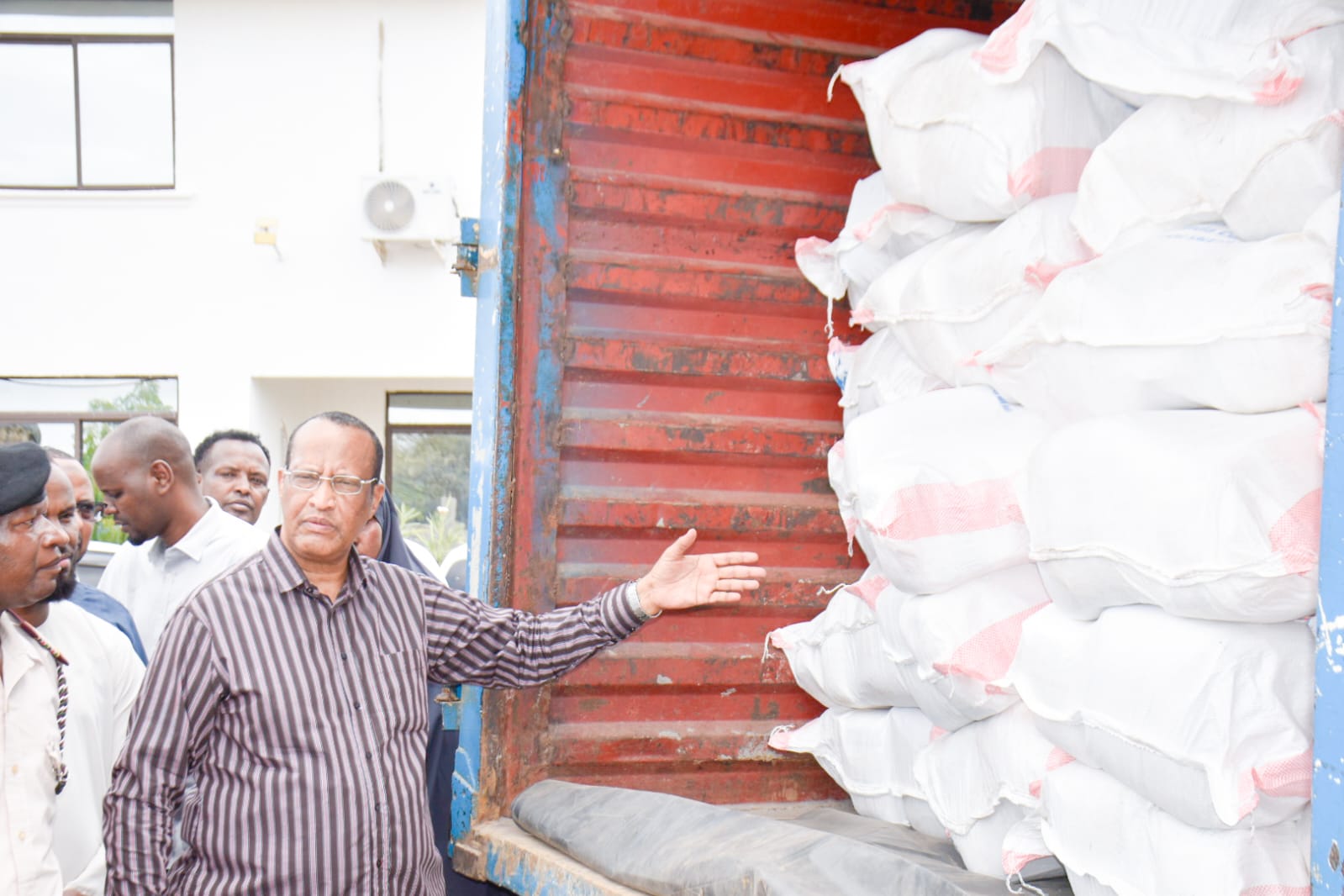
Garissa Governor Nathif Jama assesses some of the relief food consignment that is being
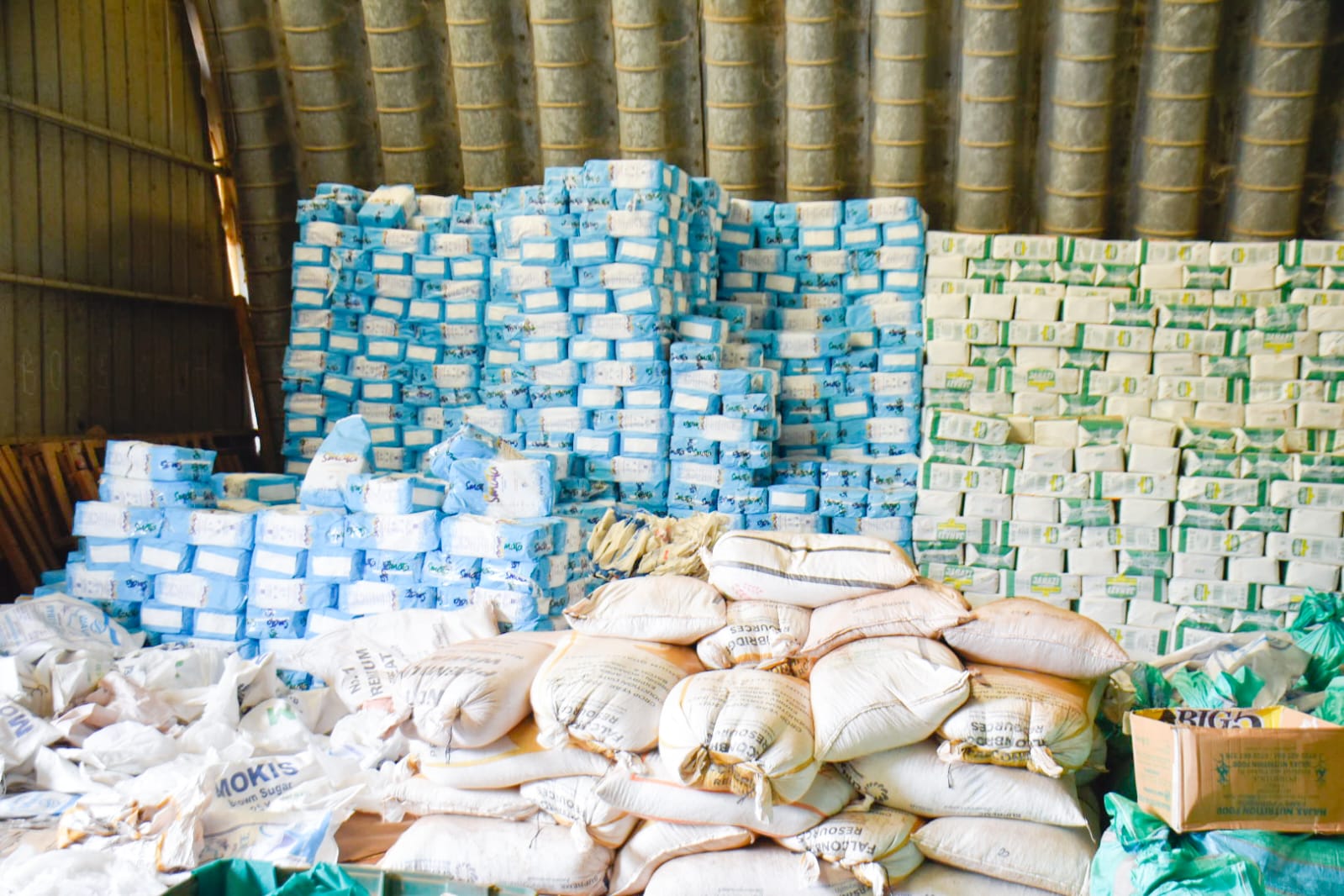
stored at the Garissa cereals store. /STEPHEN ASTARIKO.Some of the relief consignment that will distributed to
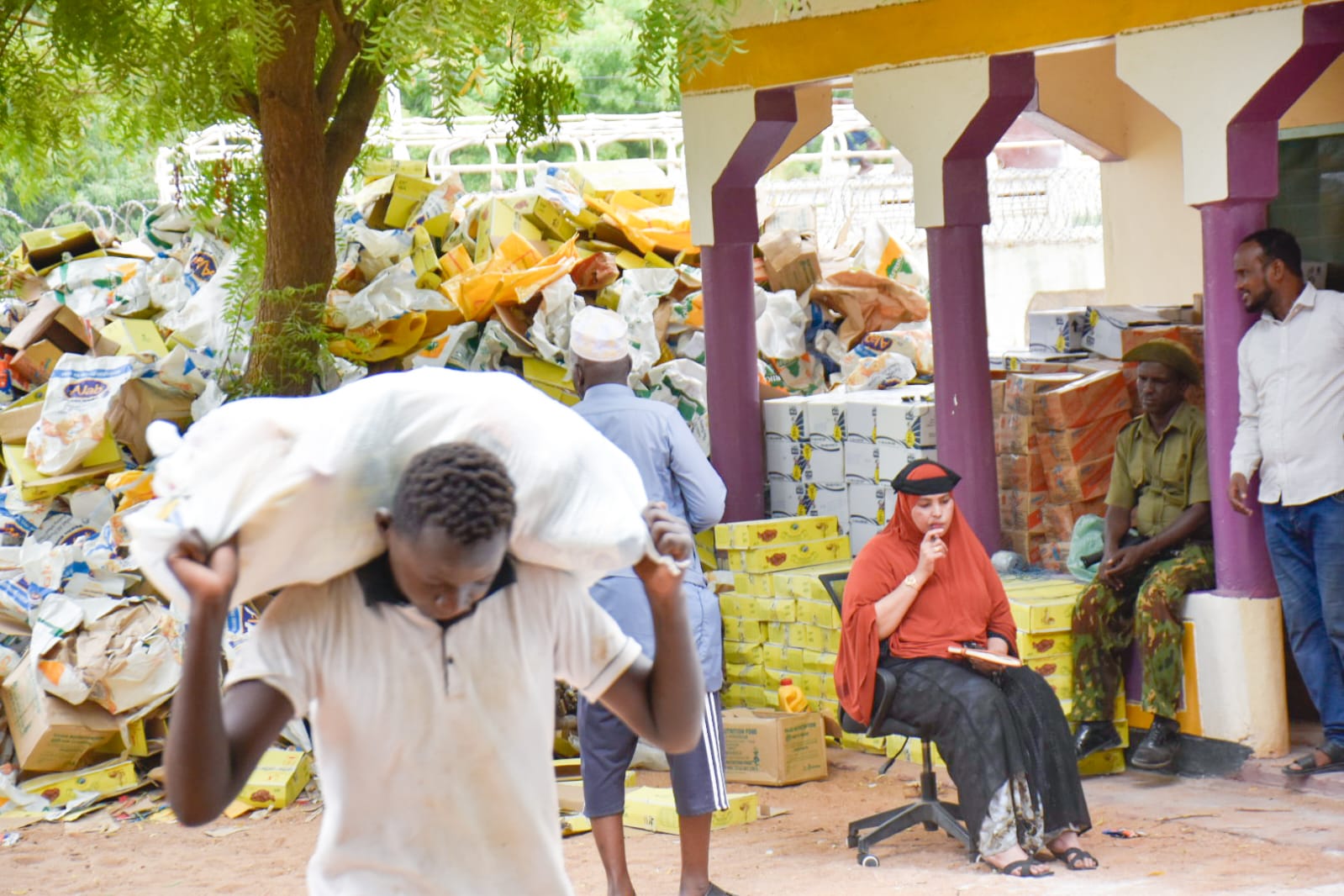
drought stricken residents. /STEPHEN ASTARIKO.Workers load the relief consignment into lories to be transported
in the sub-counties. /STEPHEN ASTARIKO.
Advertisement
Advertisement
Drought-stricken residents of Garissa can now afford to smile after the county government on Wednesday flagged of consignments of food supplies to be distributed to vulnerable households.
Governor Nathif Jama who flagged off the relief food at the county headquarters said 4,500 households across the county were targeted
Pastoralists will also receive 10,500 bags of range cubes and bales of hay to feed livestock.
Jama said the intervention seeks to cushion residents hardest hit by the drought. He was flanked
by senior national and county officials, including Garissa deputy county commissioner Cornelius Mbithi.
There were also representatives from partner
organisations such as Islamic Relief and Save the Children.
The governor called on donor institutions and partners to coordinate their
interventions through relevant county departments to enhance accountability,
avoid duplication of efforts and maximise impact.“I want to
implore our donor institutions to work through the county. While we appreciate
the activities they are undertaking in the county and sub-counties, it is
important that we are aware of their programmes for the sake of coordination,
record-keeping and tracing where value is being added,” Jama said.
The
governor highlighted ongoing drought mitigation measures undertaken by his
administration, including water trucking, repair of boreholes and distribution
of water storage tanks.
“Since the
last week of December up to now, we have trucked water in 124 centres which
have been fully reached. We have repaired 30 strategic
boreholes serving both livestock and communities," he said.The county has also distributed 46 water tanks, including those with 10,000-litre and 5,000-litre capacities.
The governor said the county had administered 300,000 livestock vaccination
doses, targeting sheep and goats, to safeguard livelihoods.
More relief food is expected in the coming days as the county continues to
mobilise resources.Mbithi acknowledged the collaborative efforts
between the national and county governments, as well as donor partners, saying
the joint approach has significantly helped drought-stricken residents access
much-needed assistance.“Let me
take this opportunity to appreciate the existing collaborative efforts from
both levels of government and our partners in ensuring that the people of
Garissa are food secure,” Mbithi said.He warned against the sale of relief food and livestock
feed.“I want to
warn anyone with the intention of selling the relief food or animal feed
flagged off today that it is not for sale. Let it reach the intended
beneficiaries. Anyone found selling these items will be held accountable and
prosecuted,” he said.According
to the Kenya Red Cross Society, several counties including Turkana, Mandera,
Samburu, Garissa, Isiolo, Marsabit West Pokot and Baringo are currently classified in the
critical phase of drought. Wajir and Tana River are listed
in the serious phase.The
worsening crisis follows three consecutive failed rainy seasons that caused acute water shortages and
depleted pasture.Livestock
are trekking longer distances in search of water and forage, leading to poor
body condition and declining milk production. This has weakened household
purchasing power and deepened food and nutrition insecurity across affected
communities.The most
vulnerable groups include children under five, pregnant and lactating women,
older persons and persons with disabilities. Increased livestock migration
within Wajir and from neighbouring counties has further strained scarce
resources, heightening the risk of conflict.Last week,
Public Service and Special Programmes Cabinet Secretary Geoffrey Ruku assured
Kenyans that the government has sufficient relief food stocks to prevent loss
of life due to hunger.

 Garissa Governor Nathif Jama and Deputy County Commissioner
Cornelius Mbithi flag off the relief food consignment. /STEPHEN ASTARIKO.
Garissa Governor Nathif Jama and Deputy County Commissioner
Cornelius Mbithi flag off the relief food consignment. /STEPHEN ASTARIKO.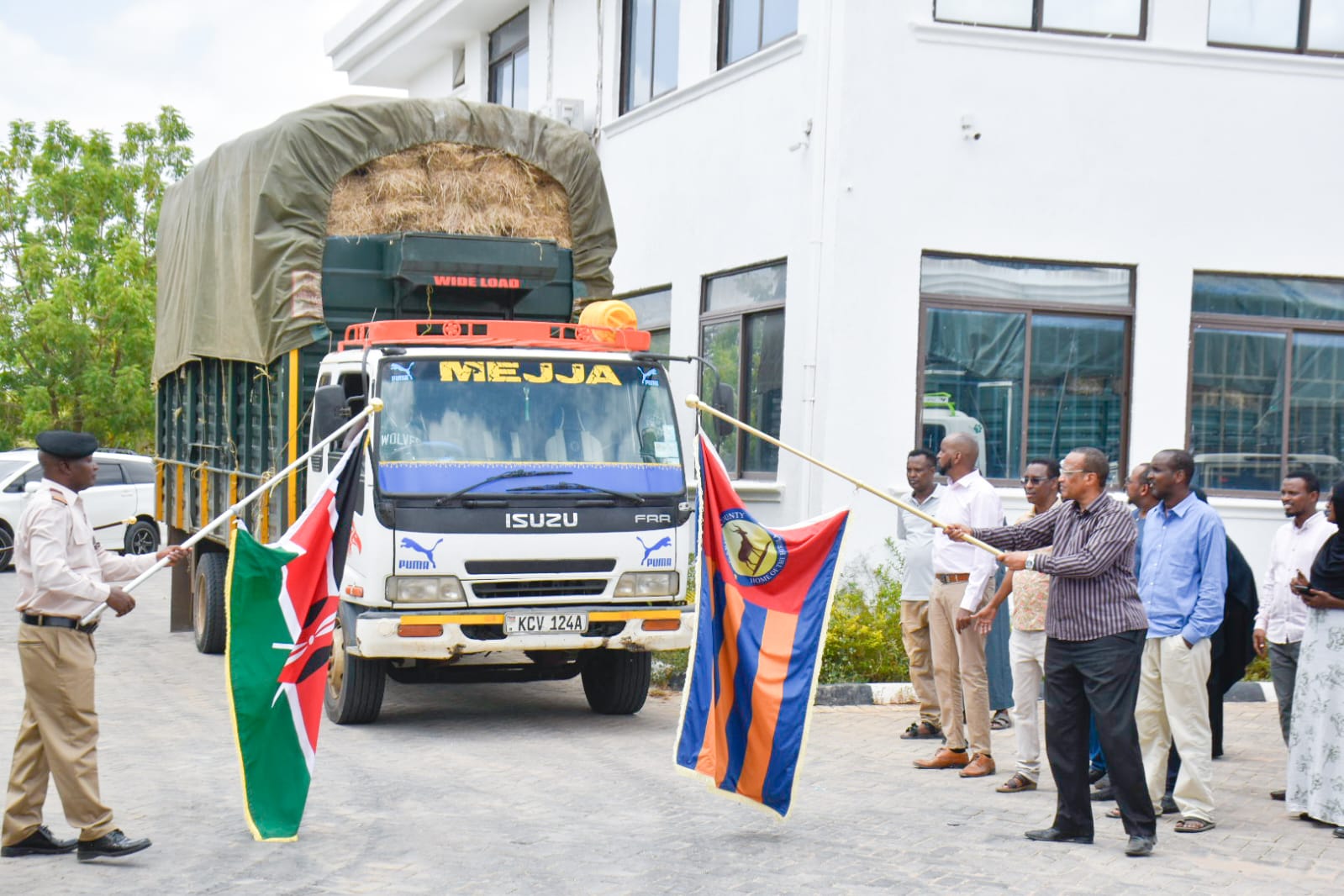 Garissa Governor Nathif Jama and Deputy County Commissioner
Cornelius Mbithi flag off fodder. /STEPHEN ASTARIKO.
Garissa Governor Nathif Jama and Deputy County Commissioner
Cornelius Mbithi flag off fodder. /STEPHEN ASTARIKO.