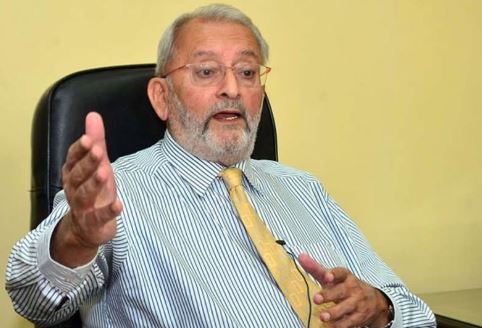
 Azym Dossa, the founding director and former Managing Director of Easy Coach/FILE
The Kenyan transport industry is mourning the death of Azym Dossa, the founding director and former Managing Director of Easy Coach.
Dossa is widely credited with transforming a modest bus operation into one of the country’s most successful and respected public service vehicle brands.
In a statement on Thursday, Easy Coach described Dossa’s passing as a great loss to the company and the wider business community, remembering him as a visionary leader whose dedication and strategic direction shaped the firm during its formative years.
Today, Easy Coach is considered one of the biggest bus companies in Kenya, operating more than 35 destinations across the country, a scale few could have predicted when the company first hit the road.
Dossa’s journey with Easy Coach began modestly. The company launched operations with just seven buses, serving a single route between Nairobi and Kisumu.
Three buses would depart for Kisumu during the day, with the same three returning to Nairobi at night. One bus was always kept on standby to ensure seamless rotation for maintenance and emergency rescues if needed.
It was a cautious but deliberate model, one that reflected Dossa’s emphasis on operational discipline and reliability.
Not long after its debut, demand began to grow. “The town of Kakamega expressed interest in the company’s services, prompting an expansion of the fleet by four additional buses,” Dossa said in one interview with the Star in 2023.
As word about the brand spread, so did requests from other towns and regions. Within just three years, Easy Coach had grown to operate a fleet of 40 buses serving 15 destinations, a remarkable expansion that signaled the company’s arrival as a major player in the sector.
Before founding Easy Coach, Dossa served as Chief Financial Officer at Akamba, one of Kenya’s most successful transport companies. His tenure there gave him invaluable experience and a unique perspective on the industry’s inner workings from fleet management and financial planning to customer service and regulatory compliance.
That background proved instrumental in shaping Easy Coach’s business model.
Dossa was credited with building strong operational and service standards that would define the brand’s reputation for reliability and customer-focused transport solutions.
Industry observers say Dossa understood that long-term success in the transport sector required more than just buses on the road. It demanded discipline, foresight, and a commitment to quality, values he embedded in the company’s culture from the outset.
Beyond growth and profitability, Dossa was a strong advocate for road safety. He consistently argued that improving safety on Kenyan roads required strict compliance with rules and regulations by all road users — not just public service vehicle drivers.
He strongly believed that the cornerstone to improving road safety was ensuring rigorous compliance with traffic laws.
“Responsibility extended beyond PSV drivers to include private vehicle owners, pedestrians, jaywalkers, and even distracted individuals such as mobile phone users, who are often major contributors to road accidents,” Dossa said.
Under his leadership, Easy Coach invested in driver training, fleet maintenance, and internal compliance systems aimed at maintaining high safety standards.
The company’s reputation for disciplined operations became one of its strongest selling points in a market often plagued by concerns over recklessness and poor regulation.
Even as he built a successful conventional fleet, Dossa kept a close eye on emerging trends in transport.
He was an advocate of electric vehicles, describing them as the way of the future and an environmentally friendly solution aligned with global efforts to reduce greenhouse gas emissions and combat climate change.
However, he was pragmatic about the challenges facing long-distance electric public service vehicles.
He noted that range, the distance a vehicle can travel on a single charge, remained a critical concern for long-haul services where buses are expected to cover extensive distances without frequent interruptions.
Additionally, he highlighted the lack of sufficient charging infrastructure along major routes as a barrier to immediate adoption.
Once these two issues were adequately addressed and electric buses became more reliable for long-distance travel, Dossa had expressed the intention to integrate them into the fleet, starting with intra-city routes.
His approach once again reflected a blend of innovation and caution, embracing the future while carefully managing risk.
Dossa believed that poor strategic planning and a failure to anticipate major hurdles left some companies vulnerable to unexpected shocks. Without foresight or adequate resources, businesses could quickly find themselves overwhelmed.
He also stressed the importance of strong management and proper hiring practices. According to him, the success of any enterprise hinges on competent and visionary leadership, supported by a capable team. Poor leadership decisions or ill-suited personnel could easily steer a company toward decline.
Ethics and integrity, he maintained, were equally crucial. Businesses driven by greed or questionable practices risked damaging their reputations and undermining their long-term sustainability.
Dossa frequently warned against ignoring technological change. Rapid digitisation and modernisation were reshaping industries worldwide, and companies that failed to adapt risked falling behind in an increasingly competitive marketplace.
From seven buses on a single route to a nationwide network serving more than 35 destinations, Azym Dossa’s legacy is etched into the Kenyan transport landscape. His disciplined approach to growth, unwavering focus on safety, and willingness to adapt to changing times helped position Easy Coach as a market leader.
As tributes continue to pour in, colleagues and industry players alike remember him not only as a businessman but as a builder — a man who combined industry knowledge, strategic vision, and operational excellence to create a transport powerhouse.
In an industry known for volatility and fierce competition, Azym Dossa steered Easy Coach with steady hands. His journey stands as a testament to what careful planning, integrity, and vision can achieve on the open road.