The Independent Electoral and Boundaries Commission (IEBC) has outlined an ambitious roadmap for the 2027 General Elections, emphasising that adequate and timely funding will be critical to the successful delivery of the country’s next electoral cycle.
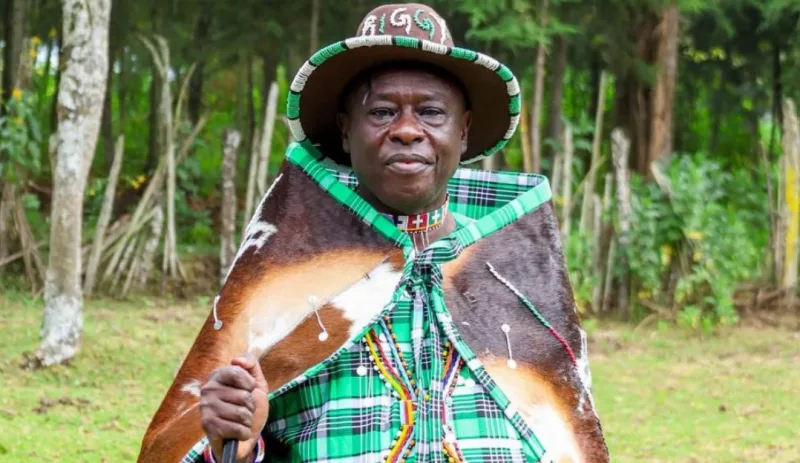
Appearing before the National Assembly Departmental Committee on Justice and Legal Affairs during consideration of the 2026 Budget Policy Statement, Acting Chief Executive Officer Moses Sunkuli appealed to Parliament to allocate sufficient resources to enable the Commission to discharge its constitutional mandate effectively.
Sunkuli told lawmakers that the total resource requirement for the 2027 General Election stands at Sh63.9 billion, reflecting expanded voter numbers, additional polling stations, technology upgrades and operational costs.
“The Commission has carefully developed baseline guidelines to steer preparations for the 2027 General Elections, but these plans can only be realised if adequate resources are made available in good time,” Sunkuli said.
Under its projections, the IEBC intends to retain the existing Register of Voters, which currently stands at 22.3 million, and incorporate an additional 6.3 million new voters based on data from the National Population Register.
This would bring the total projected voter population to 28.63 million by 2027.
To accommodate the anticipated increase, the number of polling stations is expected to rise from 46,229 in 2022 to 55,393 in 2027, an increase of 9,169 polling stations.
The Commission plans to maintain the voter-to-polling station ratio at 700 voters per station to enhance efficiency and reduce congestion on election day.
Continuous Voter Registration (CVR), as mandated by the Constitution, will continue, with enhanced registration drives planned annually.
“Verification of the voter register will be conducted six months before the General Election to ensure accuracy and credibility,” Sunkuli noted.
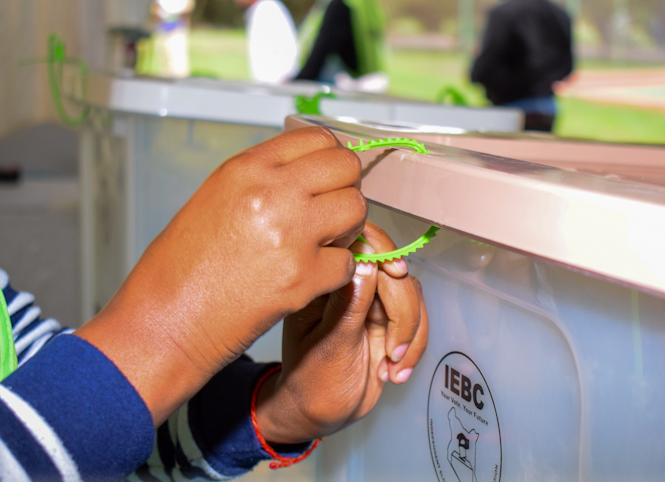
A significant component of the budget relates to technology. The Commission plans a total replacement of 45,352 Kenya Integrated Election Management System (KIEMS) kits, except for the 14,000 units purchased in 2022.
In total, 59,352 kits will be required, 55,393 for polling stations and 3,959 for training purposes.
In addition, wages for poll officials will incorporate statutory employer contributions such as the housing levy and National Social Security Fund (NSSF) payments, further increasing the financial outlay.
Sunkuli also disclosed that the Commission has pending bills amounting to Sh5.633 billion, which will be settled separately from the General Election budget. He cautioned that failure to clear the arrears in time could have far-reaching consequences.
“If these pending bills are not settled in time, they will not only result in an increase in the quantum but also constrain our operations, including the conduct of the 2027 General Elections,” Sunkuli warned.
He noted that delayed payments could trigger protracted court cases, particularly where legal fees are taxed upwards of the initial amounts, and may also prompt suppliers to withdraw services and goods critical to election operations.
The Commission has identified several funding deficits under the Medium-Term Expenditure Framework (MTEF) period 2026/27–2028/29.
Under recurrent expenditure, the gaps include Sh900 million for staff welfare, Sh200 million for the purchase of motor vehicles, Sh1.457 billion for media campaigns, Sh1.5 billion for legal petitions, Sh1.357 billion for stakeholder engagements, Sh935 million for election security arrangements, Sh4.662 billion for ballot papers, Sh2.804 billion for election materials, and Sh9.125 billion for wages.
Beyond recurrent costs, the Commission is seeking Sh1.5 billion under the development vote to fund the purchase of land and initial construction costs of the proposed Uchaguzi Centre, which is expected to serve as a central hub for electoral operations.
“We request this Committee to support the Commission in allocating adequate resources of Sh39.5 billion to fund our operations, settle pending bills amounting to Sh5.63 billion, and allocate Sh1.5 billion for the acquisition of land and initial construction of the Uchaguzi Centre in the 2026/27 financial year,” Sunkuli said.
The IEBC, constitutionally mandated to conduct and supervise elections and referenda in Kenya, carries a wide range of responsibilities beyond polling day operations.
These include continuous registration of voters, regular revision of the voters’ roll, delimitation of constituencies and wards, regulation of party nominations, registration of candidates, voter education, and facilitation of election observation and monitoring.
The Commission is also responsible for regulating campaign spending, developing and enforcing a code of conduct for candidates and political parties, and settling electoral disputes arising from nominations, excluding election petitions filed after the declaration of results.
In the current 2025/26 financial year, the Commission has already conducted 24 by-elections, including one Senate seat, two Member of National Assembly positions and 21 County Assembly Ward positions.
It is currently preparing to conduct additional by-elections for one Member of the National Assembly and three County Assembly Ward seats.
Sunkuli expressed appreciation for the funding support received to execute these mandates, but reiterated that preparations for a General Election require long-term planning and financial certainty.