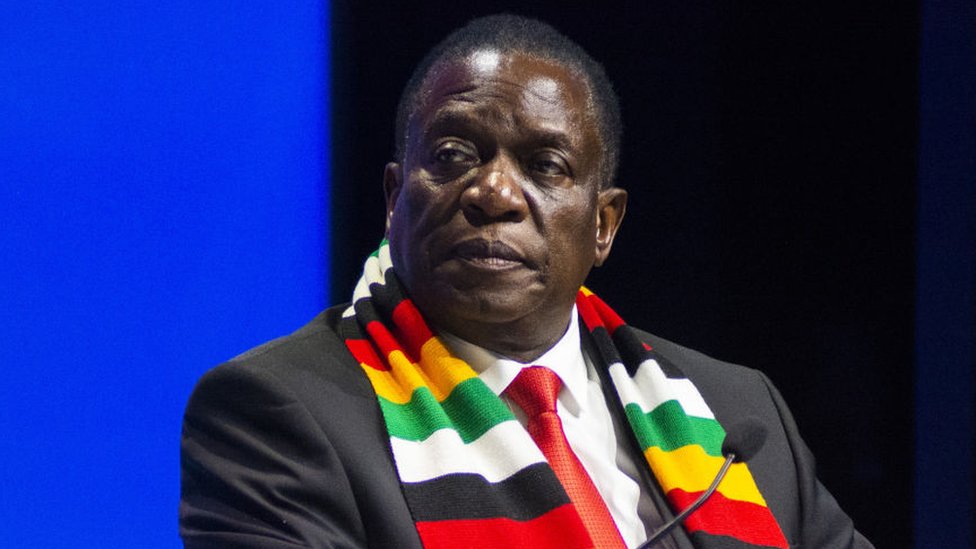
 Zimbabwe President Emmerson Mnangagwa/GETTY IMAGES
The United States has expressed regret over Zimbabwe’s decision to withdraw from negotiations on a bilateral health Memorandum of understanding (MOU) that would have provided $367 million over five years to support key health programmes in the country.
The proposed MOU, which focused on HIV/AIDS treatment and prevention, tuberculosis, malaria, maternal and child health, and disease outbreak preparedness, represented the largest potential health investment in Zimbabwe by any international funder.
In a statement, US Ambassador to Zimbabwe Pamela Tremont said the decision was “regrettable” and would impact millions of Zimbabweans who rely on US-supported health services.
“We believe this collaboration would have delivered extraordinary benefits for Zimbabwean communities, especially the 1.2 million men, women, and children currently receiving HIV treatment through U.S.-supported programs,” Ambassador Tremont said.
“We will now turn to the difficult and regrettable task of winding down our health assistance in Zimbabwe.”
The MOU was designed on a co-funding model that would have encouraged Zimbabwe to gradually increase its own health financing alongside US support, promoting sustainability and a path toward self-reliance.
Since 2006, the US has invested more than $1.9 billion in Zimbabwe’s health sector, contributing significantly to the country achieving the UNAIDS 95-95-95 targets.
“Sixteen African countries have signed health collaboration MOUs with the United States, representing over $18.3 billion in new health funding,” Ambassador Tremont said.
“This includes more than $11.2 billion in US assistance alongside $7.1 billion in co-investment from recipient countries.”
The ambassador emphasised that the United States has a responsibility to American taxpayers to ensure that investments are paired with mutual accountability, transparency, and measurable results.
“These MOUs set a higher standard for bilateral health cooperation, one that prioritises sustainability, measurable outcomes, and shared ownership of results,” she said.
While acknowledging Zimbabwe’s commitment to continue its fight against HIV/AIDS, Ambassador Tremont reiterated that the withdrawal will slow progress in areas where U.S. assistance had helped strengthen treatment programs and disease prevention efforts.
“The Government of Zimbabwe has assured us it is prepared to sustain the fight against HIV/AIDS, and we wish them well,” she added.
The decision comes amid a broader context of US engagement across Africa, where bilateral health agreements have supported millions of people and strengthened national health systems.
Observers say the withdrawal may impact ongoing HIV, malaria, and maternal health programs and underscores the challenges of sustaining large-scale international health investments without full governmental cooperation.
The US has not ruled out future collaboration with Zimbabwe but stressed that any partnership must align with shared accountability and transparency standards to ensure effective outcomes for communities.
The decision by Zimbabwe to reject the deal comes to light after a government memo from December was leaked, revealing that President Emmerson Mnangagwa felt the deal was "lopsided".
A government spokesman has since explained the US was demanding access to biological samples for research and commercial gain but said it was not willing to share the benefits for future vaccines and treatments.
A doctors' association in Zimbabwe has called for further dialogue to find a deal acceptable to both sides so the country's HIV programme can continue.
Kenya was among the first African countries to sign the health with the US.
The five-year agreement signed in Washington in December commits the US to providing up to $1.6 billion between 2026 and 2030.
President Donald Trump's administration said it was moving away from funding NGOs and instead dealing directly with governments.