The National Police Service (NPS) has raised concern over rising cases of politicians making inflammatory remarks, warning that the trend poses a serious threat to national cohesion and peace.
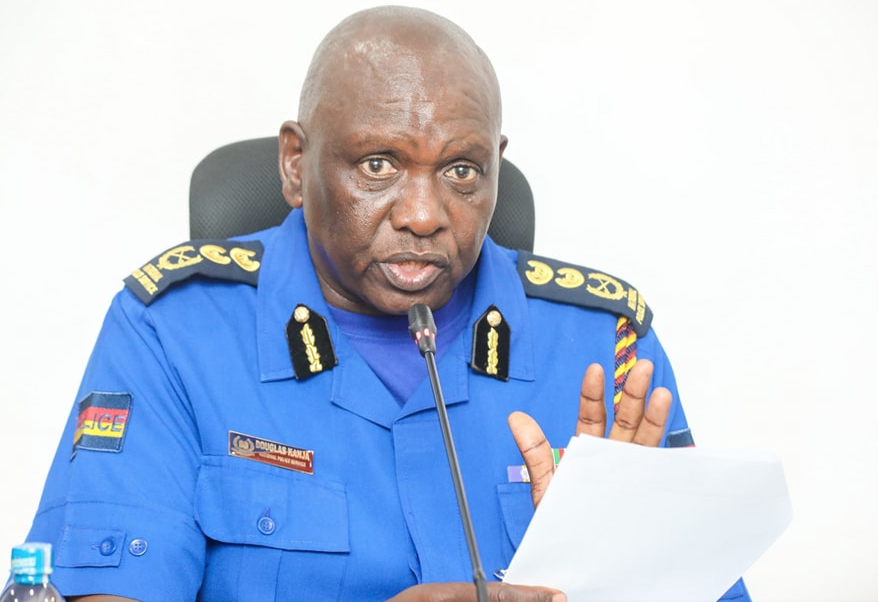
Inspector General of Police Douglas Kanja sounded the alarm during a presentation to the Senate’s Standing Committee on National Cohesion, Equal Opportunity and Regional Integration, where he outlined growing security risks linked to divisive political rhetoric.
Kanja said inflammatory statements by politicians have the potential to undermine national cohesion, inflame ethnic tensions and threaten public order, particularly as the country edges closer to a new election cycle.
“Normalisation of inflammatory rhetorics by political class threatens social cohesion, undermines public order and risks reversing gains made in fostering peaceful coexistence across our diverse communities,” Kanja said.
He said as Kenya approaches the 2027 General Elections, the NPS remains on high alert to prevent incitement, hate speech and any conduct likely to destabilise the country.
Kanja emphasised that NPS remains steadfast in its commitment to uphold the law, preserve public order and safeguard national unity and stability.
Through strong collaboration with the National Cohesion and Integration Commission (NCIC) and other partners, Kanja said NPS will continue to act decisively against individuals who propagate hate speech and incitement content, in accordance with the rule of law.
In recent months, the country has witnessed a notable surge in inflammatory rhetoric, particularly during political rallies, public meetings, media interviews and across digital platforms.
According to the police chief, such utterances have increasingly taken various forms, including ethnic stereotyping and insults, political incitement, dissemination of misleading or inaccurate information to the public regarding government projects and development programmes, messages calculated to provoke hostility or violence, and misuse of social media platforms to spread harmful content such as misinformation and disinformation.
To strengthen enforcement, the NPS has seconded officers drawn from the Directorate of Criminal Investigations (DCI) to the NCIC to enhance its investigative capacity.
The move is aimed at ensuring timely and professional handling of complaints related to inflammatory statements.
The Service and NCIC jointly investigate and enforce the National Cohesion and Integration Act by receiving and analysing complaints, gathering evidence, arresting suspects and preparing files for prosecution in collaboration with the Office of the Director of Public Prosecutions (ODPP).
Kanja further highlighted the growing role of digital platforms in amplifying hate speech, noting that the NPS Forensic Laboratory domiciled at DCI headquarters has become instrumental in tackling online incitement.
The facility provides technical support in digital device extraction and analysis, authentication of online content, cyber-tracking of inflammatory statements and production of forensic reports for court presentation.
According to the inspector general, this has significantly improved the quality of evidence submitted for prosecution.