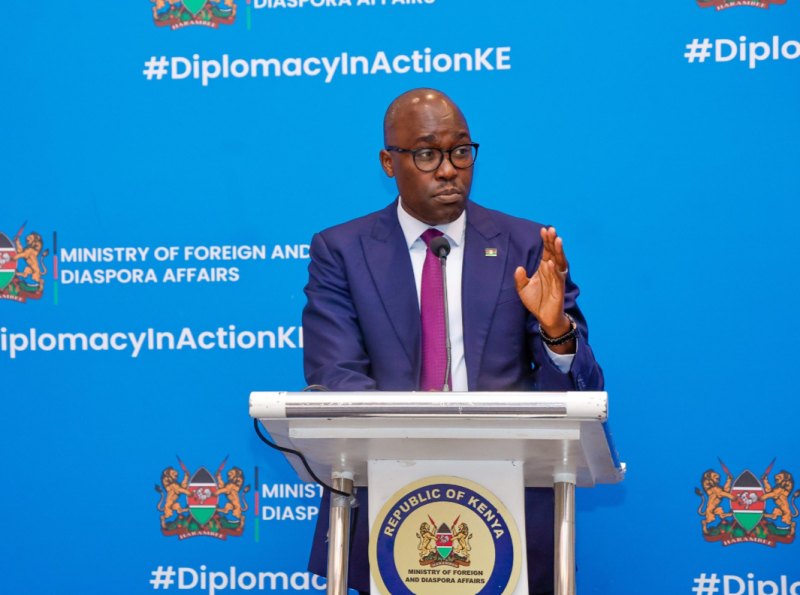
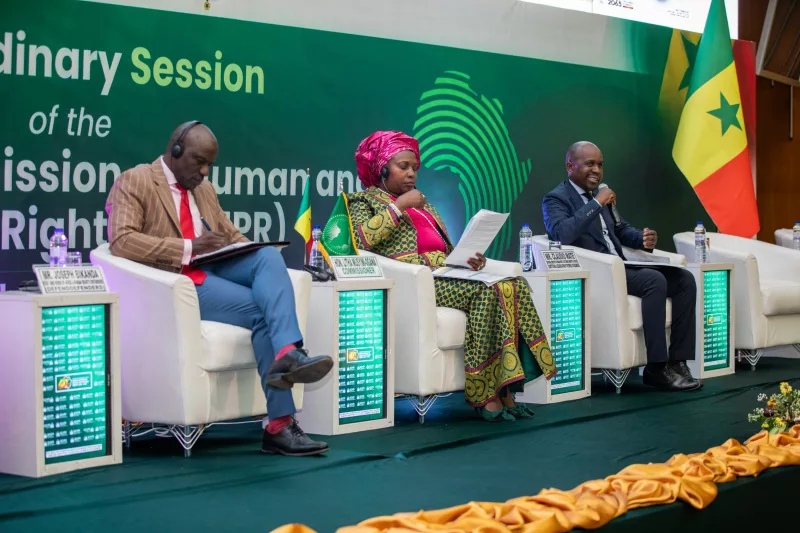
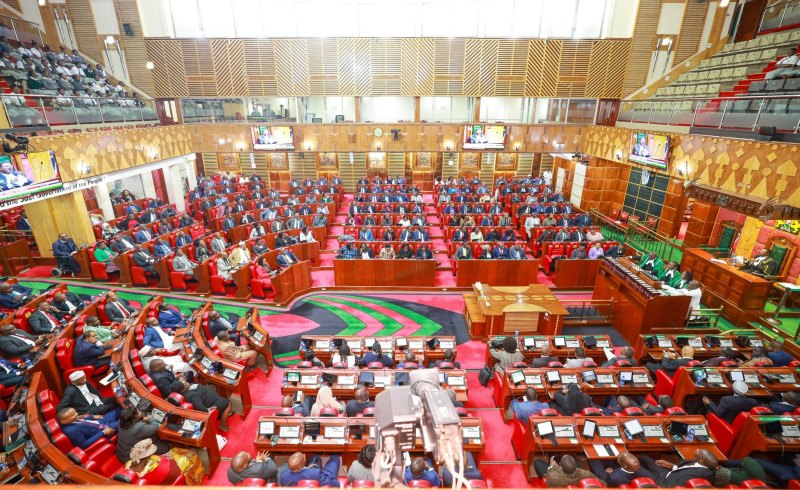
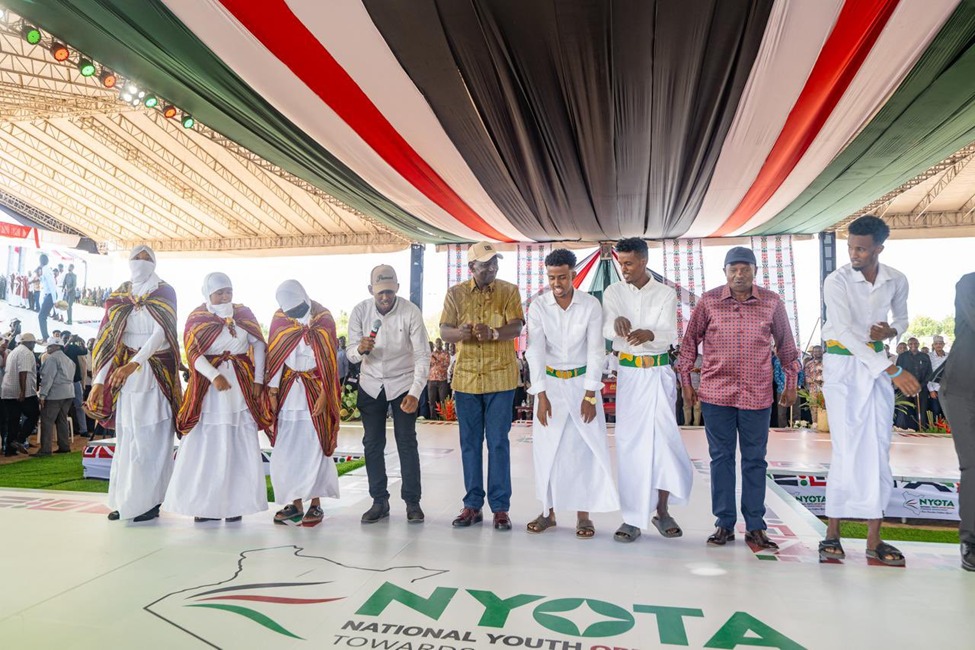
 President William Ruto, accompanied by Deputy President Kithure Kindiki, interact with NYOTA beneficiaries at Garissa High School grounds in Garissa County/Photos by Mathew Gwendo (OGS).
Kenya is at a crossroads in its development path. In its pursuit of transformative governance, the country seeks to implement strategies that involve the citizens for economic prosperity right from the grassroots.
This is facilitated by the country’s devotion to inclusive governance and fair resource allocation, an aspect that has made the broader socio-political arena a space that is socially inclusive, just and participatory for the society as a whole.
From the look of things, Kenythe, a Kwanza administration, is well aware that, to create national unity, inclusive governance formats must mirror the diversity in the population of the country.
This is attainable by involving all sectors of society, including the youth, women and other underprivileged groups who have, in particular, been excluded from the development processes in the past.
This new way of governance changes all that, ensuring citizens have control over their own destiny and are encouraged to develop individually and gradually as an economy.
All this is made possible by the devolved form of governance as decentralisation of resources becomes an essential pillar of development backed by the constitution.
Devolution has given counties more autonomy and access to resources directly, catering to each region’s needs.
The success of devolution requires an equitable and transparent distribution of resources to Kenya’s 47 counties, which the government is effecting by financing the units according to population density, poverty rate, land area and development necessities.
This formula provides for equitable access to resources across regions.
The Equalisation Fund focuses on under-resourced and underserved counties and provides financial resources to improve infrastructure, health services, education and economic opportunities.
Through supporting these regions, the fund acts as a check on interregional disparities while supporting fair national development.
To strengthen the devolved units further, the government is focused on empowering the youth and women as the backbone of the rural and urban economies.
This is in the understanding that more than three-quarters of the country’s population is young people and their active participation is essential if the country is to pursue peace and development.
Programs have been launched towards this cause with the aim to stimulate this demography’s engagement in governance and economic growth.
The Uwezo Fund and the National Youth Opportunities Towards Advancement (NYOTA) projects form the bulk of the economic empowerment targeting mainly youth and women.
This is meant to enable the two
segments of the population to star up or develop their existing businesses with
a view to earning a living and create jobs for other less endowed Kenyans
within their ventures in the informal sector of the economy.
Counties, too, have started locally led projects that fit their priorities from healthcare facilities and roads to clean water projects.
These investments create real-world benefits in citizens’ daily lives while engendering pride and cohesion in and between counties.
On the other hand, changing the education curriculum from the less valuable 8-4-4 to the superior Competency-Based Education and Training (CBET) system has been instrumental in achieving these goals.
The CBET focuses on equipping learners with practical skills and competencies relevant to the job market, ensuring that education is inclusive and accessible to all, regardless of background or location.
This approach serves to promote equal participation by providing tailored learning experiences that meet the diverse needs of students, ultimately contributing to a skilled and empowered youth population powering the economy.
By aligning education with industry needs and emphasising measurable competencies, CBET supports national development and fosters social cohesion through equitable learning opportunities.
Politically, as the ruling coalition, Kenya Kwanza has given young leaders active governance and political involvement through a large number of grassroots activities.
By engaging the nation at such levels, the leadership has produced a brand of inclusive and inter-generational leaders putting the nation at progressive development pedestal.
Such a leadership represents and champions the development of unity in an integrated manner, at the same time promoting and protecting the interests of all groups at every level of government through their ideas and actions.
The United Democratic Alliance (UDA) - a wing of the Kenya Kwanza coalition and now the broad-based government - offers leadership training, mentorship and advocacy for youth representation at both county assemblies and national legislatures.
Through the broad-based government, efforts are being made to empower the youth and women coupled with real-time education funding and transparent county allocations backed by the Equalization Fund Act with a view to remedying historical inequity and nurturing a united society.
The political stability and national unity achieved under the broad-based government is greatly dependent on broad-based resource allocation alongside diverse representation, incorporating less ethnic polarisation rather than a winner-take-all.
Such a governance structure safeguards political, ethnic and social interests, especially for marginalised communities as they have an input in decision-making processes.
Being inclusive reduces the experience of political exclusion that triggers social tensions and violence after elections bringing national cohesion and unity.
The emergence of a broad-based government framework has provided an effective platform for managing historical grievances and integrating a wide range of ethnic and political interests into nationhood expected to hold the same together as we head for electoral campaigns in the coming year.
OGS: Lameck Odhiambo works at the Office of Government Spokesperson.