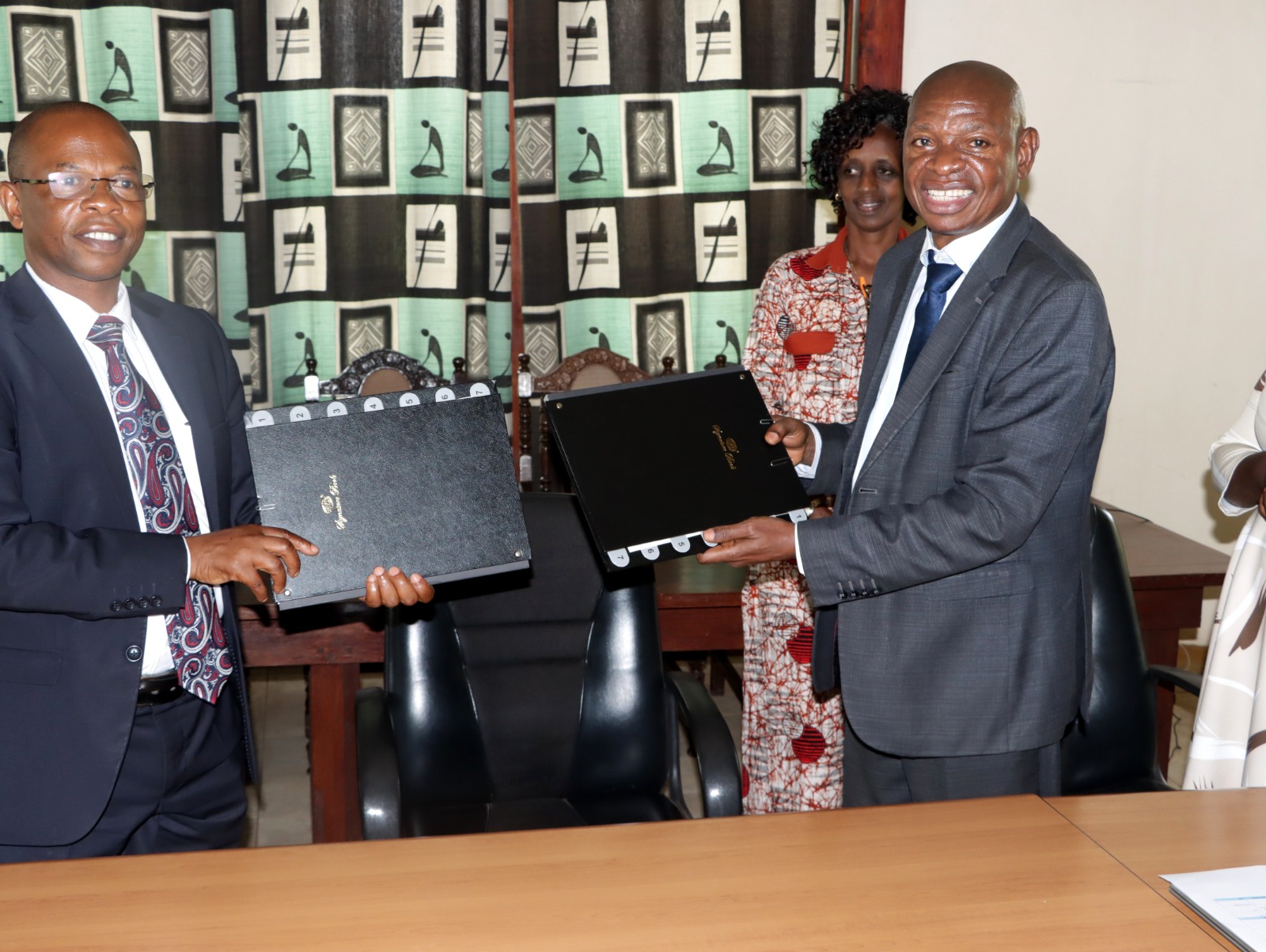
 LVBC Executive Secretary Dr Masinde K. Bwire and LTA Executive Director Sylvain Tusanga Mukanga during the signing of a memorandum of cooperation./Faith Matete
 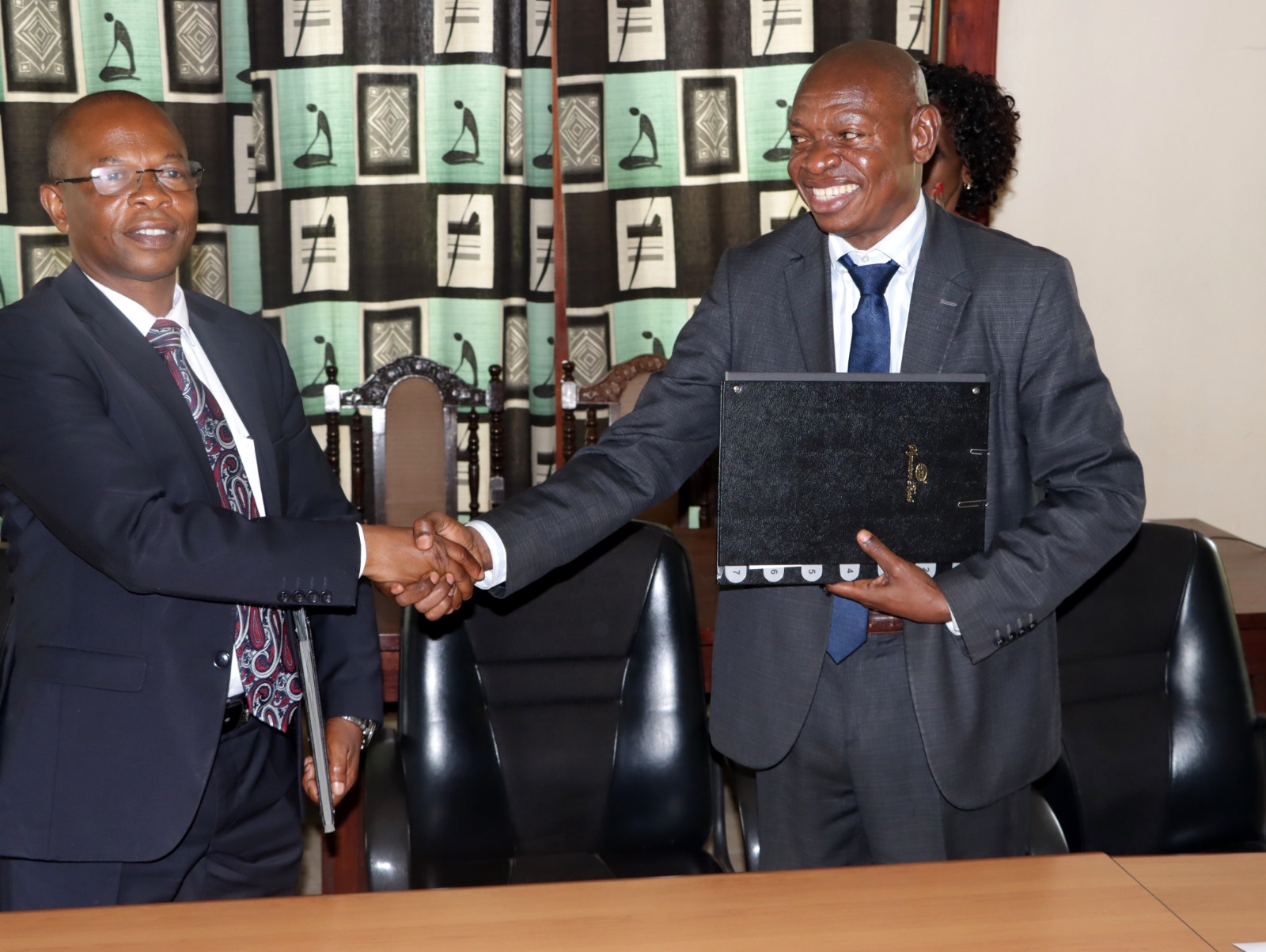 LVBC Executive Secretary Dr Masinde K. Bwire and LTA Executive Director Sylvain Tusanga Mukanga. They entered into a new partnership aimed at strengthening the management of shared water resources. /Faith Matete
 The Lake Victoria Basin Commission (LVBC) and the Lake Tanganyika Authority (LTA) have entered into a new partnership aimed at strengthening the management of shared water resources and protecting the environment within the Lake Victoria and Lake Tanganyika basins.
The two regional institutions formalised their cooperation through the signing of a Memorandum of Cooperation (MoC) in Kigoma, Tanzania.
The agreement provides a structured framework for collaboration in safeguarding freshwater ecosystems while advancing economic opportunities for communities that rely on the lakes for fishing, transport, agriculture, and trade.
The partnership was facilitated under the EAC4Nature project, supported by the German Federal Ministry for Economic Cooperation and Development (BMZ) through GIZ.
Officials said the initiative seeks to enhance regional responses to environmental challenges affecting major transboundary water bodies in Eastern and Southern Africa.
Institutional Mandates: LVBC is a specialised institution of the East African Community (EAC), established under the 2003 Protocol for the Sustainable Development of the Lake Victoria Basin and anchored in Article 114 of the EAC Treaty (1999).
Its mandate is to coordinate sustainable development and management efforts across the Lake Victoria Basin.
On the other hand, LTA was created in 2008 by the governments of Burundi, the Democratic Republic of Congo, Tanzania, and Zambia under the Convention on the Sustainable Management of Lake Tanganyika.
It is tasked with ensuring the conservation and sustainable use of Lake Tanganyika and its natural resources.
Priority Areas of Collaboration: Under the five-year agreement, the two bodies will work together in several key areas.
They will promote Integrated Water Resources Management (IWRM) through joint assessments, monitoring programmes, and policy alignment to encourage responsible water use.
Environmental protection and biodiversity conservation will also feature prominently. This includes joint projects targeting ecosystem restoration, pollution control, invasive species management, and the protection of aquatic habitats.
The institutions will further collaborate on climate change adaptation and mitigation.
Planned activities include research on climate resilience, promotion of renewable energy solutions, and sustainable land management practices aimed at reducing environmental degradation.
Capacity building and knowledge exchange form another pillar of the agreement.
The two organisations intend to organise joint trainings, workshops, and technical exchanges to strengthen institutional expertise and regional coordination.
Community participation will also be prioritised.
The MoC supports livelihood initiatives and cross-border cooperation designed to improve socio-economic conditions for communities living around the lakes.
In addition, the agreement outlines cooperation in disaster risk reduction, including improved early warning systems and coordinated responses to floods, droughts, and other climate-related hazards. Maritime safety and security is another focus area, with emphasis on preventing pollution from shipping activities, sharing best practices, and mobilising resources to enhance safety across the lake basins.
Implementation Framework: To oversee implementation, the MoC provides for the establishment of a Joint Implementation Committee made up of two representatives from each institution.
The committee will coordinate work plans and budgets, track progress through annual reporting, and conduct evaluations every two years to assess impact and inform future programming.
The agreement will run for five years, with the possibility of renewal upon mutual consent.
In a press statement, LVBC Executive Secretary Dr. Masinde K. Bwire and LTA Executive Director Sylvain Tusanga Mukanga reaffirmed their commitment to deepening regional cooperation.
They noted that joint action is critical in addressing shared environmental threats, strengthening climate resilience, and improving livelihoods for communities dependent on the two lakes.
The new pact signals a renewed push for coordinated management of Africa’s major freshwater systems, underscoring the importance of partnership in achieving sustainable development across the region.