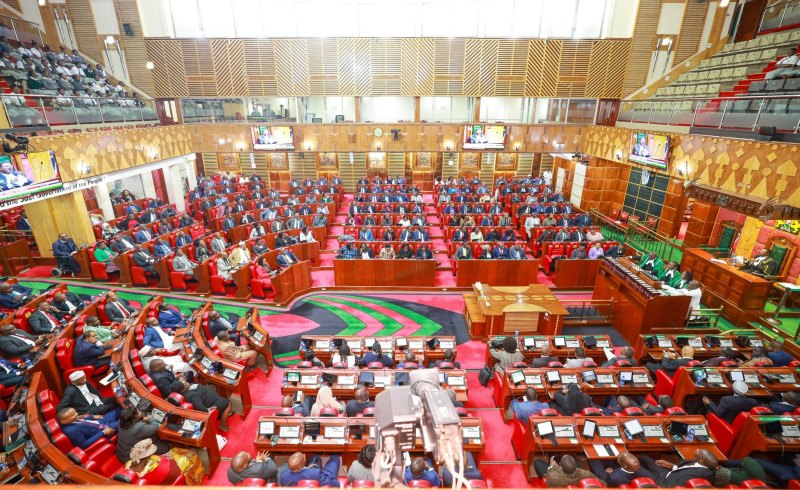
 Chief Secretary, H.E. Ambassador Moses Kusiluka, delivering remarks to participants at the 6th e-Government Annual Work Meeting on February 17, 2026, in Arusha./HANDOUT
Tanzania opened its sixth annual eGovernment meeting on February 17, 2026, with a strong message to public institutions: stop building disconnected systems, follow the law, and make cybersecurity and data protection integral to service delivery.
The three-day conference ran until February 19 at the Arusha International Conference Centre.
In his opening address, Chief Secretary Moses Mpogole Kusiluka framed digital government as an operational reform rather than an ICT showcase.
He urged ministries and agencies to adhere strictly to Tanzania’s eGovernment legal framework from project initiation to daily operations.
“Officials who bypass the required approval process will face disciplinary action,” Kusiluka said, emphasising accountability.
He challenged delegates to focus on execution, telling them the purpose of the meeting is practical results, not theory.
Benedict Ndomba, Director General of the eGovernment Agency (eGA), described the forum as a platform to review progress and agree on new measures for “secure, inclusive and integrated” systems that enhance public service delivery.
The conference programme features multiple sessions over three days, with Kusiluka as the guest of honour.
The issues discussed in Arusha have immediate relevance for Kenya. The country’s digital government infrastructure already serves as a revenue and identity pipeline.
According to the National Treasury and Economic Planning, the Government Digital Payments Unit is mandated to digitise all government payments, aiming to increase revenue collection, reduce costs, and enhance service delivery through electronic channels.
Tanzania’s focus on standards, integration, and accountability mirrors challenges Kenya faces as it expands digital services.
Workforce readiness was another key topic at the Arusha meeting. Kusiluka criticised the practice of addressing weak performance by transferring staff rather than building capability.
He urged public sector employers to train officials to meet the demands of fast-changing technology.
Kenya faces a similar skills gap as agencies scale digital services while defending against fraud, downtime, and compromised credentials.
Cybersecurity and personal data protection were emphasised repeatedly.
Tanzania’s leadership instructed agencies to prioritise responsible use of emerging technologies, including artificial intelligence, alongside robust safeguards for citizen data.
The message resonates in Kenya, where the Office of the Data Protection Commissioner regulates the processing of personal data under the Data Protection Act 2019.
The law also governs lawful data sharing between government departments, a critical factor in the success of integrated digital projects.
For Kenyan observers, the Arusha meeting offers a clear benchmark. As digital services such as eCitizen expand, the lessons are direct: enforce standards early, integrate systems by design, continuously build staff capacity, and treat citizen data protection as a top priority.
The conference concluded on February 19, with resolutions expected to guide the implementation of integrated and secure digital services across Tanzania’s public sector.
 Chief Secretary, H.E. Ambassador Moses Kusiluka, delivering remarks to participants at the 6th e-Government Annual Work Meeting on February 17, 2026, in Arusha./HANDOUT