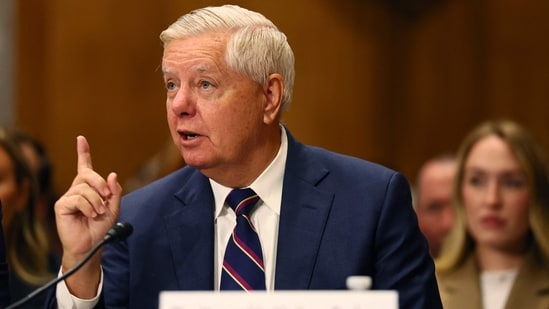
 U.S Senator Lindsey Graham in a past meeting./FILE
A US senator has criticised Saudi Arabia’s actions towards the United Arab Emirates, describing them as a backward step and warning of the wider consequences for the Middle East.
In an interview with Sky News Arabia, U.S. Senator Lindsey Graham stated that Saudi Arabia is currently "moving backward," noting that they are fiercely attacking the United Arab Emirates due to its accession to the Abraham Accords.
Responding to justifications suggesting that the dispute stems from the files of Sudan and Yemen, Graham asserted that there is no valid excuse for such behaviour.
He explained that while differences over Sudan and Yemen may exist, what is currently unfolding is tantamount to a "de facto declaration of war."
In a related context, Senator Graham posted statements on the X platform affirming that Sheikh Mohamed bin Zayed’s decision to embrace the Abraham Accords and modernise his country—while simultaneously preserving its faith—represents the most significant change he has witnessed in the Middle East in his lifetime.
He pointed out that the UAE's efforts to integrate the region with the rest of the world constitute one of the "bravest and most impactful decisions" ever made by a Middle Eastern leader.
Graham added that he had been very candid with Mohamed bin Zayed, stressing that he cannot do this alone. He emphasised the necessity for others in the region to adopt and participate in this vision, rather than remaining mere "passive observers."
Furthermore, Graham warned that certain forces converging in the region recently are attempting to undermine the movement toward "the light" by reverting to old methods and engaging in what he described as "cheap" politics.
He concluded his remarks by stressing that these actions have not gone unnoticed, warning that continuing on this path would cause "immense damage" to the best opportunity he has seen in hundreds of years to change the Middle East for the better