The committee overseeing the implementation of the National Dialogue Committee (NADCO) report and the 10-point bipartisan agenda has expressed confidence that it will deliver a strong performance when it presents its status report on March 7.
The team said on Thursday that the process is on course despite challenges in some areas, noting it will provide an accurate update on progress made, outline outstanding issues, and give projected timelines where implementation hurdles still exist.
Committee Chairperson Agnes Zani revealed that the team has received more than 200 stakeholder submissions to guide the process.
She said the committee is engaging civil society, political parties, and counties to ensure the final report reflects broad national input.
“What is also very important for us to indicate is that we have been able to receive over 200 submissions from various stakeholders. So we have a wealth of information,” Zani said.
She noted that some proposals require legislation currently being processed in the National Assembly, describing the exercise as a political, technical, and administrative process.
Committee Vice Chairperson Javas Bigambo said the team is optimistic it will deliver a strong scorecard by the end of its execution period.
“In terms of where we are, as a committee we are confident to indicate that implementation of the 10-point agenda presently has crossed the 50 per cent mark,” he said.
He added that the forthcoming report will give a clear picture of what has been achieved and what remains.
“When the time will have come, March 7, we will give an accurate status report. Where challenges may still abound, we will give a projection on when some of them will be implemented,” Bigambo said.
He emphasised that the agenda goes beyond the political interests of Kenya Kwanza and Azimio coalitions, whose leaders initiated the bipartisan talks that produced the NADCO report.
“We remain emphatic that issues to do with the implementation of the 10-point agenda are not limited to immediate and primary interests of UDA and ODM alone. They are national in nature and their implementation is perpetual,” he said.
Zani noted that the committee is currently analysing the views through a structured methodological framework to ensure sustainability and practicality of the proposals.
The team has also been engaging civil society organisations and political parties under the Centre for Multiparty Democracy (CMD) in consultative forums aimed at building consensus and aligning positions.
Zani said the engagements provided a platform for inclusive and bipartisan dialogue, helping to deepen understanding of the stakeholder landscape and identify areas of convergence.
“These interactions are instrumental in harmonising stakeholder positions, building trust across the political divide and ensuring that the process remains inclusive, consultative and outcome-oriented,” she said.
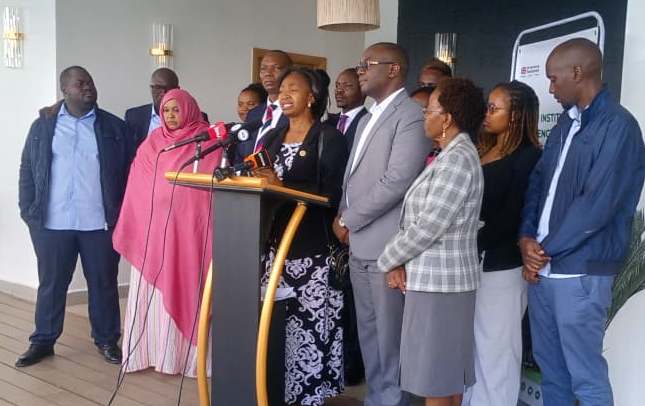
They were addressing the press Thursday in Nairobi following the conclusion of a two-day retreat with civil society groups and CMD member parties, focusing on reviewing progress, strengthening coordination, and generating action points to enhance implementation.
According to Zani, the insights gathered will inform a comprehensive report reflecting the aspirations of key actors and supporting democratic consolidation, national unity, and sustainable governance.
On the legislative front, Zani acknowledged that some proposals require new laws or amendments, a process dependent on Parliament.
“In terms of bills or necessary legislation required, we have to understand where this committee is working. The people who process their bills are in the National Assembly. So that process is ongoing,” she said.
The March report will provide the status of each proposed bill and recommendations based on stakeholder views.
“This is a political, technical and administrative process,” Zani added.
The committee has also begun county-level public participation to gather grassroots views, with forums completed in Kisumu, Homa Bay, Migori, and Siaya counties.
Between February 23 and 28, similar engagements will be held in Mombasa, Taita Taveta, Kwale, Tana River, Lamu, and Kilifi counties.
The team has called on governors, county assembly speakers, and MCAs in the coastal region to facilitate public participation.
COIN-10 was formed to oversee implementation of reforms agreed upon after last year’s bipartisan talks, aimed at easing political tensions and advancing governance, electoral, economic, and institutional reforms.
With two weeks to the reporting deadline, the committee says it remains confident the country will see “commendable progress” when the final status report is unveiled.