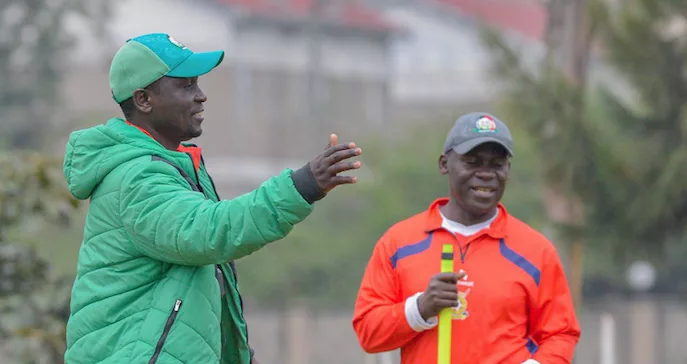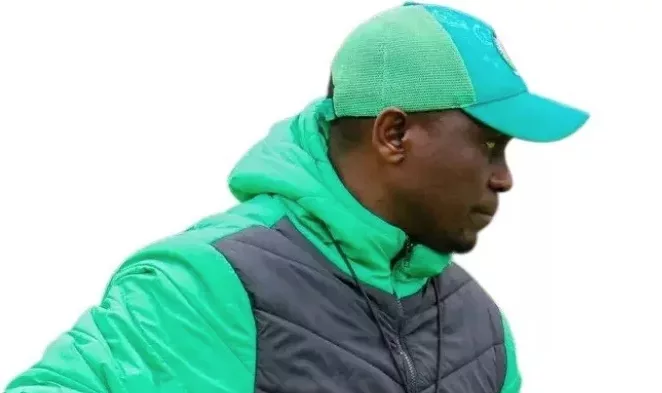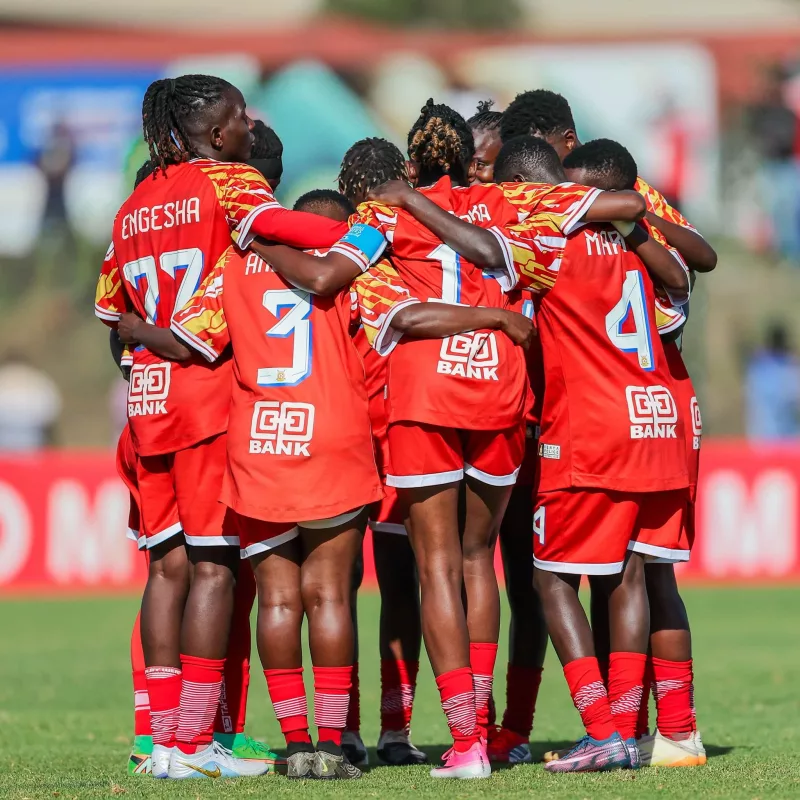
 Immediate former Tusker FC head coach Charles Okere/OKERE FACEBOOK
 When Charles Okere confirmed his resignation as head coach of Tusker FC on Tuesday, it was far more than a routine administrative announcement.
It marked the closing of a chapter shaped by patience, internal progression and silverware — a journey that began in quiet apprenticeship and matured into leadership at one of Kenya’s most storied clubs.
There was no public fallout, no emotional outburst, no dramatic rupture between coach and institution. Instead, the transition unfolded with calm restraint, reflecting the measured personality that defined his tenure. Okere chose composure over controversy and reflection over recrimination.
Proud owners of 12 Kenyan Premier League titles, the Brewers looked to the CAF ‘A’ licence holder as the architect of their next golden chapter. Yet the script has been inconsistent. Promise too has often been followed by setback, and Tusker now find themselves ninth on the table with 28 points — a daunting 15-point gap separating them from leaders Gor Mahia.
What appeared on the surface as inconsistent results masked deeper recruitment challenges that constrained his rebuilding blueprint. In an exclusive interview, Okere acknowledged that efforts to strengthen key departments of the squad faltered at crucial windows, an issue that weighed heavily in the joint decision to part company.
“We proposed several good players for signing, but our efforts didn’t bear any fruit,” he said. “We had to make do with the players we had.”
The inability to secure targeted reinforcements left gaps that proved difficult to bridge, particularly after the departure of key figures. Among them was striker CHAN 2024 hero Ryan Ogam, whose move to Austrian Premier League side Wolfsberger created a void in the attack that was never adequately filled.
“Some of our best players, like Ogam, left the club, but nothing was done to replace them,” Okere added, underscoring the imbalance that followed.
Yet even as he pointed to those constraints, he resisted the temptation to deflect responsibility. Leadership, in his view, demanded ownership — even in imperfect circumstances. “Every journey has its season, and mine with Tusker FC has now come to an end,” he said.
For Okere, the departure carries personal significance. When he first arrived in Ruaraka in April 2018 as an assistant under Robert Matano, he was not stepping into the spotlight. He was stepping into service, determined to learn and grow within the club’s structure rather than attempt to reshape it overnight.
“I arrived here not as a finished product,” he reflected, “but as a student of the game, eager to learn and serve.”
His rise through the ranks was gradual and deliberate. From assistant coach to youth team mentor, from second assistant to head coach in July 2024 following Matano’s departure, each step reflected institutional trust built over time. His ascent was organic — cultivated from within rather than imposed from outside.
“I was trusted with responsibility,” he said. “And I worked every day to honour that trust.”
That trust bore fruit. Two league titles stand as defining highlights of his tenure, reaffirming Tusker’s place among Kenya’s football elite and reinforcing a competitive identity in a fiercely contested domestic landscape.
“Together, we celebrated two league titles,” Okere noted. “We overcame countless challenges. And we built memories that will remain with me for a lifetime.”
Even in triumph, he was quick to widen the lens beyond himself. “These victories were never about me,” he insisted. “They were about a collective belief — players, staff, management and supporters moving in one direction.”
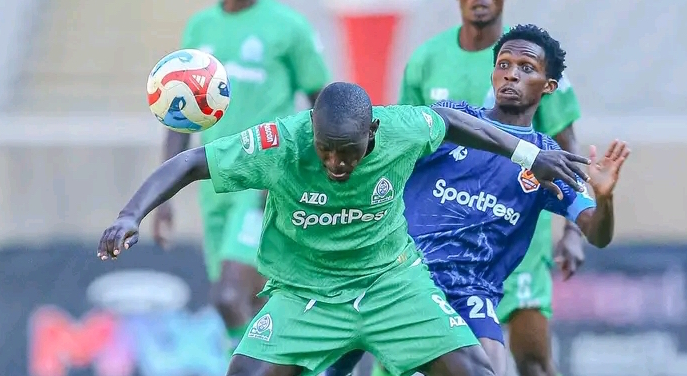
The current campaign, however, proved less forgiving. Eight defeats in 20 matches left Tusker ninth on the table with 28 points, trailing leaders Gor Mahia by 15. A heavy 4–0 loss to AFC Leopards in January exposed defensive fragility, while Saturday’s 3–1 defeat to Mathare United at the Police Sacco Grounds marked his final game in charge.
Still, his assessment remained grounded. “While not every chapter unfolded exactly as planned,” he admitted, “that is the nature of both football and life — a blend of triumphs and trials.”
He accepted the burden that accompanies leadership. “Results have not always matched our ambition,” he conceded. “And as head coach, I accept the weight of that responsibility.”
Gratitude ran consistently through his remarks. He spoke of players who endured difficult stretches, the staff whose contributions often go unnoticed, and management that entrusted him with growth from assistant to head coach.
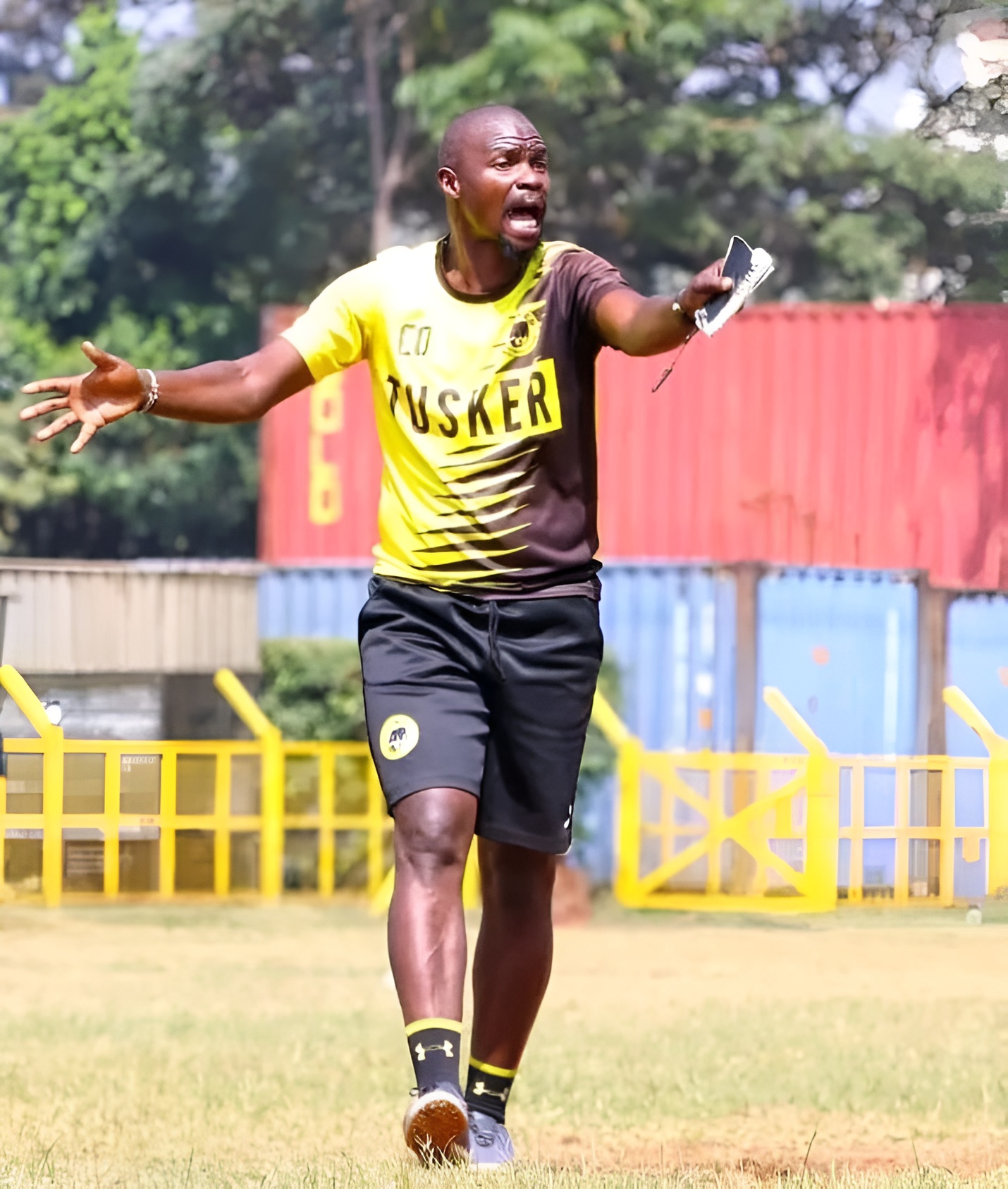 Immediate former Tusker head coach Charles Okere during a training /HANDOUT
 “To the players, thank you for your sacrifice, your resilience, and your courage in difficult moments.”
“To the technical bench and backroom staff — your unseen work is the foundation upon which success stands.”
“To management, thank you for believing in me.”
He reserved special acknowledgement for supporters, recognising both encouragement and criticism as integral to professional growth.
“Your passion is the heartbeat of this club. Your cheers lifted us. Your criticism sharpened us.”
In perhaps the clearest expression of personal evolution, Okere framed his tenure as transformative.
“Your support, your criticism, and your encouragement have all shaped me in meaningful ways,” he said. “I leave a better coach and a better person than I arrived.”
Tusker now turn the page to a new era under French tactician Julien Mette, who is set to assume responsibility at a pivotal juncture of the season. Mette observed Saturday’s defeat from the stands alongside Harambee Stars second assistant coach Anthony Kimani, signalling imminent technical adjustments.
Mette brings considerable African experience, having worked at Tongo FC, AS Otoho and Rayon Sports, as well as managing Djibouti’s national team. His appointment reflects ambition and a desire for structural recalibration.
“Mette is already in the country and even attended Monday's training,” a source at this club confirmed. Tusker have already moved to reinforce, signing goalkeeper Pavelh Ndzila from Rayon Sports, left-back Servel Akouala from US Biskra and striker Selasie Bless Akai from Dadje FC in a bid to inject experience and attacking impetus.
“We needed to bring in experience to add steel to the squad,” CEO Sam Nzau explained. “Hopefully, we can turn things around in the second leg.”