
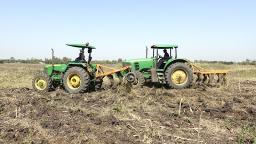
 Hope and uncertainty as farmers ready their fields for the long rains
Rains will continue in many parts of the country into next week, while northern Kenya remains dry.
Acting Kenya Meteorological Department director
Edward Muriuki said the rains are concentrated in the southern region of the
country.
He added that they will extend to central,
western and southern parts of the Rift Valley.
The forecast indicates that drought-hit
Turkana, Samburu, Marsabit, Mandera, Wajir, Garissa and Isiolo will remain dry.
“Night-time (minimum) average temperatures are
expected to be less than 10°C in some parts of the highlands east and west of
the Rift Valley, the central Rift Valley and in the vicinity of Mt
Kilimanjaro,” Muriuki said in a forecast ending February 23.
The forecast shows continued rainfall in Nandi,
Kakamega, Vihiga, Bungoma, Siaya, Busia, Baringo, Nakuru, Trans Nzoia, Uasin
Gishu, Elgeyo Marakwet, West Pokot, Kisii, Nyamira, Kericho, Bomet, Kisumu,
Homa Bay, Migori and Narok counties.
“Morning rains are likely over a few places.
Afternoon showers and thunderstorms are expected in several places. Night
showers are likely over a few places, occasionally spreading to several areas,”
Muriuki said.
The highlands east of the Rift Valley —
Nyandarua, Laikipia, Nyeri, Kirinyaga, Murang’a, Kiambu, Embu, Tharaka Nithi,
Meru and Nairobi counties — will experience occasional morning cloudiness,
giving way to sunny intervals.
“Afternoon showers are expected in a few
places, occasionally spreading to several areas. Nights will be partly cloudy,
though showers may occur in a few places,” he said.
At the Coast — Mombasa, Kilifi, Lamu and Kwale
counties, as well as the Tana Delta — days will be sunny with partly cloudy
conditions at night. However, morning and night showers may occur in a few places
in Kwale county during the first half of the forecast period.
In north-western Kenya, covering Turkana and Samburu, sunny intervals are expected during the day, with partly cloudy conditions at night.
“Daytime (maximum) average temperatures of more
than 30°C are expected in several parts of the country, including the Coast,
the south-eastern lowlands, north-eastern and north-western Kenya,” Muriuki
said.
The department advised farmers in rainy regions
to take advantage of the showers, while those in northern Kenya should conserve
water and protect livestock from heat stress.
The new seven-day forecast comes weeks after
the department announced that most parts of Kenya are expected to receive heavy
rainfall during the March–April–May (MAM) season.
In early February, the department said the long
rains would begin between mid- and late March in Central Kenya and Nairobi, the
Rift Valley highlands, and southern and western regions around Lake Victoria.
These areas are forecast to receive above-normal rainfall.
The rest of the country, except the Coast, is
expected to receive near-normal rainfall, with the onset likely in early April.
Coastal regions will experience drier-than-normal conditions.
The forecast, released in Nairobi by the IGAD
Climate Prediction and Applications Centre (ICPAC), suggested that the current
drought affecting many parts of Kenya could ease within the next two months.
However, its effects may persist for several months.
The outlook covered the wider Greater Horn of
Africa region. It indicates that Kenya and Somalia are likely to receive less
rainfall than neighbouring countries.
“The outlook indicates a 45 per cent
probability of wetter-than-normal rainfall over much of the Greater Horn of
Africa, including most parts of Uganda, Rwanda, Burundi, Tanzania, central to
western Kenya, Ethiopia, South Sudan, northern Somalia and Djibouti,” ICPAC
said.
Muriuki said timely climate information is
critical, especially for farmers affected by drought.
“Early warning services are essential in
mitigating climate risks. They provide timely information that enables
governments, communities and institutions to prepare for and respond
effectively to climate-related hazards,” he said.
ICPAC cautioned farmers against assuming that
good seasonal rainfall would mean continuous rain throughout the season.
“Despite the seasonal outlook, dry spells may
still occur in areas forecast to receive near-normal or above-normal rainfall,
while wet spells may occur in areas forecast to receive near-normal or
below-normal rainfall,” the centre said.
Experts noted that although the March to May
season is Kenya’s main rainfall period, it is also the most difficult to
predict with high confidence.
“While the MAM season contributes a larger
share of annual rainfall across much of the Greater Horn of Africa, seasonal
anomalies are generally less predictable than in other seasons,” they said.
“This is largely due to the weak relationship
between rainfall and global climate drivers such as the El Niño–Southern
Oscillation and the Indian Ocean Dipole.”
They warned that conditions may change during
the season, with local and month-to-month variations expected.
“Even in areas forecast to receive near-normal
or above-normal rainfall, dry spells may occur and vice versa,” they said.
ICPAC director Dr Abdi Fidar said the regional climate forum helps countries translate warnings into action.