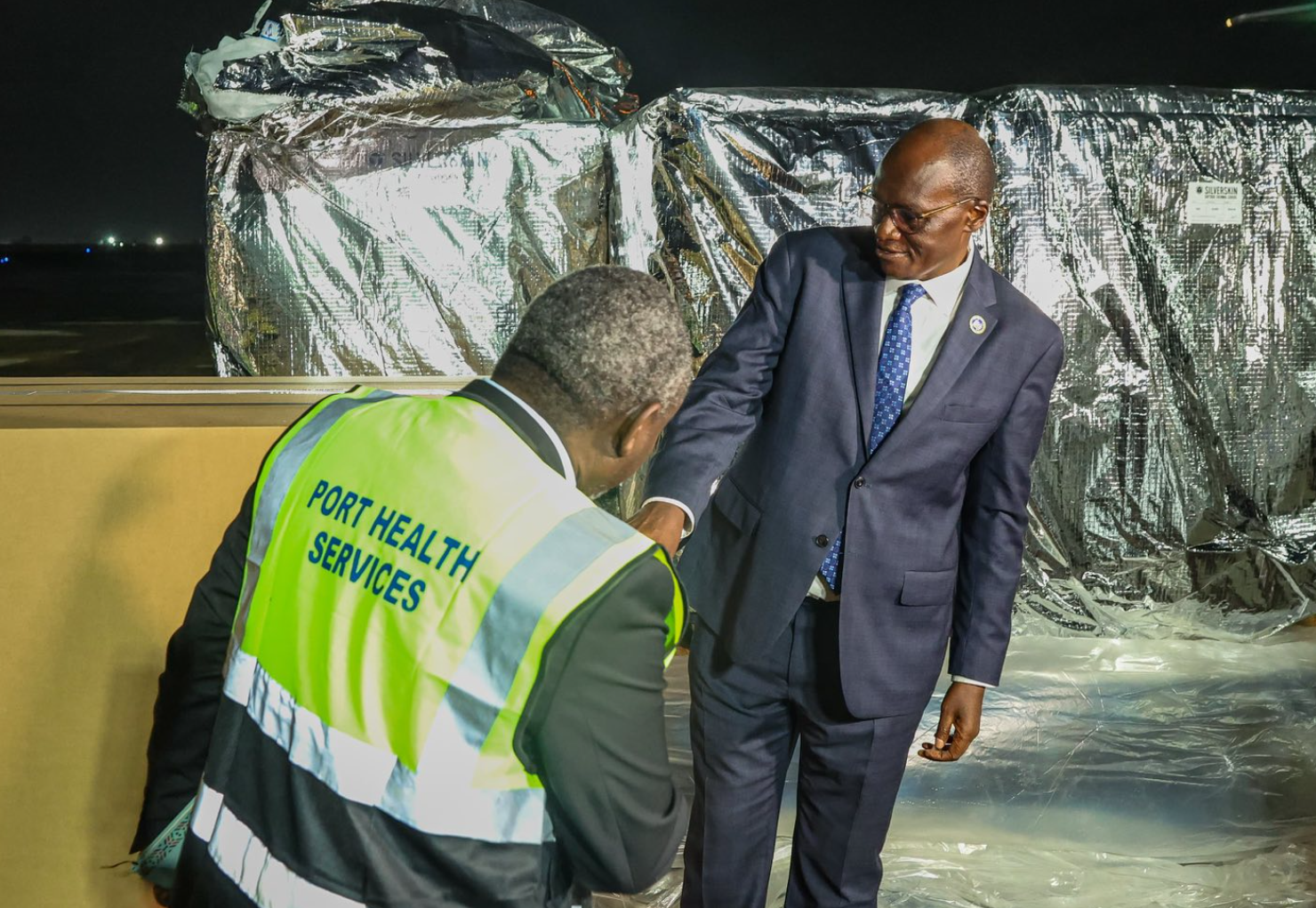
 Health DG Patrick Amoth (in suit) when he received the lenacapavir consignment on February 17, 2026.
Kenya on Tuesday evening received the initial batch of 21,000 starter doses funded through the Global Fund, 12,000 more doses are expected in April, and another 25,000 from the US government.
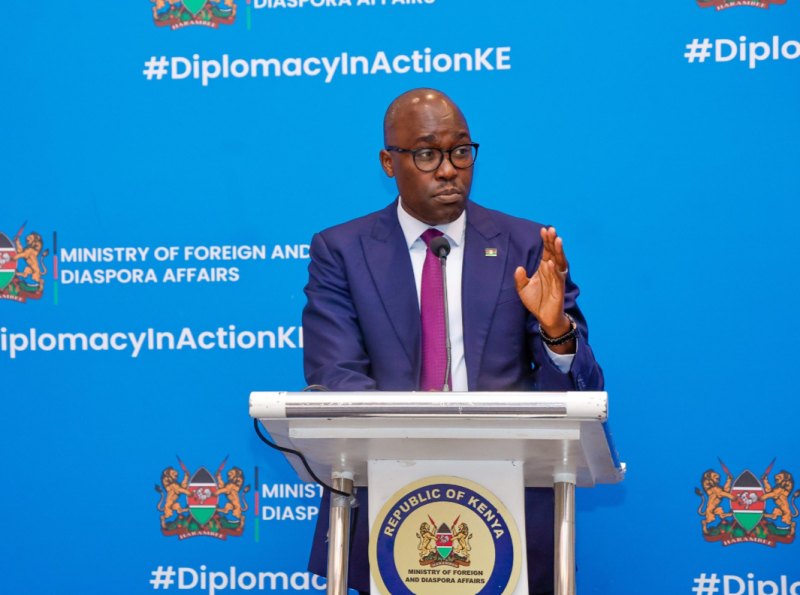
Health CS Aden Duale said the first qualification for getting the drug is being HIV negative.
Lenacapavir, a long-acting injectable form of HIV pre-exposure prophylaxis (PrEP), offers six months of protection per dose by blocking critical stages of the virus’s life cycle.
“Let me emphasise that this medicine is for those who are HIV negative,” CS Duale said.
“It must be stated clearly and emphasised that Lenacapavir is neither a vaccine nor a cure for HIV and therefore we urge all those on treatment to continue their lifelong therapy.”
Kenya will begin offering the injections to selected people in 15 counties from early March, with strict eligibility rules guiding who qualifies for the limited first supply.
“The first phase of implementation will begin in early March, covering 15 counties, followed by a second phase covering another 15 counties, and a final phase covering the remaining 17 counties, ensuring nationwide access over time,” Duale said.
The launch in March will cover 15 counties with the highest new HIV infections.
These are Mombasa, Kilifi, Machakos, Nairobi, Kajiado, Nakuru, Uasin Gishu, Kakamega, Busia, Siaya, Kisumu, Migori, Homa Bay, Kisii and Kiambu.
The ministry says a phased approach will later expand access to all counties based on readiness and data.
HIV prevention officials say the criteria for who qualifies is strict because the first supplies are limited. Only people at significantly high risk of HIV infection will be eligible initially, according to the National AIDS and STI Control Programme (Nascop).
Kenya expects an additional 12,000 continuation doses by April, to ensure those who start the prevention injections can continue without interruption.
“In addition, the US government has committed to support Kenya with a further 25,000 doses, which will strengthen the national roll-out and increase access for more Kenyans,” Duale said.
Dr Jonah Onentiah, who leads HIV prevention at Nascop, said officials decided to focus on populations most likely to benefit first due to limited doses
“We will prioritise adolescents and young people, mothers who are pregnant and key populations,” Dr Onentiah told the Star recently.
These key populations include sex workers, men who have sex with men, couples in discordant relationships, and adolescents and young women in counties with high rates of new infections.
Lenacapavir was approved by the United States Food and Drug Administration in June 2025 and later endorsed by the World Health Organization (WHO) in updated guidelines, confirming its safety and effectiveness for HIV prevention.
The Pharmacy and Poisons Board recommended registration of the injection in January 2026 after a detailed scientific assessment.
Before receiving Lenacapavir, clients will undergo screening to confirm they are HIV negative.
They must also demonstrate significant risk of infection, such as engaging in sex work or being in a serodiscordant relationship where one partner is HIV positive and the other is not.
Individuals must weigh at least 35 kilogrammes to qualify for the injection.
The drug is administered through a series of doses. Clients start by taking two oral tablets on the first two days, followed by a tablet on day eight. On day 15, they receive the first injection, which protects for six months. Routine HIV testing and side effect monitoring will accompany every injection appointment, health officials say.