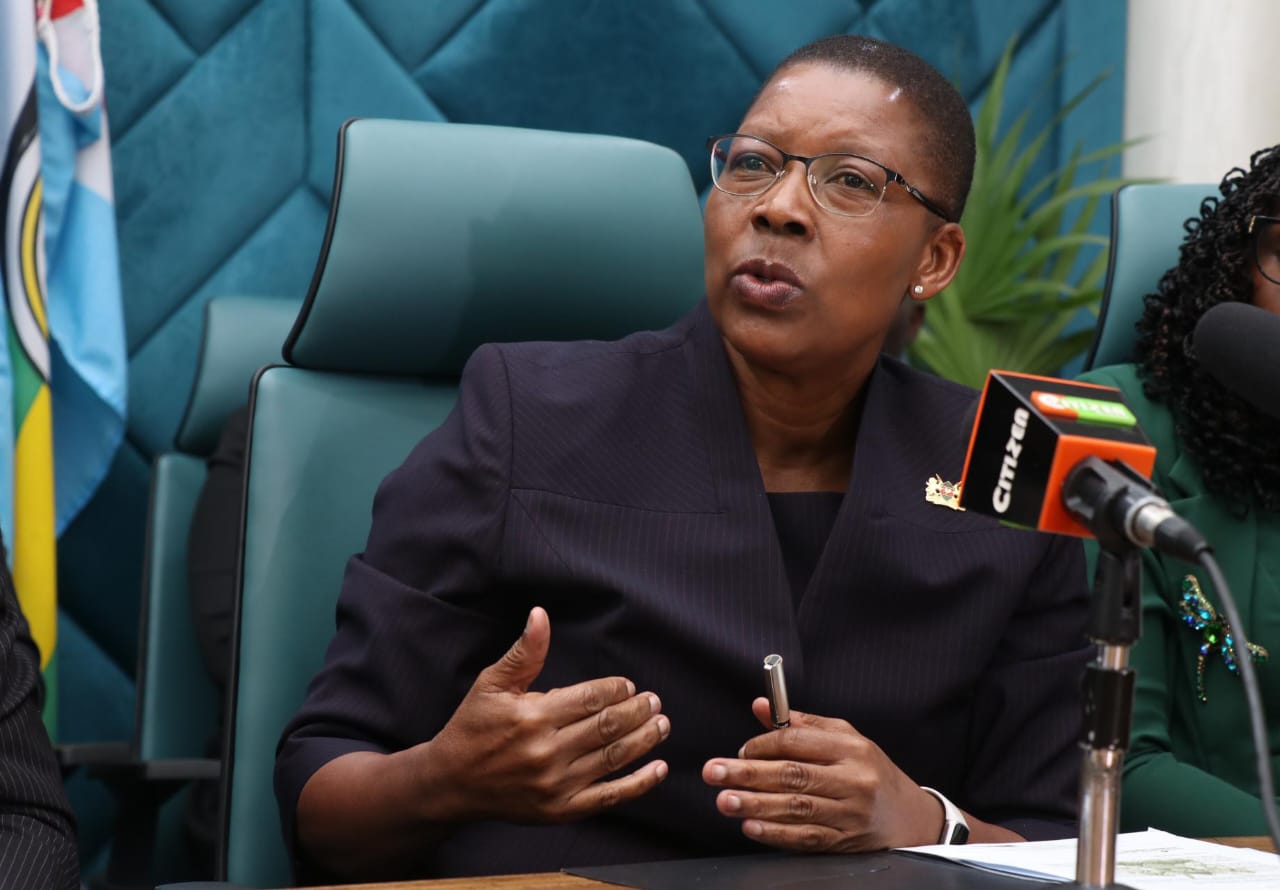
The Attorney General, Dorcas Oduor, has formally backed the prosecution of a senior partner at one of the notable law firms in Nairobi and other suspects accused of allegedly forging the will of former Attorney General James Boro Karugu, arguing that criminal investigations cannot be stopped merely because succession proceedings are ongoing.
In grounds of opposition dated February 17, 2026, the Attorney General urged the Constitutional and Human Rights Division of the High Court to dismiss a petition filed by the said senior partner, Peter Mbuthia Gachuhi, and five other petitioners.
The group is seeking orders to block investigations and any prosecution arising from allegations that Karugu’s last will and testament, dated February 2, 2014, and a related trust deed were forged.
The petitioners have sued the Director of Public Prosecutions, the Directorate of Criminal Investigations and the Attorney General, contending that criminal proceedings would interfere with a pending succession cause concerning the late former Attorney General’s estate.
The 6 were in court today, represented by lawyer Fred Ojiambo. The matter came up before Justice Bahati Mwamuye, where Ojiambo sought additional time, telling the court he had not been served with the relevant documents. “I have not been served,” Ojiambo said, urging the court to grant him more time to respond. The judge directed that the case be mentioned on March 16 for further directions.
In its response, the Attorney General described the application seeking conservatory orders as incompetent, misconceived and an abuse of the court process.
The State argued that allegations of forgery fall squarely within the criminal justice system and cannot be shielded by parallel civil proceedings in the Family Division.
According to the grounds of opposition, the existence of High Court Succession Cause No. E916 of 2023 does not bar investigators from probing whether criminal offences were committed in the preparation or execution of the will. The Attorney General maintained that the Family Court has no jurisdiction to determine criminal culpability, including offences such as forgery.
“The Applicant has not demonstrated real, imminent, or irreparable prejudice that cannot be adequately addressed through the criminal process or remedies available before the trial court,” the Attorney General stated, adding that suspects have recourse to disclosure, objections to defective charges, or termination of proceedings if prosecutions are improperly mounted.
The State further argued that staying investigations would unjustifiably impede the constitutional and statutory duties of the National Police Service and the Director of Public Prosecutions, whose mandate includes investigating and prosecuting suspected criminal conduct in the public interest.
It said the petitioners had failed to show any illegality, malice or abuse of power on the part of investigators or prosecutors.
The dispute arises from a bitter family row over the estate of Karugu, who served as Kenya’s second Attorney General in the early years of the Moi administration and died on November 9, 2022.
Following his death, disagreements emerged among beneficiaries after a document presented as his last will, together with a trust deed establishing the JBK Foundation, was challenged as allegedly inauthentic.
The criminal inquiry was triggered by a complaint lodged with investigators by one of Karugu’s daughters, Victoria Nyambura Karugu.
Investigators cited alleged irregularities in the text, annexures and execution of the will and recommended that the DPP consider charges including forgery, uttering a false document, conspiracy to defraud and false swearing against several individuals involved in the preparation and witnessing of the will.
Those named include Karugu’s sons, Eric Mwaura Karugu and Benjamin Githara Karugu, as well as other individuals listed as witnesses, executors and trustees.
They argue that the criminal process risks pre-empting issues that are still pending before the succession court, including whether the will is valid.
On January 19, 2026, the High Court issued interim conservatory orders restraining the DPP and the DCI from summoning, arresting or charging the petitioners in relation to the will, pending an inter partes hearing.
In opposing the petition, the Attorney General urged the court to allow investigations and any subsequent prosecutions to proceed, insisting that constitutional safeguards exist within the criminal justice system to protect the rights of accused persons.
The State asked the court to dismiss both the application and the petition with costs, paving the way for investigators and prosecutors to carry out their mandates without interference.