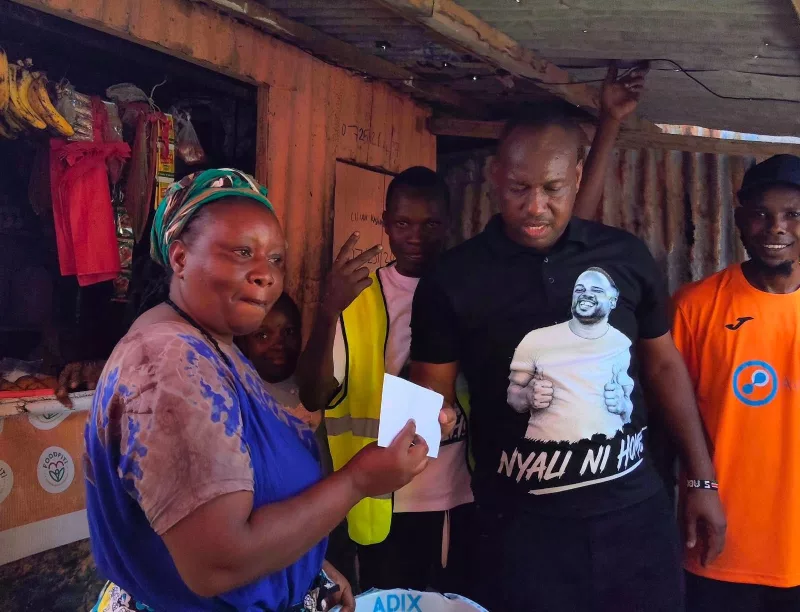
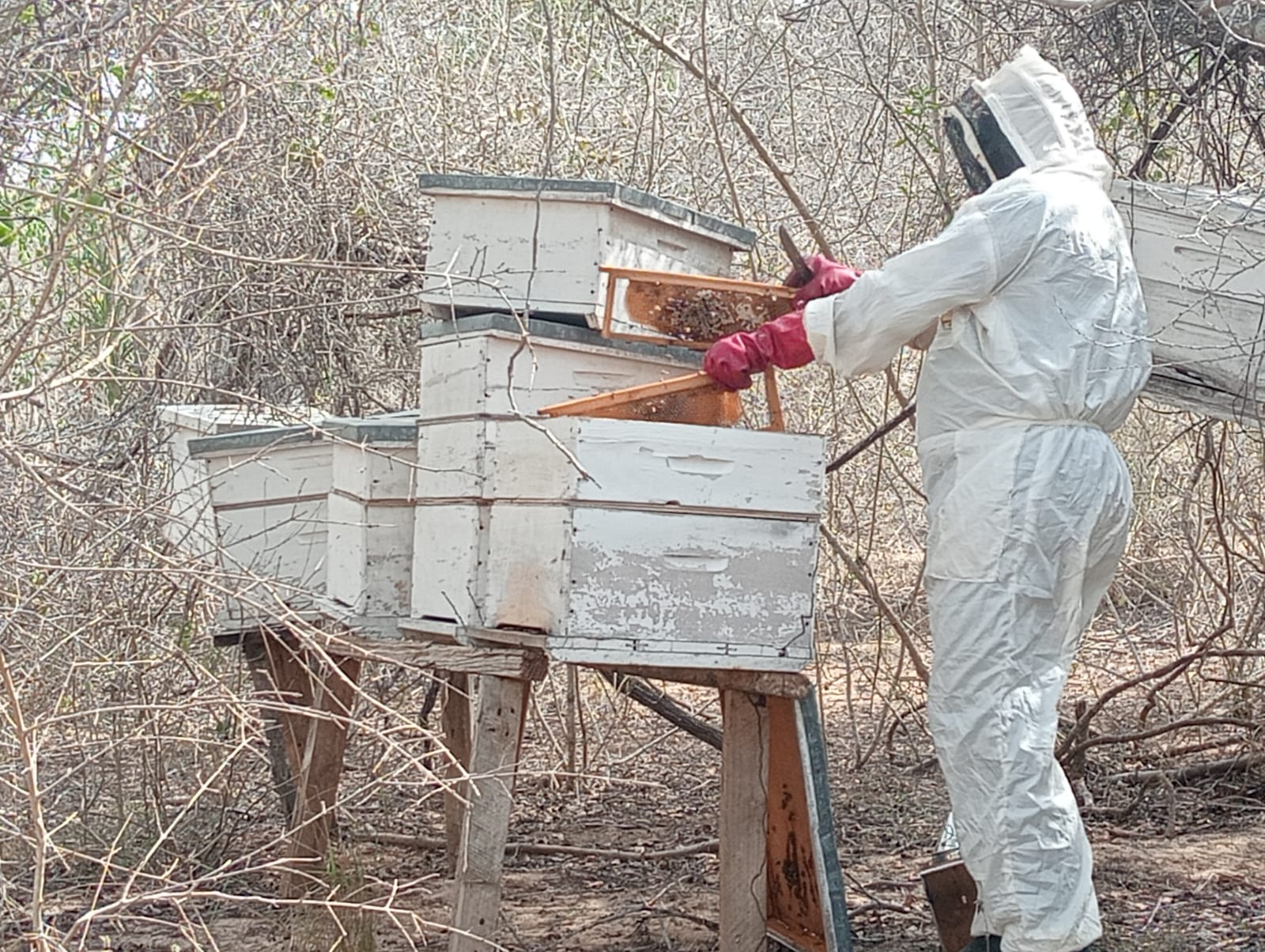
 Some of the community bee hives in Tana delta that has transformed livelihoods.
For generations, communities in Tana Delta subcounty have practised beekeeping as part of their culture, harvesting honey mainly for household consumption.
However, the traditional method of honey hunting — which
involved burning bees to access honeycombs — posed a serious threat to bee
populations and the fragile ecosystem of the Delta.
Few residents realised they were living atop a natural
treasure. Research later revealed that Tana Delta produces some of the finest
honey in the country. That discovery sparked a transformation now reshaping livelihoods
while protecting one of Kenya’s most important ecological zones.
The turning point came when Nature Kenya partnered with
African Beekeepers Limited (ABL) to design a model that would increase honey
production and quality while conserving bees through well-managed hives and
sustainable harvesting practices.
With initial support from The Restoration Initiative (TRI
Tana) project, Nature Kenya had begun mobilising communities into groups to
undertake commercial beekeeping and market their honey. However, the early
approach faced hurdles. The organisation acknowledges that community-led
production struggled with low yields, poor-quality honey and a lack of reliable
markets.
To address this, Nature Kenya entered into a Memorandum of
Understanding with African Beekeepers Limited, a private commercial honey
producer.
Under the agreement, ABL provides technical expertise in
commercial honey production, extension services, monitoring and harvesting. It
also guarantees a consistent market by purchasing honey on frames and paying
communities directly.
The results have been dramatic. Honey production has
increased significantly. Bees are no longer killed during harvesting. Community
members are earning more from beekeeping than ever before.
During a recent media tour of Tana Delta, journalists
witnessed how the project is impacting both pastoralists and farmers.
At Marafa in Chara, members of the 36-strong Chareko Youth
Group are already counting the gains.
Treasurer Rukia Masha recalls that they formed the group in
October 2024 and received 72 beehives managed by ABL.
“Before the project, we had financial challenges. Children
would be sent home from school and our husbands could not afford basic needs.
Since then, we have been able to sustain our livelihoods,” she says.
She received Sh6,000 in the first harvest and Sh7,000 from
her two beehives in the second harvest.
She now plans to expand her individual hives to increase her
earnings. Masha credits Nature Kenya and ABL for transforming their lives while
promoting conservation within the Delta.
For Mariam Mohamed, the group’s secretary, the project has
been a lifeline. With her husband unemployed, beekeeping income now supports
her two children.
“Previously, we depended only on milk from cows and it was a
challenge. Currently, my children lack nothing,” she says.
After earning Sh3,000 in the first harvest and Sh7,000 in
the second, she is appealing for more hives.
The transformation is also shifting social norms. Hassan
Jillo, a Marafa resident whose wife benefits from the project, says attitudes
towards women working have changed.
“I can stay for up to one month without spending a shilling.
We are very thankful for the project,” he says, noting that women are now
active contributors to household income.
Idriss Barissa says the shift from traditional hives to
modern methods has brought stability. With his earnings, he has bought two
goats and paid school fees for his son in junior secondary school.
Environmental conservation has also improved.
“Previously, there was reckless destruction of trees. Now,
no one is allowed to cut trees without a permit from the Kenya Forest Service,
and only a specific number can be cut. The bee population is also increasing
each day,” he says.
In Nduru village, also in Chara, Mohamed Guyole, chairman of
Kongoa Youth Group, reports growth. Supported with 72 beehives, the group
earned Sh247,000 after harvesting from half of the hives.
“We harvested three times. The first time we got 74kgs, the
second time 257kgs and the third time 323kgs, which indicates production is
increasing rapidly,” he says.
In Ngao, Victor Komora of Mvoni Bee Keepers Group says 33
members are managing 107 hives.
“We are seeing the benefits. Under the contract we signed,
ABL harvested twice and members received income,” he says.
Women’s groups are also thriving. Lydia Hiribai, chairperson
of Golbanti Women Group with 25 members, says they have harvested three times
since receiving their hives in 2024.
“We are conserving the environment through this project.
Some of us are planting flowering trees to increase the number of bees and get
more honey,” she says.
African Beekeepers Limited managing director Ernest Simeoni
says the company has been involved in beekeeping for 30 years, including
manufacturing equipment.
Since beginning operations in Tana Delta in August last
year, ABL has harvested 2,371 honey frames — nearly two tonnes of honey.
“It has been quite a challenge because we are trying to
change mindsets of people who, over centuries, have been used to honey hunting
and gathering, selling low volumes of honey in bottles and containers. Our
system is to produce high volumes and high-quality honey for the export
market,” he says.
Unlike traditional systems, ABL does not buy liquid honey.
The company purchases fully capped honey frames harvested by its field team.
Communities provide land and security for the hives, while harvesting is done
professionally to minimise disturbance.
“We are conserving the bees because we do not cut combs. We
are not disturbing the bees. We remove fully capped frames and replace them
with recycled combs intact, with minimal disturbance,” he says.
This method boosts productivity because bees do not have to
rebuild combs after each harvest.
Nature Kenya executive director Dr Paul Matiku says the
partnership has elevated the organisation’s beekeeping work.
“Tana Delta is a key biodiversity area. It is an Important
Bird Area and a site of global significance for biodiversity,” he says.
“It hosts over one per cent of the global population of
migratory birds. That means it is critical for birds which migrate in large
numbers and congregate in one place.”
Rudolf Mukhanu, Nature Kenya manager for the restoration initiative,
describes Tana Delta as a Ramsar Site and global biodiversity hotspot. He notes
that land-use practices have historically driven environmental degradation.
With 78 beekeeping groups now engaged and supported by ABL’s
technical expertise and guaranteed market, production volumes are rising
steadily.
“In terms of impact, women previously did not have a voice.
They relied heavily on farming and when harvests failed, they earned less,” he
says.
Through the Green Heart Initiative, Nature Kenya continues
to implement conservation and community development programmes in Tana Delta.
The five-year Commercial Beekeeping Programme, running from
July 2024 to June 2029, seeks to create an inclusive, sustainable and
participatory business model.
The model is anchored on regenerative and climate-smart agriculture, integrated landscape management, public-private partnerships, livelihoods diversification and innovative financing mechanisms.