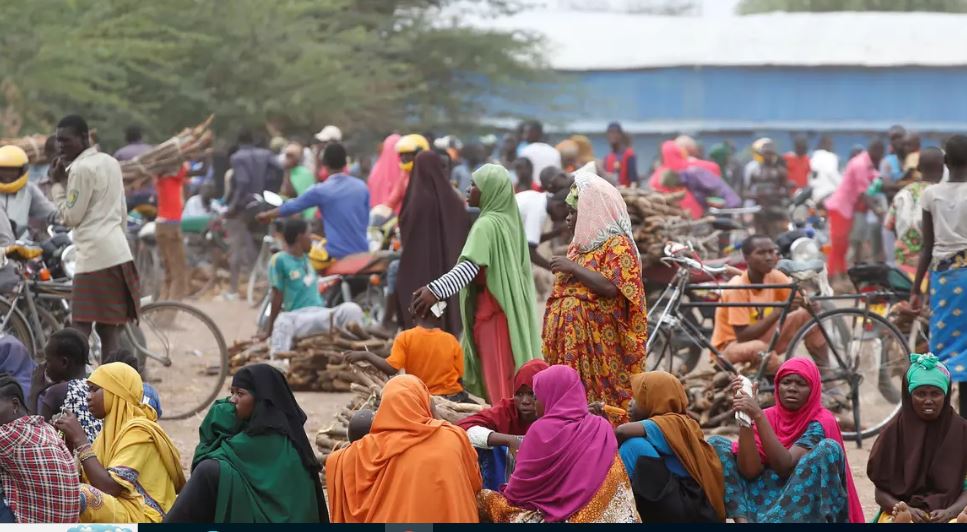
Kenya has made significant legal strides to recognise refugees as economic contributors, but turning policy into meaningful employment remains a challenge, a new study finds.
The Refugee Act of 2021 explicitly grants recognised refugees the right to engage in employment, enterprise, and professional practice where their qualifications are recognised in Kenya.
The law, strengthened by the 2024 Refugee Regulations, offers a strong foundation for refugee inclusion in the labour market.
However, legal recognition alone has not translated into widespread formal employment. Refugees in Kenya, which hosts one of Africa’s largest refugee populations, face bureaucratic and practical hurdles that limit their economic participation.
A Kenya-specific study, part of a 15-country series conducted by the Refugee-Led Research Hub at the University of Oxford and commissioned by the Amahoro Coalition, highlights both the challenges and opportunities for refugee employment.
A major obstacle is the Class M work permit, required under the Kenya Citizenship and Immigration Act for refugees seeking formal employment. Unlike other foreign nationals, refugees must navigate a dual process involving both the Directorate of Immigration Services and the Department of Refugee Services.
The permit process is complex, requires employer recommendations justifying why the position cannot be filled by a Kenyan, and is valid for only two years, creating uncertainty for both employers and refugees.
Restrictions on freedom of movement further exacerbate the problem. Refugees living in camps face barriers to relocating to urban centres, where most formal jobs are available, and even urban-based refugees encounter difficulty navigating the permit process.
Indirect costs associated with permit applications, coupled with limited publicly available data on successful applications, make planning and advocacy challenging.
Despite these obstacles, the private sector has shown some openness. Many businesses are willing to engage refugees as vendors, suppliers, or business clients, and entrepreneurship initiatives have gained momentum. Yet, few programmes focus on facilitating formal wage employment.
“Kenya’s legal framework recognises refugees as contributors to the economy. The next step is ensuring that the private sector fully embraces that vision. Refugees bring skills, resilience and entrepreneurial drive. With clearer processes and stronger partnerships, companies can help turn policy commitments into tangible economic impact,” said Mercy Kusiwaa Frimpong, Strategy Custodian for Communications at Amahoro Coalition.
Experts say unlocking refugee talent at scale will require coordinated action. Simplifying Class M permit requirements, timely issuance of refugee identity cards, better inter-agency coordination, and formalisation of employment pathways through humanitarian organisations could reduce uncertainty for employers. Investment in digital skills and technology access could also open new opportunities in remote and online work.
Kenya has laid the legal groundwork for refugee inclusion. The next phase depends on sustained private sector leadership to ensure that refugees are not just recognised in law but are fully integrated into the country’s economic future.