Flight operations at Jomo Kenyatta International Airport (JKIA) continued to experience disruptions for the second consecutive day on Tuesday as Kenya Civil Aviation Authority (KCAA) workers sustained their industrial action, resulting in cancellations, delays and diversions that reportedly left some passengers stranded.
Although a limited number of aircraft were cleared to land and depart in the early hours of the morning, several flights were reported to have been delayed, cancelled or redirected to alternative destinations, including Wilson Airport, according to airport sources and flight tracking data.
Data from flight tracking platform Flightradar24 indicated that multiple aircraft were holding within the Nairobi airspace or adjusting schedules as airport operations appeared to slow amid limited staffing.
Egypt Air was among the carriers whose aircraft were observed diverting to Wilson Airport.
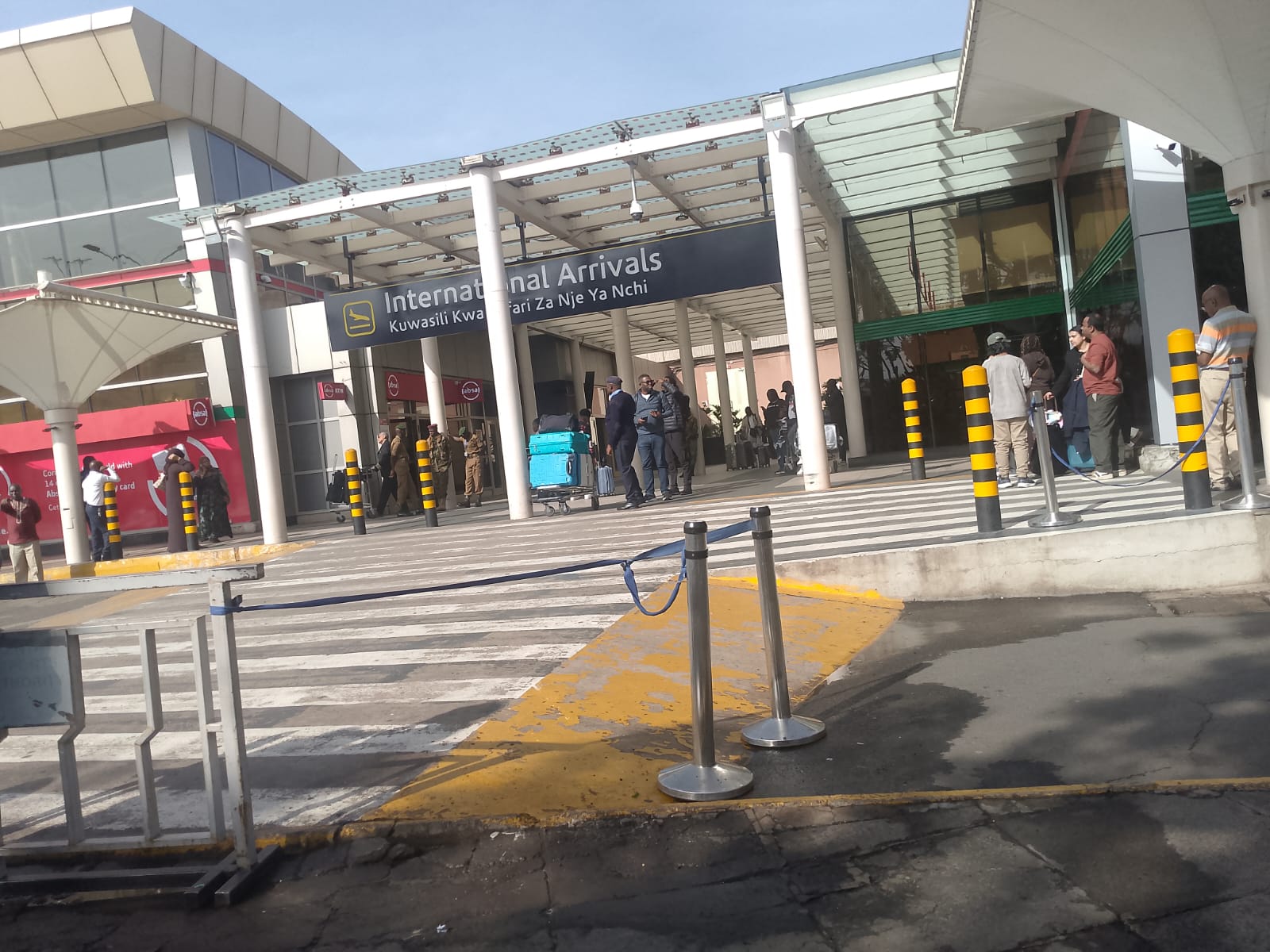
At the usually busy facility, activity at the departures and arrivals areas appeared subdued.
Sections of the normally crowded terminals were largely quiet, with relatively few passengers moving through the airport.
Some travellers were seen seated on their luggage while awaiting updates, while others paced within the terminals or sought to rebook journeys.
Several check-in counters remained closed, with only a small number of airline desks operating intermittently.
“I have been here since last night, and no one is giving clear information,” said a passenger scheduled to travel to Abu Dhabi on Etihad Airways.
A number of passengers were observed checking in individually as limited operations resumed in phases. Some arriving travellers emerged hours later than expected following delays affecting inbound flights.
Among those seen at the arrivals area was Faith Kpyegon, who arrived later than scheduled amid delays affecting flights.
Security presence at the airport appeared heightened, with General Service Unit officers deployed at various points across the facility.
The officers remained on standby as part of precautionary measures aimed at maintaining order and safeguarding critical installations.
Airport officials indicated that during operational disruptions, priority is typically given to aircraft already airborne and seeking to land to minimise potential safety risks and airspace congestion.
“Safety of aircraft and passengers remains the top priority. When operations are limited, landing flights are handled first before departures are gradually scheduled,” said an official who declined to be named.
The industrial action has affected both domestic and international operations.
The action was called by the Kenya Aviation Workers Union (KAWU), which cited a range of grievances involving KCAA management.
In a statement, KAWU Secretary General Moss Ndiema said the strike followed what the union described as the authority’s failure to negotiate and conclude a Collective Bargaining Agreement since 2015.
“The last CBA lapsed in 2015, and despite persistent pleas from the union, management has refused to negotiate subsequent agreements,” Ndiema said.
“Terms and conditions of service for unionisable employees have remained stagnant for over ten years.”
The union further claimed that the authority had declined to deduct and remit union dues for employees in Grades 4 and 5 who had expressed willingness to join the union.
“Management has violated the constitutional right of employees to join a union as provided under Article 41 of the Constitution,” Ndiema said.
KAWU also raised concerns regarding what it termed prolonged reliance on contract and temporary employment arrangements for positions it described as permanent in nature.
“Workers are engaged on contracts for years, terminated and later re-engaged on inferior terms compared to their colleagues on permanent terms,” Ndiema stated.
“This denies employees the right to decent work and equal pay for work of equal value.”
Additional issues cited by the union include the development and implementation of new human resource instruments without consultation, job downgrading said to have resulted in pay reductions, and practices the union characterised as unfavourable to its members.
KAWU also alleged non-compliance with a court order issued by the Employment and Labour Relations Court directing the authority to renew the contract of a flight operations inspector.
“We demand full compliance with the court order, including renewal of the contract and payment of all dues as ordered,” Ndiema said.
The disruptions have drawn concern from aviation industry players, who caution that prolonged operational challenges could have wider implications for Kenya’s aviation sector.
JKIA serves as a major transit hub for passengers and cargo across East and Central Africa, handling thousands of travellers daily.
Tour operators and logistics firms indicated that the uncertainty was already affecting bookings and supply chains.
“Every hour of disruption affects businesses, especially cargo operations,” said a logistics agent at the airport.
“Perishable goods, medical supplies and exports depend on reliable air transport.”
Airlines have advised passengers to verify flight status before travelling to the airport and to contact customer service desks for rebooking options.
Kenya Airways said it was working to manage the situation and minimise inconvenience to customers.
“We regret the disruption caused to our guests and are closely monitoring the situation while providing updates through our official communication channels,” the airline said in a customer advisory.