
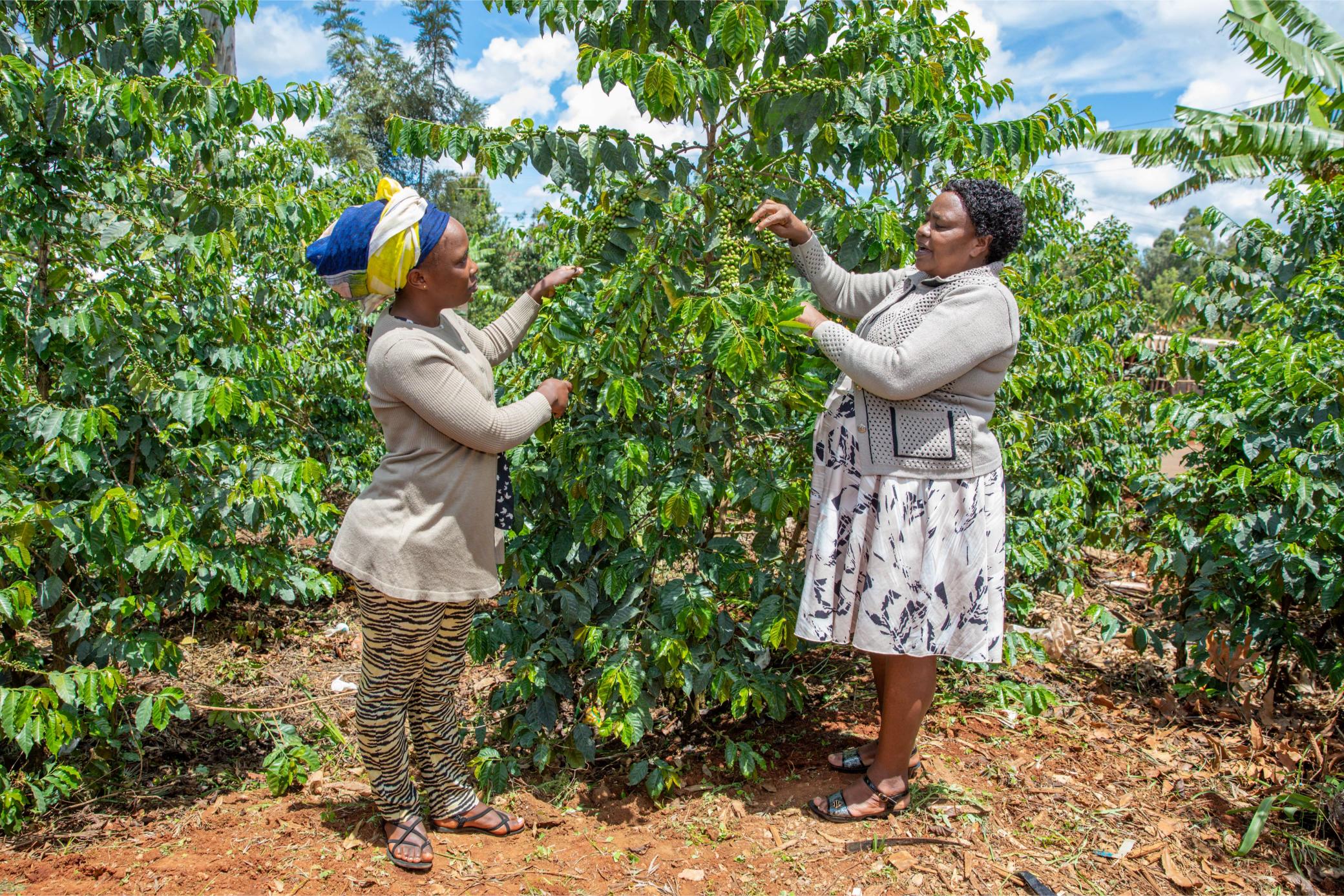
Behind the aroma of Kenya’s world-renowned coffee lies a troubling reality: women casual labourers are struggling under mounting economic and social pressures, a new assessment reveals.
The sector-wide impact assessment was released on Wednesday by the Kenya National Chamber of Commerce and Industry.
The survey was conducted between September 2024 and April 2025 in partnership with the Danish Institute for Human Rights and the Kenya National Commission on Human Rights. It showed women on coffee farms are routinely paid below the minimum wage, denied protective equipment and locked out of decision-making.
Erick Rutto, the president of the national chamber of commerce, said the assessment will help improve the working environment in the coffee value chain.
“As we have for long predicted, the findings confirm the presence of multiple human rights impacts across all levels of coffee production,” he said.
“At the smallholder level, casual labour arrangements predominantly involving women often exposed workers to unsafe conditions, including inadequate protective equipment during pesticide application and wages that sometimes fell below statutory minimums.”
The research spanned six key coffee-producing counties of Kirinyaga, Nyeri, Kiambu, Embu, Kericho and Nandi. It found casual workers, predominantly women, reported earning between Sh200 and Sh250 per day in western counties such as Nandi and Kericho.
In Central, rates ranged slightly higher at Sh300 to Sh475. Both fall significantly short of the legally prescribed minimum agricultural wage of between Sh412 and Sh731, depending on location.
“Many women interviewed highlighted the difficulties they faced in receiving compensation for their labour on family farms. Some shared that women risked facing domestic violence if they were pushing the topic of compensation,” the report said.
Beyond the farm gate, the report highlights a significant disconnect between global sustainability certifications and the actual conditions on the ground.
While international buyers rely on schemes like Fairtrade and Rainforest Alliance to demonstrateethical sourcing and manage human rights risks, these audits rarely reach the smallholder farms where the most vulnerable workers.
Dirk Hoffmann, chief adviser at the Danish Institute for Human Rights, stated, “The assessment clearly showed that as global buyers of coffee conduct their own human rights due diligence, certification schemes cannot replace direct engagement with producers on the ground to manage sustainability risks."
Governance failures compound the economic uncertainty.
“According to most respondents in this assessment, cooperatives were often poorly governed, with limited transparency and accountability mechanisms," the report states.
"Many cooperatives were reported to be dominated by male leadership, with women and youth having minimal representation in decision-making roles.”
Farmers described opaque payment systems, unexplained deductions and leaders who vanish after payouts.
"...once coffee proceeds were paid out, it was not uncommon that men disappeared for weeks at a time, spending the coffee proceeds on alcohol or extramarital affairs and leaving women with the sole responsibility of caring for children and managing household needs.”
The timing of the report is critical as Kenya navigates sweeping sector reforms and faces stricter international regulations, such as the European Union Deforestation Regulation.
“The assessment underscores the importance of strengthening dialogue and engagement platforms between coffee producers, buyers and regulators to ensure that sustainability and human rights considerations remain central to ongoing reforms,” Mutai said.







