A new era has dawned for Kenya's workers, who will now retire with millions of shillings for decent living in their sunset years.
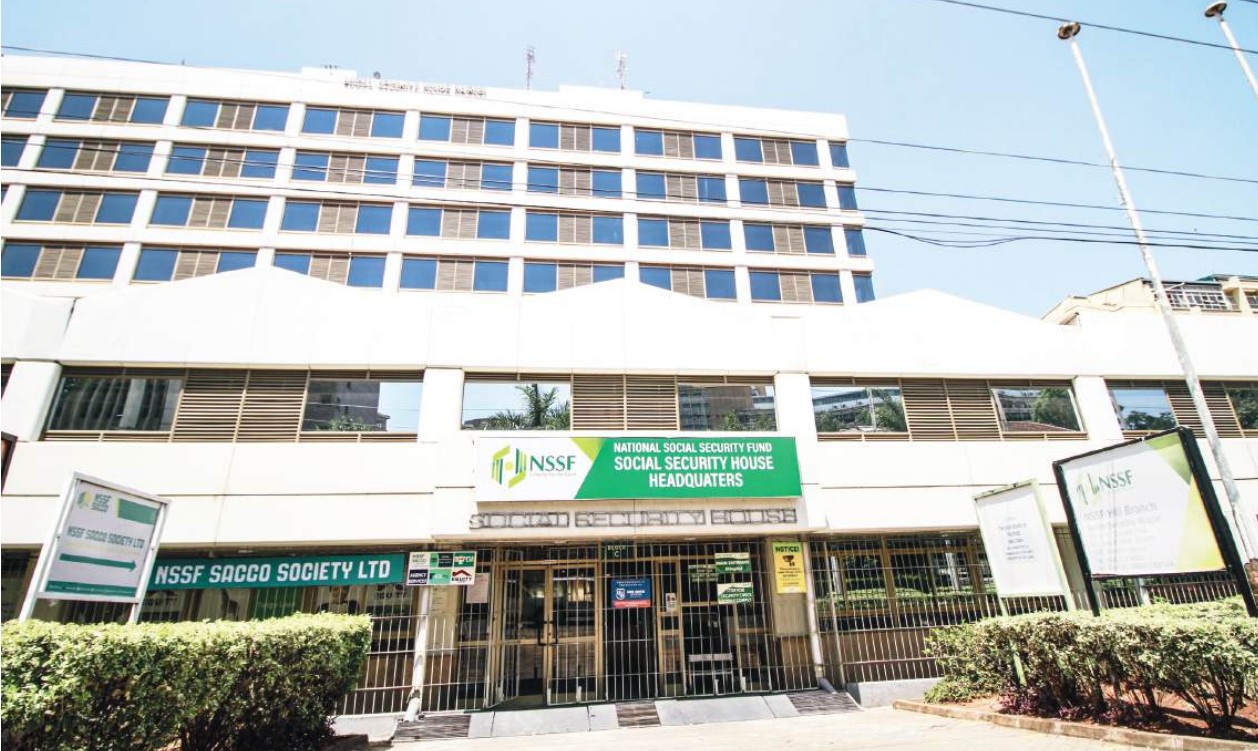
The National Social Security Fund has unveiled higher pension savings after rolling out a new Tier II contribution band and delivering strong investment returns.
Under the phased implementation of the NSSF Act of 2013, contribution bands have been expanded each year since 2023.
From February 2026, the upper earnings limit — the base for Tier II contributions — rose from Sh72,000 to Sh108,000 per month, while the lower earnings limit of Tier I increased to Sh9,000.
At the statutory contribution rate of six per cent from both employee and employer, this results in a maximum combined monthly pension contribution of Sh12,960 per worker — up sharply from prior levels.
Financial planners say the widened Tier II band means formal sector workers — particularly those earning above middle-income thresholds — will see their pension pots grow far more rapidly over time.
Where previously many contributors were capped in Tier II at far lower limits, the expanded limit means more of their earnings are now channelled into long-term savings.
Together with matched employer contributions, this effectively doubles the impact of each shilling saved.
It means that a person earning upwards of Sh108,000 will save at least Sh155,520 every year, which translates to about Sh8 million exclusive of interest if he or she works for 50 years.
Before the phased reforms began, NSSF contributions were modest in both scale and growth. Under the old framework that was in force until 2022, monthly deductions rarely exceeded a few hundred shillings, and total payouts at retirement seldom approached levels that could meaningfully support living costs.
For instance, when Jared Chogo retired to his Vihiga village home after working as a gardener for an Indian family in Muthaiga for 25 years in 2020, he pocketed a paltry Sh50,000 from NSSF, a sum so little it could not buy him two cows.
“I was deducted Sh200 every month for 25 years. I was shocked to find out that my total take-home could not buy me a quarter of an acre of land. Claiming took me close to three months due to bureaucratic paperwork at the time,’’ Chogo told the Star.
“I now depend on my children for survival. I feel really bad but I have no other option.”
As debate rages over higher deductions under Kenya’s restructured pension system, pension experts say the real story of the new NSSF lies not in Tier I, but in Tier II — a shift that could quietly transform how millions save for retirement.
Fred Waswa, founder and group CEO of Octagon Africa Financial Services, says that for a long time, the statutory scheme was weakly enforced, with contributions as low as Sh200 a month, the kind that cannot support retirement in dignity.
“The restructuring of NSSF into Tier I and Tier II, with contributions linked to salaries, is a game-changer. Enforcement has also improved dramatically. Inspectors now actively ensure compliance even in small businesses. This will significantly improve both coverage and benefit adequacy,’’ Waswa said.
He explained that under the new framework, employees and employers each contribute six per cent of pensionable earnings. But the structure is split into two tiers with very different implications for workers.
Tier I is calculated as six per cent of the minimum wage — a relatively small amount that continues to be remitted to the National Social Security Fund. Economists and pension practitioners note that while Tier I contributions have increased from the old flat-rate Sh200, the actual sums remain modest.
“The bigger shift is Tier II, which is also set at six per cent but applies to an employee’s gross salary, subject to an upper earnings limit currently capped at Sh108,000. For workers earning below that threshold, Tier II is calculated on their full gross pay, including allowances.”
The law allows employers to opt out of NSSF for Tier II contributions and instead channel the cash into private pension schemes.
“That is the most important reform that people are not talking about enough. Tier II money does not have to go to NSSF. It can be invested in a private pension scheme where governance, reporting, and access to benefits are often clearer,” Waswa said.
The change has been hailed by private pension managers as transformative, saying it has opened the door for thousands of employers, especially small and medium-sized enterprises, to offer structured retirement benefits for the first time.
A fortnight ago, a report by Zamara, a private fund manager, indicated a growing interest from employers seeking to redirect Tier II contributions into umbrella pension schemes.
“In the private sector, contributions are ring-fenced, invested transparently and paid out within set timelines. Employees are far more confident they will actually receive their money when they retire,’’ Keziah Kilaho, a seasoned fund manager, told the Star.
Unlike NSSF, where pension payments can only be made out after an employee retires, private pension schemes pay out benefits at different stages even before retirement, subject to scheme rules.
Pension experts advise employees to engage their HR departments to find out whether their employer has contracted out Tier II contributions. Contracting out must be done at the employer level and applies to the entire workforce, not individuals.
“The good news is that Tier II money is not lost. Whether through NSSF or the private sector, the savings are real and they add up,” Kilaho told the Star.
Investment expert Renson Muthoka says that reforms at NSSF will boost saving culture in the country, which trails regional peers.
“For Tier II contributions, depositors are earning a minimum of eight per cent from private funds. Last week, NSSF announced a 17 per cent interest, the highest returns on any kind of investment in the country today. This is likely to push the country’s saving culture to an average of 16 to 17, up from the current 14 per cent (the percentage of the national population that have pension savings) in the next three years,’’ he said.
In Uganda, Rwanda and Tanzania, 20 per cent of the populations have pension accounts.
Reacting to the 17 per cent interest announced by NSSF in the first week of February, Francis Macharia, an investment adviser at Fasihi Capital, said that the rate stands out in an era of modest local savings returns.
“While many commercial bank products and money market investments yield mid-single-digit interest, a consistent double-digit return at scale adds significant value over decades, particularly when layered on Tier II’s widened base.”
Apart from impressive returns, NSSF has made a number of reforms that make the fund more attractive. For instance, it has cut the claims clearing period to at most 10 days and are currently banking on technology to cut the payout to 24 hours.
The fund’s managing trustee and CEO David Koross told an editor’s roundtable a fortnight ago that NSSF is adopting artificial intelligence to automate most of its services to ensure swift and efficient services.
He revealed that, like other pension funds managed under the Retirement Benefits Authority, NSSF allows depositers to secure loans in financial institutions.
The giant pension fund is pushing for changes to the law to allow contributors partial access to their accumulatedfunds before hitting age 50 — potentially aligning NSSF treatment with other pension schemes where early access is possible under certain conditions.
Currently, the law only permits access at retirement age or through early retirement after age 50.
Koross explains this would provide a lifeline to workers facing unemployment or redundancy, who might otherwise rely on costly borrowing.
The regulator has, however, countered with proposals to limit early withdrawals, in some policy drafts suggesting that only a fraction of accrued benefits (for example, up to 30 per cent) be accessible before 50, to preserve long-term pension adequacy.
The state pension fund currently serves 3.6 million active members and more than 77,000 employers, with growing participation from public servants and informal sector workers through initiatives such as Haba Haba.
Last year, member contributions rose by 35 per cent to Sh84 billion, while total assets grew to approximately Sh575 billion, representing growth of over 43 per cent.
Investment income more than doubled, delivering a gross return of about 22 per cent, with operating costs maintained at around 1.47 per cent, within the statutory limit.
Net investment income — a key driver of returns for savers — rose sharply to approximately Sh105.3 billion, up more than 150 per cent from the preceding year.
Management attributed these gains not only to enhanced contributions but also to valuation gains on bonds and equities, as global and local markets rallied over the period.
The fund processed 128,836 benefit claims and paid out Sh8.74 billion to 91,851 retired members, with an average turnaround time of 10 working days.
This accounts for 71.2 per cent of all claims during the financial year, illustrating a fairly good balance between claims made and disbursements made.
Despite improvements at the fund, NSSF continues to struggle with public trust. Long queues and bureaucratic delays have left contributors sceptical about sending larger sums to the fund.
This trust deficit, analysts say, is one of the key reasons the Tier II contracting-out option was built into the law — to protect workers while expanding pension coverage.
Even so, the NSSF CEO reassures that the fund is suffering from legacy issues and that it is working tirelessly to turn a new page.
“This is a whole new version of the fund where efficiency meets sound returns,” Koross told editors.
As Kenya grapples with rising living costs and an ageing population, analysts say the success of the new NSSF will ultimately depend on transparency, trust and public awareness — especially of the options workers now have.
Pension experts insist this is one reform story Kenyans need to fully understand — because it shapes not just today’s payslip, but tomorrow’s dignity.