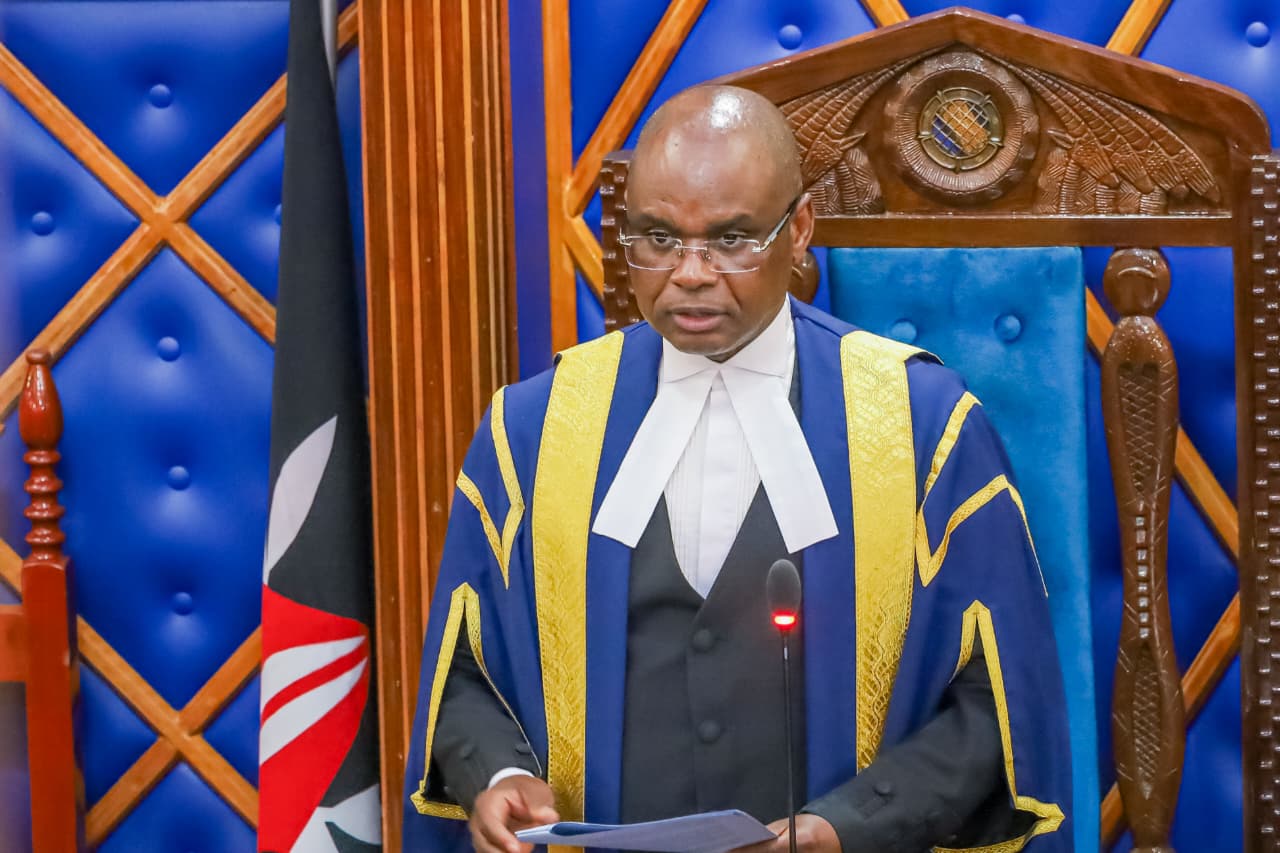
Senate Speaker Amason Kingi has defended the House’s oversight mandate while inviting governors for a high-level meeting to address tensions over allegations of harassment and intimidation.
In a communication to senators, Kingi described the governors’ decision to boycott the County Public Accounts Committee (CPAC) and limit appearances before the County Public Investments and Special Funds Committee as unconstitutional.
“No organ, authority or person, not least the Senate, has the power to suspend, compromise, vary or waive the Legislature’s mandate,” Kingi said, warning that any governor who fails to honour a lawful summons risks facing “the full force of the law.”
He cited Article 125 of the Constitution, which empowers Parliament to compel attendance, demand documents, and examine witnesses under oath.
“The constitutional oversight mandate is exercised by the Senate as often as whenever the Senate, in its judgment, considers appropriate,” Kingi said.
“Any purported restriction or limitation of this mandate is unconstitutional.”
In a conciliatory gesture, the Speaker confirmed that he has invited the leadership of the Council of Governors (CoG) for a structured engagement on February 26 at Parliament Buildings.
“The request by the Council of Governors for an engagement with the leadership of the Senate is consistent with the constitutional requirements for consultation and cooperation between the two levels of government and is welcome,” he said.
The meeting is expected to bring together Senate leaders and governors to develop an agreed framework on how county chiefs will appear before oversight committees.
The standoff began after CoG accused some senators of using oversight sessions to intimidate governors.
In a press statement on February 9, the council called for the reconstitution of CPAC, claiming senators had turned the committee into a platform for political witch-hunts.
The governors announced they would suspend appearances before CPAC until their concerns were addressed and limit appearances before the investments committee to once per audit cycle.
They also requested the removal of four senators from the committees as a precondition for restoring confidence in the oversight process.
Kingi rejected the demands, noting that the power to appoint or remove committee members lies exclusively with the Senate under Article 124 of the Constitution.
“The Council of Governors’ demand that certain senators be removed from the service of any committee is without constitutional anchor,” he said.
He also highlighted strict constitutional timelines for audit scrutiny, noting that Parliament must consider reports from the Auditor-General within three months of receipt and by March 31 each year.
Referring to a High Court ruling, Kingi said the deadlines “severely constrain the programme of the Senate watchdog committees.”
Any boycott, he added, could derail accountability and undermine the prudent use of public resources. “Compliance with this constitutional timeline is not optional and any actions that impede the audit process undermine accountability,” he told the House.
While maintaining a firm stance on the law, Kingi criticised what he described as “public mudslinging and unsubstantiated allegations” by the governors, urging them to use formal institutional channels to raise complaints.
The standoff has highlighted deep mistrust between the two levels of government, with governors saying repeated summons and hostile hearings are affecting service delivery.
Analysts say the planned talks could redefine the relationship between the Senate and county governments, particularly regarding oversight procedures.
For now, Kingi emphasised that the law must be followed.
“In the meantime, any governor invited or summoned to appear before any committee of the Senate must do so, failing which the consequences provided for in the Constitution and the law shall follow,” he warned.
The outcome of the February 26 meeting is expected to determine whether the dispute is resolved through dialogue or escalates into a constitutional confrontation over Senate oversight and county autonomy.