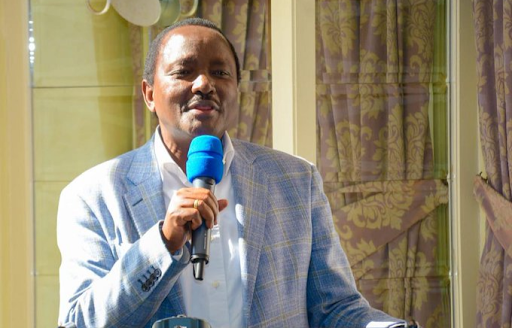
ODM’s decision to initiate a formal exit from the Azimio Coalition Party could significantly spell doom for Wiper leader Kalonzo Musyoka and trigger major changes in Parliament.
ODM has announced plans to initiate a formal withdrawal from Azimio, citing sustained breaches of the coalition agreement and lack of consultation in recent leadership changes.
The move comes at a time when the orange party is exploring a pre-election arrangement with President William Ruto’s UDA under a broad-based political framework.
Should ODM complete its exit, the implications for Azimio — and particularly for Kalonzo’s Wiper party — could be far-reaching.
ODM currently forms the backbone of the Azimio coalition in both Houses of Parliament.
In the National Assembly, Azimio commands 135 members, 86 of whom belong to ODM. In the Senate, ODM has 19 senators out of Azimio’s 29.
The coalition has already suffered attrition.
The United Democratic Movement (UDM), with two senators, shifted allegiance to Kenya Kwanza shortly after the 2022 General Election.
Jubilee, which has four senators, has also been leaning towards President Ruto’s camp.
Under parliamentary rules, the Minority side in Parliament is determined by the second-largest party or coalition.
ODM’s numerical dominance has been central to Azimio’s claim to Minority status and its entitlement to key leadership positions.
If ODM walks away, Azimio risks losing its numerical edge, potentially triggering a reconfiguration of Minority leadership.
This scenario places Kalonzo’s allies — who currently occupy influential parliamentary slots — in a precarious position.
In the Senate, Kitui Senator Enoch Wambua of Wiper serves as Deputy Minority Leader. In the National Assembly, Kathiani MP Robert Mbui, also of Wiper, holds the same position.
With ODM commanding the majority of opposition lawmakers, it would be within its rights to push for a reshuffle of leadership slots should it chart a new political path.
Such a move could see Wiper legislators de-whipped from their positions, effectively diminishing Kalonzo’s leverage in Parliament.
Senator Wambua struck a measured tone in response to ODM’s announcement, saying Wiper respects ODM’s decision. He however insisted that the coalition does not collapse simply because one party exits.
“If ODM has chosen to exit the coalition, we must respect their choice. The coalition does not collapse because of the exit of a party,” Wambua said.
He maintained that Wiper holds its parliamentary leadership positions “by right” and expressed reluctance to engage in what he termed a premature tussle over posts.
“Those who still subscribe to the ideals of Azimio-OKA will push those ideals for the benefit of all Kenyans to the extent that we can,” he added.
Despite the confidence, the arithmetic suggests Wiper may struggle to sustain its influence without ODM’s numbers.
ODM’s National Executive Committee (NEC) resolved to begin the formal withdrawal process, accusing coalition partners of effecting leadership changes without its consent.
“In light of these sustained breaches, and in order to safeguard the integrity, autonomy and strategic direction of ODM, the NEC resolved to initiate the formal process of withdrawal from the Azimio la Umoja in accordance with the applicable legal and constitutional provisions,” the party said in a statement.
ODM leader Oburu Odinga was blunt in his assessment, declaring that Azimio is effectively defunct without ODM.
“This thing called Azimio… we are Azimio. The strongest party of Azimio is ODM. There’s no one who can decide without consulting ODM,” he said.
He dismissed recent changes made after a meeting chaired by former President Uhuru Kenyatta, which saw Kalonzo Musyoka named coalition leader, replacing Raila Odinga.
Suba South MP Caroli Omondi was also named secretary-general, replacing Junet Mohamed, pending ratification by the Registrar of Political Parties.
ODM rejected the changes, arguing they were undertaken in disregard of the coalition’s Deed of Agreement.
“Azimio was dead when ODM left it. We left it a long time ago, and it’s only a formality that we have not performed — and we will do it very soon,” Oburu said.
ODM’s exit would leave Kalonzo at a crossroads — either consolidate a slimmer opposition outfit or seek new alliances to maintain relevance.
Without ODM’s numbers, Azimio risks losing not only parliamentary clout but also its national political weight.
As ODM signals openness to negotiations with UDA, the opposition coalition that once mounted a formidable challenge in 2022 now faces an uncertain future — with Kalonzo potentially emerging as its biggest casualty.