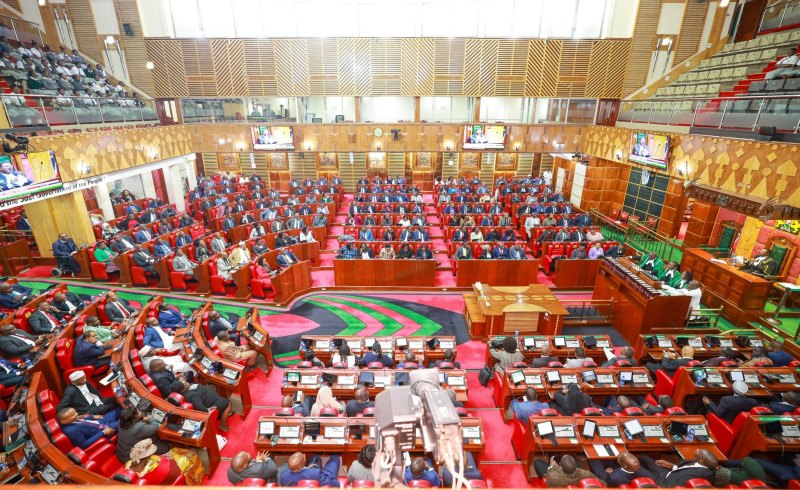
Governors who ignore Senate summons could soon be arrested and forcibly presented before the House to answer audit queries, following a declaration by the Inspector General of Police (IGP).
The IGP said the National Police Service (NPS) is prepared to apprehend county chiefs who fail to honour parliamentary invitations.
The remarks come amid rising tensions between the Senate and the Council of Governors (CoG).
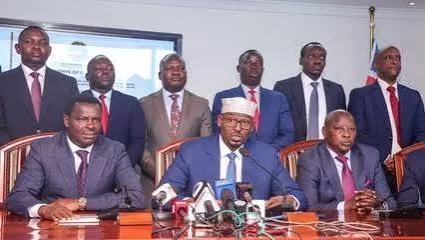
Appearing before the Senate County Public Accounts Committee (CPAC), the IGP said the police are ready to enforce lawful orders issued by Parliament, provided the communication is clear and procedurally sound.
“There is no one who is above the law. The National Police Service will continue to operate within the law,” the IGP said.
“We are ready to work together with this committee and Parliament for the good of the people,” the IGP added.
The IGP had been invited to explain why police had not acted on earlier requests to arrest governors who repeatedly ignored Senate summonses.
The committee disclosed that it had written to the IGP.
“We had written to you. I don’t know the progress you have made on that?” the committee chair asked.
In response, the NPS Legal Director said police had received the request and were willing to execute it but required specific timelines.
“Yes, we did receive a request to arrest and present that witness to this committee. We had requested more time, but if you give us a date on when we need to present the witness, we will gladly do that,” the officer said.
He added that while arrested persons are ordinarily presented in court within 24 hours, the matter required coordination between Parliament and police to determine timelines for appearance before the committee.
The committee sought assurance that the police would act once formally notified. The legal director confirmed their readiness.
The Senate’s power to summon and enforce attendance is grounded in Article 125 of the Constitution, which grants both Houses of Parliament and their committees authority to summon any person to appear, give evidence, or provide information.
Section 18 of the Parliamentary Powers and Privileges Act also empowers committees to summon individuals and allows Parliament or its committees to order the arrest of anyone who fails to honour a summons.
Recent procedural clarifications indicate that if the IG fails to act within seven days of such an order, the arrest may be effected by a parliamentary officer.
The standoff comes as governors have threatened to boycott CPAC, accusing some senators of harassment, intimidation, and political witch-hunts.
The governors demanded intervention by the Speaker and said they would resume appearances only after their grievances were addressed.
Meanwhile, some governors began acting on their threat.
The dispute traces back to a governors’ meeting on Monday, where they resolved to suspend appearances before CPAC and limit attendance before the County Public Investments and Special Funds Committee (CPIC) to once per audit cycle, citing persistent harassment by certain senators.
Senators have denied the accusations, saying accountability for public funds is non-negotiable and constitutionally mandated.
The Senate Speaker has dismissed attempts to suspend appearances before Senate audit committees, warning that undermining scrutiny of county spending threatens both accountability and the spirit of devolution.
In a statement dated February 10, the Speaker said he had taken note “with grave concern” of allegations of political witch-hunts, harassment, extortion and intimidation raised by governors.
“The Senate wishes to reiterate that its oversight role over county governments is firmly anchored in the Constitution,” he said, citing Article 96, which mandates the House to oversee national revenue allocated to counties.