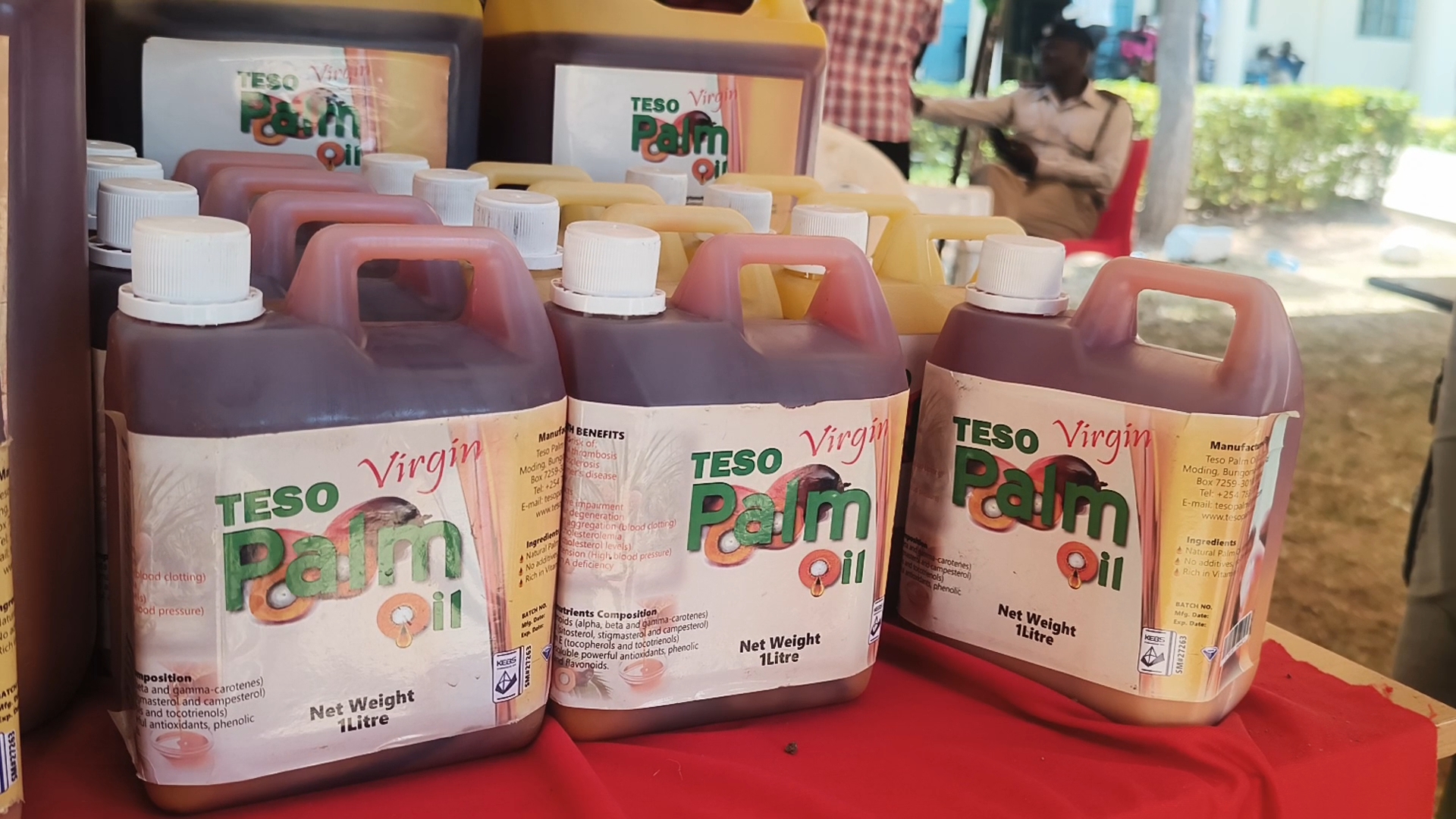
A farmer in Teso North has appealed to the government for support to expand palm oil processing in order to create a reliable market for local growers.
Peter Rotich said he owns a small processing plant in Moding that currently produces about 300 litres of palm oil per week.
He noted that the output is too low to meet demand and called for support to scale up production to one tonne daily.
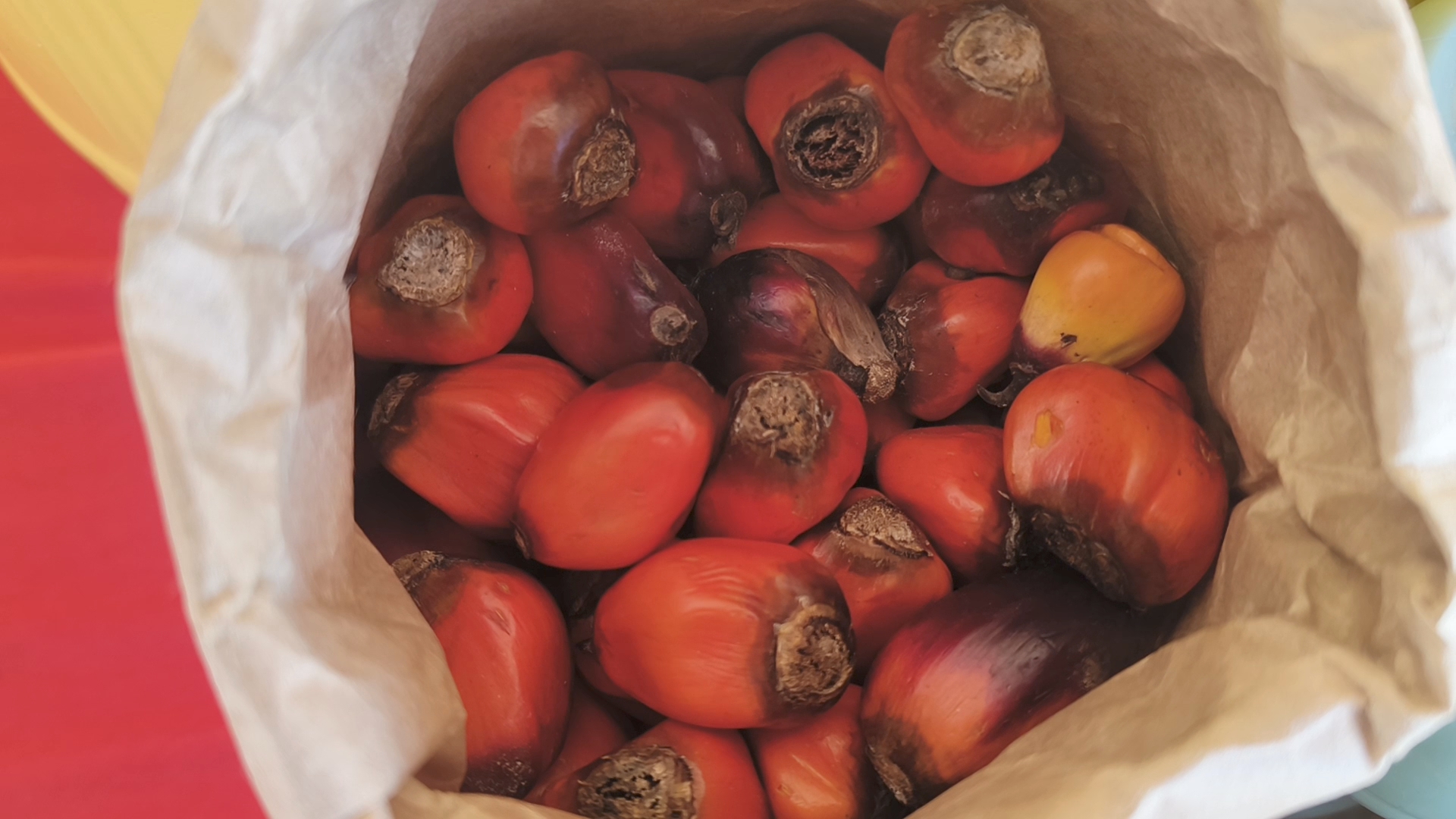 Palm fruits are used to produce edible cooking oil.
Rotich said he established the plant in 2014 after realising that many farmers had mature palm trees but lacked a ready market for their produce.
Since then, several farmers have been supplying palm fruits to the facility, where the fruits are processed into edible and cosmetic oils.
“Once we expand production, we shall create employment opportunities for many youths in production, packaging, transportation, sales and marketing. We also plan to source palm fruits from neighbouring counties such as Vihiga, Bungoma and Kakamega,” he said.
Another farmer from Amagoro, John Anyare Mukule, cited limited access to seedlings as a major challenge and urged the government to support small-scale growers.
He said increased support would enable farmers to benefit from palm farming, which produces cosmetic oil, edible oil and animal feed.
Mukule said he has more than 2,000 palm trees on his farm.
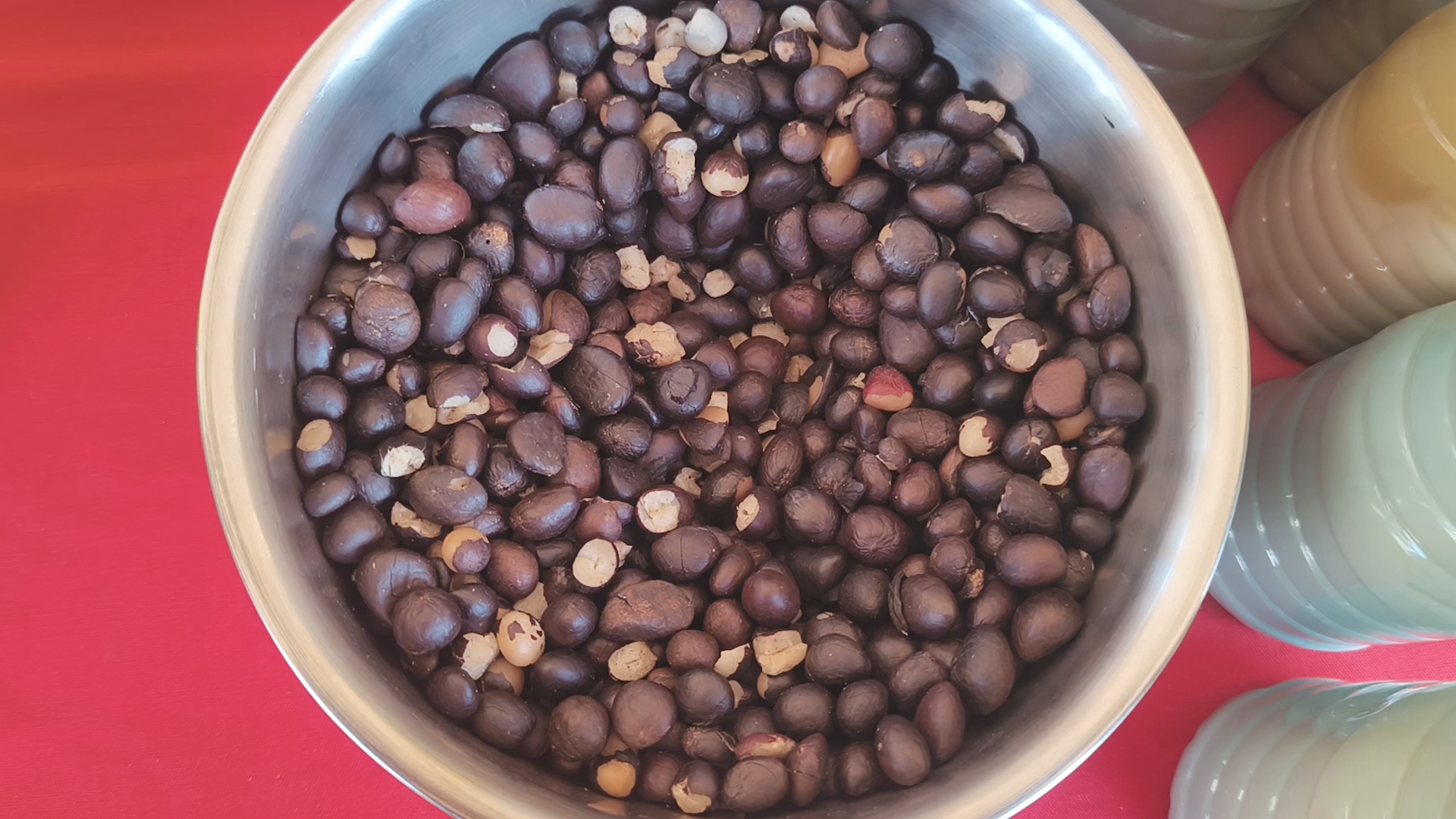 Palm kernels are used to produce detergents such as soap and cosmetics like lotions and creams.
Teso North MP Oku Kaunya has also encouraged farmers to adopt palm cultivation and value addition.
The MP called on the government to fund the expansion of the processing plant, saying it would provide a stable market for farmers and create jobs for local youth.
He further urged support for local start-ups such as Mamlo Food, which produces peanut butter from locally grown groundnuts.
Kaunya made the remarks during the three-day Teso North Youth Empowerment Conference held at Chamasiri Technical and Vocational College.
He lamented the lack of a major cash crop in the constituency following the collapse of cotton farming and the closure of the Malakisi and Katakwa ginneries.
“This region lacks a cash crop. Cotton farming collapsed and the ginneries closed. I urge the government to help revive the crop, provide seedlings and reopen the ginneries,” he said.
He also asked the government to distribute coffee and Hass avocado seedlings to diversify farming and improve farmers’ incomes.