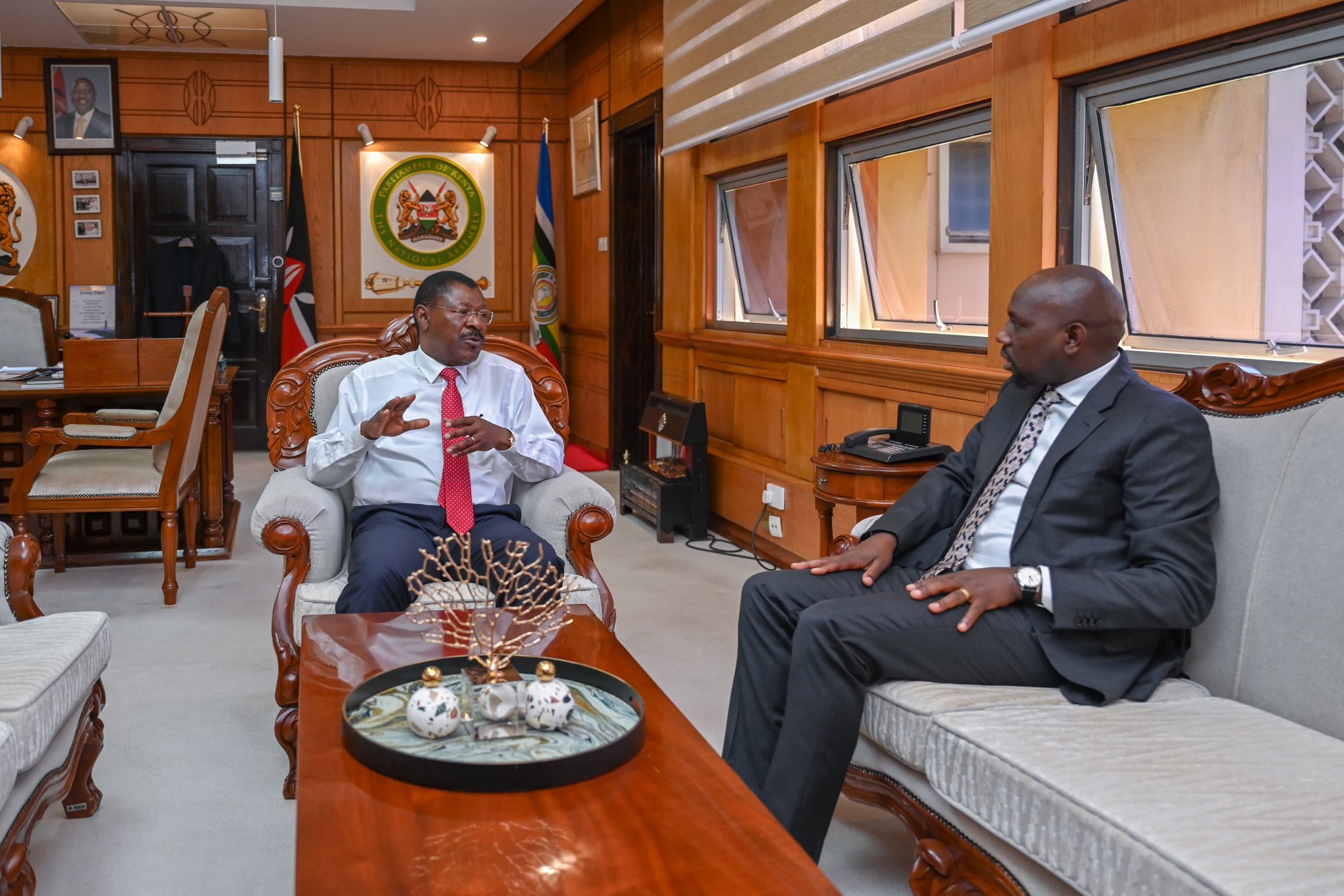
 National Assembly Speaker Moses Wetang’ula and Cabinet Secretary Kipchumba Murkomen /HANDOUT
Interior Cabinet Secretary Kipchumba Murkomen has raised concerns over heightened political activity across the country as Kenya heads towards next year's general election.
He says the early build-up is presenting emerging security risks.
Murkomen spoke when he appeared before the National Assembly during an informal meeting to brief lawmakers on the state of national security.
While assuring MPs that the country remains largely stable, he cautioned that the political atmosphere is becoming increasingly charged.
“The country is experiencing heightened political activity ahead of the 2027 general elections, carrying inherent security risks, particularly from criminal elements and hired goons whose tool of trade is violence against opponents,” he explained
Political activity across the country is steadily intensifying as Kenya edges closer to the 2027 General Elections, with leaders crisscrossing regions to consolidate support, forge new alliances and position themselves for upcoming contests.
Political rallies, grassroots mobilisation drives and realignments within major parties have become more frequent, signalling an early start to campaigns.
Murkomen said although political engagement is a fundamental aspect of democracy, certain trends were worrying from a security standpoint.
He said public pronouncements by some political actors continue to heighten the political temperature across the country, increasing the risk of confrontation among rival camps.
The CS warned that disinformation and misinformation campaigns propagated through digital platforms are also raising security concerns, particularly where they are used to incite communities or spread panic.
The heightened activity has also heightened tensions in some areas, with concerns emerging over inflammatory rhetoric, rivalry between opposing camps and the potential exploitation of the charged environment by criminal elements.
To address the evolving security landscape, Murkomen outlined a raft of measures the government has prioritised to enhance public safety and preparedness ahead of the polls.
Among them is recruitment and training of 10,000 police constables to be deployed across the country to provide additional manpower.
He said the move seeks to strengthen law enforcement capacity and ensuring adequate coverage, especially in hotspots.
The government is also revitalising community policing initiatives to strengthen collaboration between the public and law enforcement agencies.
Murkomen said closer ties between citizens and security officers are critical in detecting and preventing crime at an early stage.
In addition, the state is enhancing collaboration through regional and international cooperation forums such as Interpol, facilitating transnational coordination operations and exchange of best practices in tackling crime.
Murkomen said retraining and capacity building for police officers is ongoing to enhance professionalism, service delivery and responsiveness to emerging security challenges.
He added that there will be targeted deployment of specialised security officers based on threat mapping and risk assessment to improve responsiveness and deterrence.
Beyond election-related risks, the CS said the country continues to face threats from organised criminal gangs, mainly operating in urban areas and densely populated settlements.
He said the gangs are largely composed of unemployed youth who are attracted to criminal networks by the promise of financial gain from illicit activities.