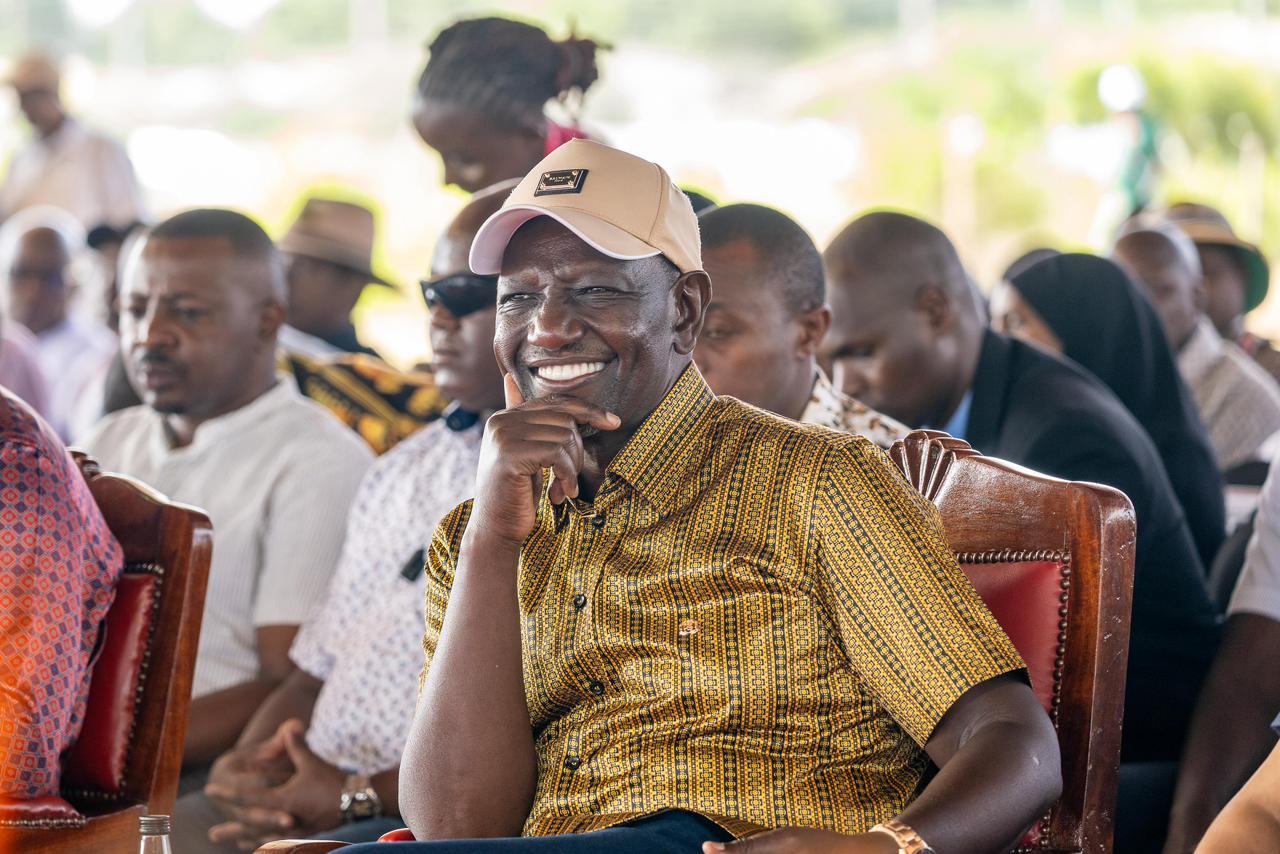
President William Ruto has taken a firm stand against historical injustices affecting Northern Kenya, insisting that all Kenyans, regardless of region, are entitled to equal rights and opportunities.
He said that the people of Northern Kenya would no longer be treated as second-class citizens.
“When we first launched this programme here, many young people did not even have identification cards,” Ruto said Wednesday during the disbursement of Sh63 million in NYOTA start-up capital to 2,520 youth from 30 ward at Garissa high school.
“The first attempt had a very poor response, and we had to bring in staff from the Registrar of Persons’ office. Today, more people here can access their birth certificates, IDs, and passports without being judged or asked unnecessary questions,” he stated.
The President highlighted that the children of Garissa and the wider Northern Kenya region now have the same rights as young people from any other part of the country.
“Citizenship is a right that cannot be contested. There are no second-class citizens in the Republic of Kenya,” he said.
Ruto acknowledged the historical marginalisation of the region, saying it had long been subjected to profiling and unfair treatment.
“For a very long time, the people of Northern Kenya were treated as second-class citizens. I promised to end that injustice, and today, the region is fully participating in national programmes such as NYOTA,” he stated.
The President also addressed critics who questioned why Northern Kenya was benefiting from the youth empowerment programme.
“They never complained when I visited Eldoret, Nakuru, Nyeri, or Machakos, but when I come to Northern Kenya, they make noise. Are the people of Northern Kenya not Kenyans?” Ruto asked, reaffirming that the politics of discrimination and tribalism have no place in Kenya.
The NYOTA programme, part of the government’s Bottom-Up Economic Transformation Agenda, aims to empower young people at the grassroots level and provide equal access to economic opportunities.
Each beneficiary received Sh25,000 in the first phase, with Sh22,000 credited to the Pochi la Biashara mobile wallet and Sh3,000 invested in a Haba na Haba Savings Account managed by the National Social Security Fund (NSSF) to encourage long-term savings and financial security.
In the second phase, each youth will receive an additional Sh25,000, bringing the total start-up capital per beneficiary to Sh50,000.
The programme is expected to boost youth entrepreneurship, financial inclusion, and job creation, ensuring that no young Kenyan is left behind.