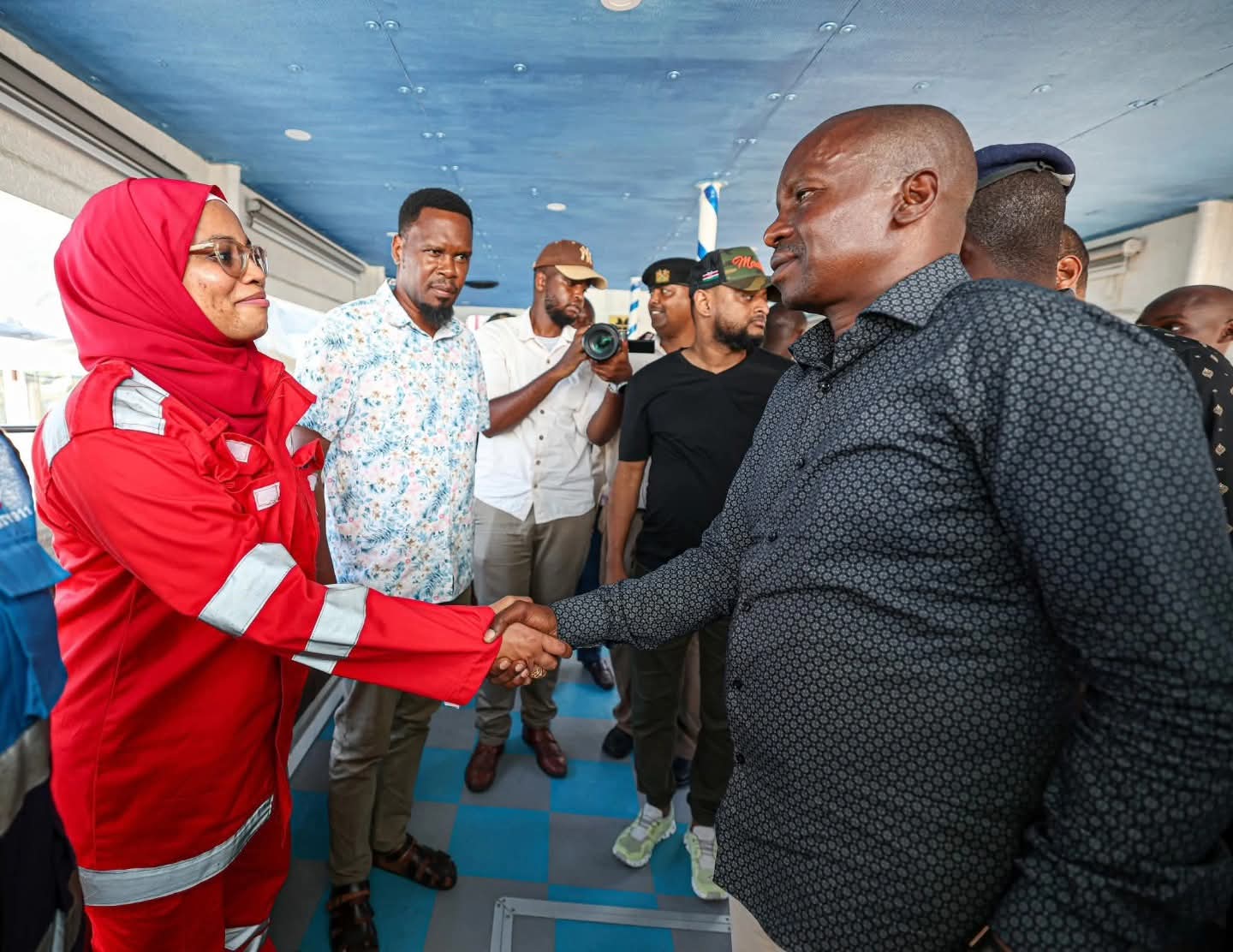
Aisha Al Husseini and Deputy President Kithure Kindiki during a boat incident at Tudor where three people lost their lives during the East Africa Ocean festival last year. Photo/JOHN CHESOLI
She never imagined the volunteer badge she wore with pride would one day lead her to the corner office.
Today, Aisha Al-Husseiniis the Kenya Red Cross Society Mombasa county coordinator, and the first woman to hold the position.
“When I started as a volunteer, I never imagined I would one day lead the Mombasa branch. I just wanted to help,” she says.
Al-Husseini’journey into humanitarian work began long before her formal entry into the Kenya Red Cross in 2012. As a pupil at Valentine Primary School, she joined the Red Cross Club, an experience that quietly planted a seed.
She later sat her KCPE exam in Lamu before returning to Mombasa to complete her O-Level education at Shariff Nassir Girls Secondary School.
Those school clubs, she says, shaped her worldview. They introduced her to community service and exposed her to the impact of organised humanitarian work.
After high school, curiosity turned into commitment.
“I wanted to be part of what Red Cross was doing in the community,” she recalls.
While in college, Al-Husseinijoined the Kenya Red Cross Society as a part-time intern, working mornings and attending classes in the evenings.
What began as a three-month internship quickly became a calling. In 2012, Al-Husseiniformally registered as a volunteer.
For the next five years, she reported to the Mombasa Red Cross offices daily, funding her own transport from Mtwapa, juggling the work and studies, and asking for nothing in return.
“I used to commute every day, support the office, then go back to classes in the evening. There were no expectations,” she says.
From 2012 to 2017, she showed up consistently. Eventually, she received a modest volunteer stipend of Sh12,000 a month.
Even then, her commitment never wavered.
With a background in finance, Al-Husseinisupported the finance department as a volunteer before being appointed finance assistant, earning Sh18,000 a month.
It would take nearly eight years from the day she first walked in as a volunteer to secure her first formal employment.
Rising through the ranks
As her academic qualifications improved, so did her responsibilities.
Al-Husseinibecame a finance grants assistant, overseeing finances for seven partner organisations working with the Kenya Red Cross Mombasa branch.
When the project ended, she returned to the branch as an accountant, managing operations and county-level projects.
In November 2022, she was appointed acting county coordinator. By March 2023, the role was confirmed.
A year later, following a competitive recruitment process, she was officially appointed county coordinator, a position she holds to date.
She now oversees all Red Cross operations in Mombasa county. These include disaster response, disaster risk reduction, volunteer and youth management, health interventions and stakeholder engagement.
While many associate the Red Cross with emergencies, Al-Husseiniis keen to shift that perception.
“People mostly see us during disasters, but Red Cross work is daily. We do much more than respond to disasters,” she says.
Under her leadership, the Mombasa branch has supported county health interventions during cholera outbreaks, waterborne diseases and Mpox preparedness.
The branch has worked closely with the county government to establish isolation facilities and provide supplies.
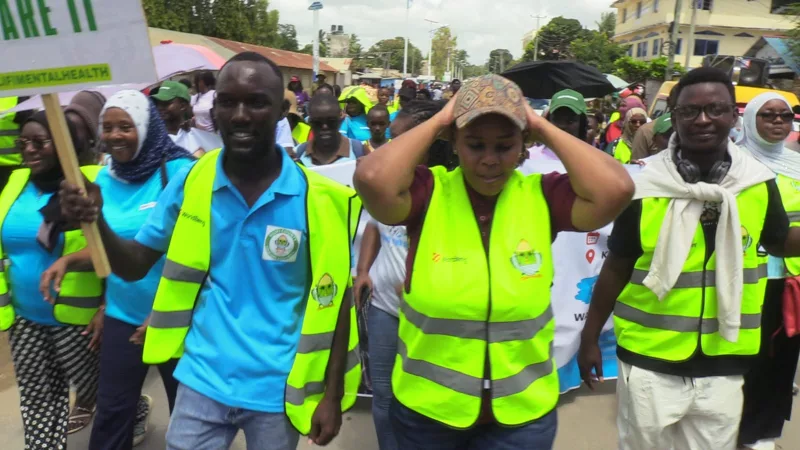
As the rainy season approaches, Red Cross teams are already on the ground, raising awareness and preparing communities for floods and related risks.
Al-Husseini’sascent was not without resistance.
Coming from a conservative background, she faced scepticism at home and in the workplace.
“Some people questioned whether a woman could lead disaster response,” she says.
Even her family initially misunderstood the Red Cross, associating it with religion rather than humanitarian work.
Coming from a Muslim family, the word ‘cross’ raised concerns, with some assuming the organisation was Christian.
Over time, through dialogue and action, perceptions changed.
“It took time and explanation. They came to understand that the Red Cross is humanitarian, neutral and about dignity.”
Balancing night responses, motherhood and leadership has been demanding.
Al-Husseiniwas appointed coordinator while pregnant and gave birth in the same year. Her daughter is now nearly three.
To cope, she built strong subcounty leadership structures, empowering team leaders to respond on the ground while she coordinates strategically.
“It’s not easy, but it’s possible,” she says.
She also notes with pride that women now make up a significant number of county coordinators across Kenya’s 47 Red Cross branches.
One of Al-Husseini’sproudest achievements is the youth empowerment programme funded by the Danish Red Cross and implemented in Kisauni and Likoni, areas identified as insecurity hotspots.
The project targets more than 100 youth groups, reaching over 2,000 young people.
Participants undergo life-skills training, self-awareness sessions and entrepreneurship development under the SPRINT programme.
The training covers financial literacy, record-keeping, proposal writing and business planning.
After pitching their ideas, 50 youth groups received grants of Sh50,000, with funds released in tranches.
The initiative culminates in a Youth Networking Day on February 12, where beneficiaries showcase their progress.
“Engaging young people meaningfully has reduced insecurity and given them hope,” she says.
Beyond youth programmes, Al-Husseinihas overseen the Urban Resilience Building Project in informal settlements including Moroto, Burukenge, Kachonjo and parts of Maganda and Vikobani.
Through Community Disaster Committees established in all 30 wards, residents are trained in disaster preparedness, flood mitigation, fire prevention and climate awareness.
The approach empowers communities to respond even before Red Cross teams arrive.
The project, initially set to end in 2025, has been extended to 2026 due to its success.
Covid-19 and crisis response
During the Covid-19 pandemic, Al-Husseiniwas part of the team leading food distribution in Jomvu subcounty.
The team worked overnight, door-to-door, for months.
She contracted Covid-19 in the line of duty, endured quarantine and returned to work once cleared.
“There is no day I have ever regretted this work. Helping people gives you strength,” she says.
Al-Husseinihas also been involved in major rescue operations in Mombasa.
She supported family members during the retrieval of a car that slid off the Likoni Ferry in 2019 and plunged into the Indian Ocean, killing Mariam Kighenda and her four-year-old daughter, Amanda Mutheu.
Last year, she led the Red Cross response to a boat capsize in Tudor during the East African Ocean Festival, where three young men died after losing control of their boat.
She was also involved in the multi-agency rescue mission during the demolition of an 11-storey building near the Coast General Teaching and Referral Hospital.
The Red Cross coordinated evacuations within a 1.2-kilometre radius, including patients from the hospital, following a safety advisory affecting more than 60,000 residents.
Al-Husseiniworked alongside county authorities, Kenya Defence Forces engineers and medical teams to ensure safe evacuations and emergency preparedness.
As the Kenya Red Cross rolls out its 2026–30 strategic plan, Al-Husseinienvisions a stronger focus on youth, mentorship and innovation.
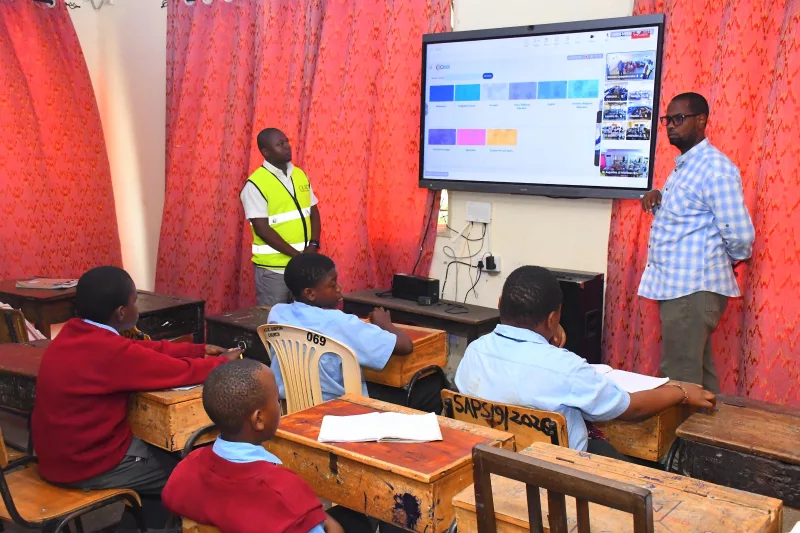
The Mombasa branch hosts IOMI 001, a fabrication lab that offers young people and innovators a free space to prototype ideas and build solutions.
Plans are also under way to establish a dedicated youth hub, a safe space for collaboration, learning and growth.
Al-Husseiniis candid about the long road humanitarian work demands.
“This generation wants quick results. But service requires patience,” she says.