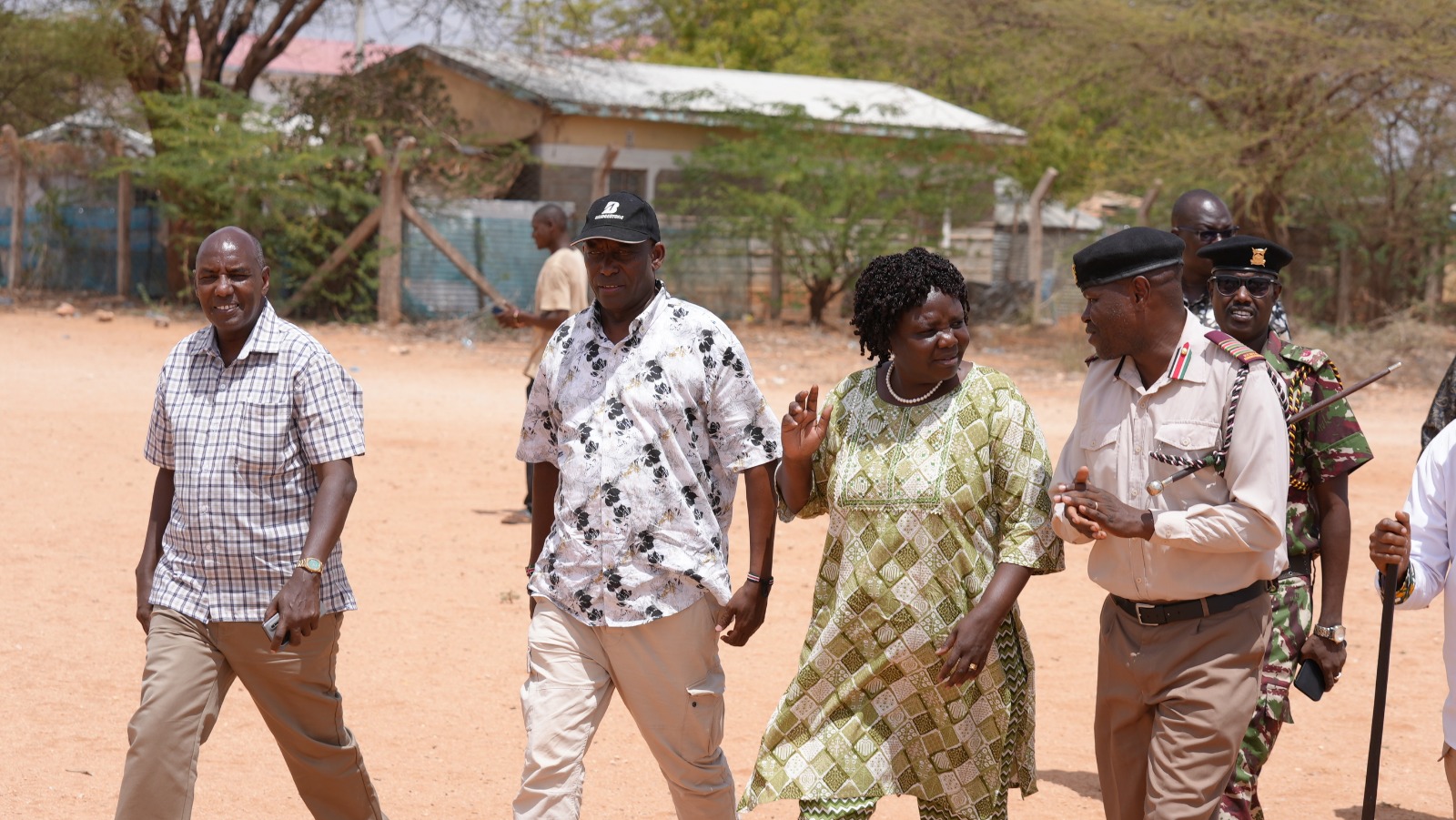
 The
Cabinet Secretary for East African Community, ASALs and Regional Development,
Beatrice Askul in Garbatulla, Isiolo County,
The
Cabinet Secretary for East African Community, ASALs and Regional Development,
Beatrice Askul in Garbatulla, Isiolo County, The Principal Secretary for ASALs and Regional Development,
Hersama Kello with NDMA CEO Hared Adan in Garabatula,Isiolo County. /STEPHEN
ASTARIKO.
The Principal Secretary for ASALs and Regional Development,
Hersama Kello with NDMA CEO Hared Adan in Garabatula,Isiolo County. /STEPHEN
ASTARIKO.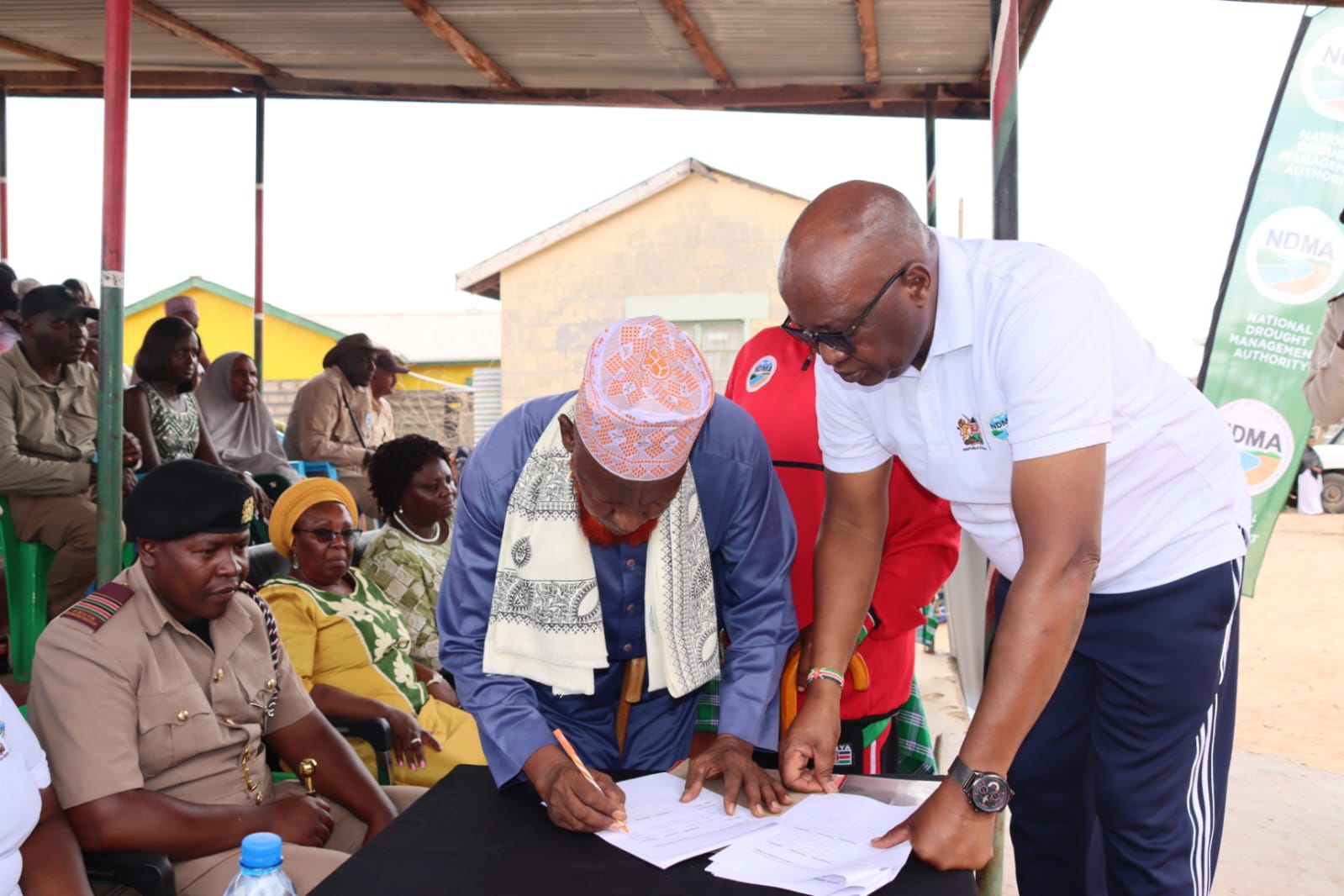 Peace committee leaders drawn from Garissa, Isiolo and Meru
counties sign peace agreements to end inter community conflicts over pasture
and water, and livestock theft. /STEPHEN ASTARIKO.
Peace committee leaders drawn from Garissa, Isiolo and Meru
counties sign peace agreements to end inter community conflicts over pasture
and water, and livestock theft. /STEPHEN ASTARIKO.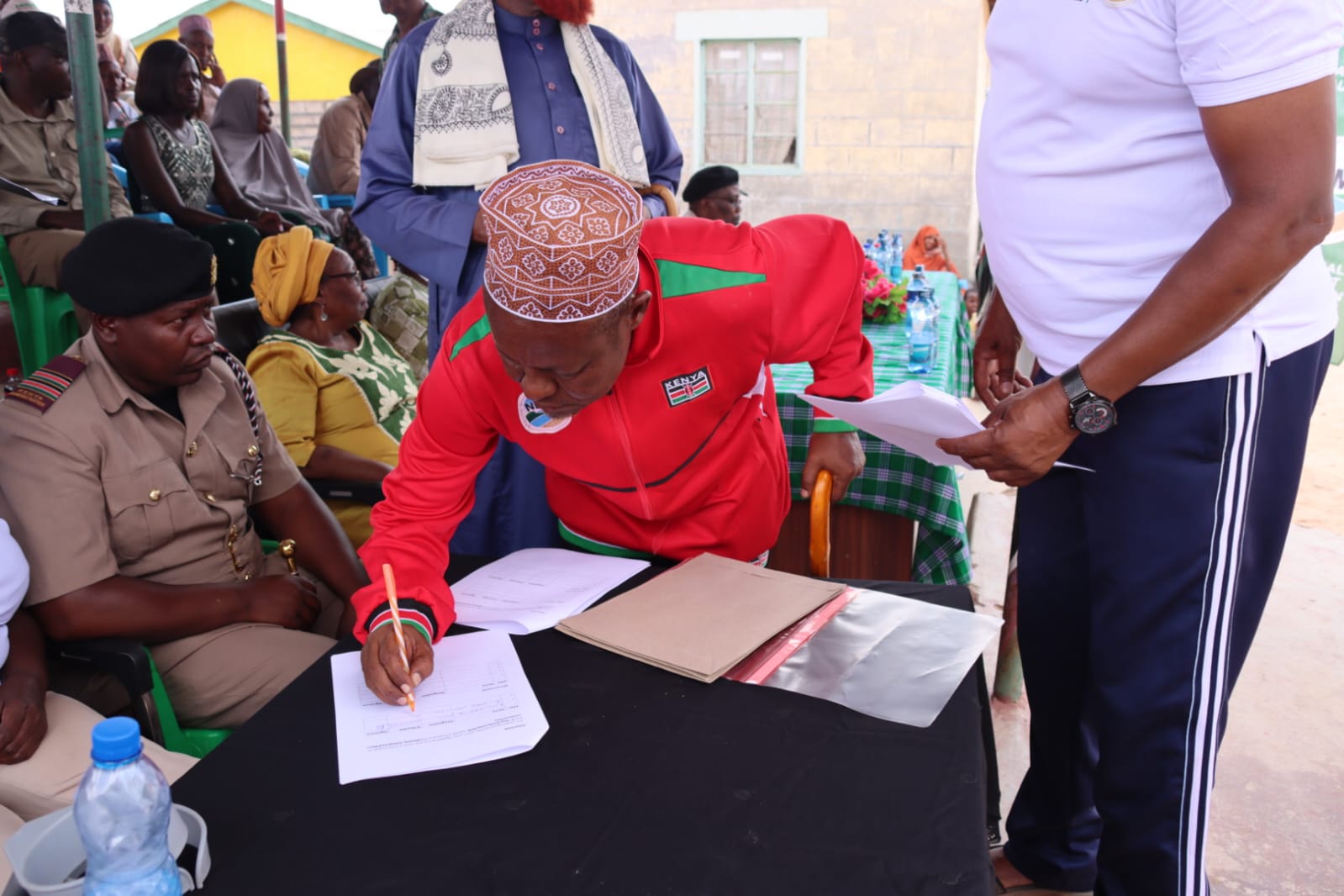 Peace committee leaders drawn from Garissa, Isiolo, and Meru
counties sign peace agreements to end inter-community conflicts over pasture
and water and livestock theft. /STEPHEN ASTARIKO.
Peace committee leaders drawn from Garissa, Isiolo, and Meru
counties sign peace agreements to end inter-community conflicts over pasture
and water and livestock theft. /STEPHEN ASTARIKO.
Intercommunity clashes, border conflicts, banditry, and cattle rustling risk stagnating development among pastoralist communities, Cabinet Secretary Beatrice Askul has said.
Pastoral communities have been cautioned that continued intercommunal violence, boundary disputes, banditry, and cattle rustling could keep their regions trapped in underdevelopment.
The Cabinet Secretary for East African Community, ASALs, and Regional Development, Beatrice Askul, noted that while other parts of the country invest public funds in infrastructure and social services, significant resources in nomadic regions are instead being spent on security operations.
She spoke in Garbatulla, Isiolo County, where she officially concluded a four-day peace caravan along the Modogashe–Garbatulla corridor.
The CS expressed concern that insecurity in pastoral areas was diverting critical resources away from development initiatives.
“The funds being used to disarm illegal firearms, purchase vehicles for security agencies, and provide fuel for patrols to curb cattle rustling are the same resources that other regions are channeling into water projects, roads, hospitals and schools,” Askul said.
She urged communities to reflect on the long-standing nature of these conflicts and reconsider their approach to coexistence. Suggesting stronger social integration as one possible pathway to peace, Askul encouraged inter-community marriages to foster shared responsibility and restraint.
“These conflicts have persisted for far too long. Perhaps it is time we embrace unity more deliberately. When communities are interconnected by family ties, acts of violence and livestock theft become personal, and people begin to think twice,” she added.
She emphasized that peace is a fundamental pillar of effective drought response and sustainable development in arid and semi-arid lands. She called on all stakeholders to work collaboratively to find lasting solutions, particularly during drought seasons when competition over water and pasture often fuels conflict.
“Peace is not simply the absence of violence. It is built through dialogue, cooperation and collective accountability. In ASAL regions, peace creates the foundation upon which development can grow and livelihoods can endure harsh climatic conditions,” she stated.
Her remarks were reinforced by the Principal Secretary for ASALs and Regional Development, Hersama Kello, who described the prolonged conflicts as deeply regrettable and a major barrier to progress in the affected areas.
Kello said that although every citizen is entitled to development, involvement in criminal activities has continued to deprive communities of essential services and opportunities.
“These conflicts and cattle rustling have plagued this region for decades. I attended high school here in Garbatulla in the late 1980s, and even then, we would hear gunfire at night, forcing students to hide under their beds. Armed attacks were common during school holidays. Today, many years later, we are still discussing the same issues,” Kello recalled.
He lamented the widening development gap, noting that while local children miss school due to insecurity, their peers elsewhere continue learning uninterrupted. Similarly, while businesses thrive in peaceful regions, communities affected by conflict remain locked in cycles of livestock theft and instability.
“When we deny our children education through violence, others are advancing. When we engage in conflict, other regions are building wealth and participating in global markets. This should deeply trouble us,” he said.
The peace forum brought together elders, women and youth leaders, peace and grazing committees, representatives from both county and national governments, and civil society organizations.
The gathering aimed to strengthen dialogue and prevent drought-related conflicts along the shared Garissa–Isiolo–Meru corridor.
Delegates from Isiolo, Garissa, and Meru counties presented a joint communiqué reaffirming their dedication to peaceful coexistence.
The agreement emphasized respect for traditional grazing systems and negotiated migration routes, shared use of public amenities across county borders, and coordinated mechanisms for the recovery and restitution of stolen livestock.
The communiqué further highlighted the need for community-driven early warning systems, accurate reporting of incidents, and close collaboration with government authorities to address insecurity and prevent escalation.
The Garissa–Isiolo–Meru corridor remains a vital livestock migration route and a critical drought refuge, but it has historically experienced heightened tensions during extended dry spells.
Speakers at the forum noted that sustained engagement, early intervention, and locally grounded agreements have proven effective in reducing conflict and maintaining social harmony in the region.