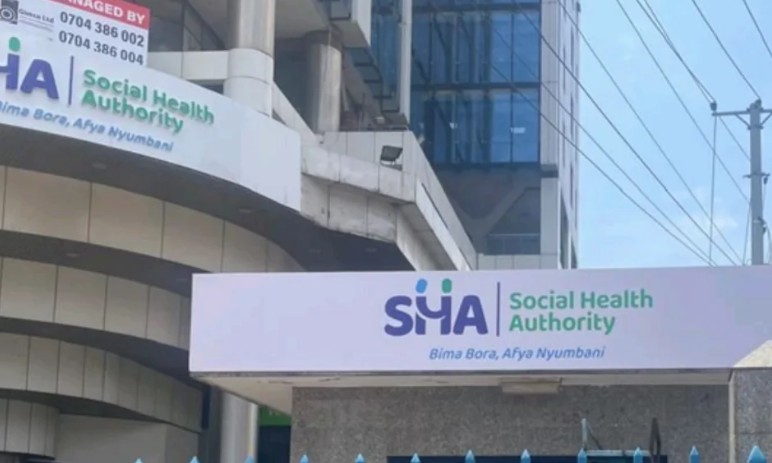
 SHA headquarters /FILE
Cancer patients who were promised higher financial protection under the Social Health Authority are unable to access the benefit, cancer control organisations have said.
Kenyans undergoing treatment for cancer are unable to access the Sh800,000 cover that SHA promised in November last year.
SHA increased its oncology benefit from Sh550,000 to Sh800,000, effective December 1 last year.
But patients who have already exhausted the previous limit say they are still unable to access the additional cover, according to cancer control organisations.
They said hospitals are turning them away or demanding cash payments because the new benefit has not been put into effect.
SHA confirmed the delay, attributing it to delays in gazetting the new tariff structures for the revised oncology benefit package.
Without gazettement, hospitals and healthcare providers cannot apply the higher limit, although it was publicly announced.
The concerns were raised on World Cancer Day 2026 by the Kenyan Network of Cancer Organizations (Kenco), which said the gap between policy announcements and implementation is pushing patients into financial distress and treatment interruptions.
“We appreciate the recent presidential directive to increase the Social Health Authority oncology benefit from Sh550,000 to Sh800,000, effective 1st December 2025,” Prisca Githuka, Kenco board vice-chairperson said. She is also chairperson of the advocacy, education and research committee.
“This commitment reflects recognition at the highest level of the immense financial strain faced by cancer patients and caregivers,” she said.
“However, two months after the public proclamation, the increased benefit has still not been implemented in practice.”
Githuka said cancer patients across the country are bearing the cost of delays within the health financing system.
“Our engagements with patients across the country indicate that most people who had exhausted the original Sh550,000 limit are still unable to access the additional benefits,” she said. “Many continue to be denied treatment once the previous limit is reached.”
One patient said the situation has left them stranded and forced them to pay out of pocket for life-saving care.
“My cover was exhausted months ago. We were told the limit was increased, but at the hospital, they say there is no communication and I must pay cash,” the patient said. “I am still buying medicine on my own to survive.”
Health Cabinet Secretary Aden Duale confirmed the package was raised from Sh550,000 to Sh800,000 per patient or per household, but did not address the implementation delays.
“This is a very historic move and this is to protect our families from the catastrophic spending that has historically driven many of them into poverty when they are diagnosed with cancer,” he said in Garissa.
About 29,000 Kenyans die every year and close to 44,000 Kenyans are diagnosed every year.
Phoebe Ongadi, executive director of Kenco, said patients report being told that although the new limit was announced publicly, facilities cannot act on it because the benefit package has not been formalised.
“System failures, delays and administrative breakdowns persist, meaning patients are still turned away or forced to pay out-of-pocket for essential services even when cover should be available,” she said.
Another patient quoted in the statement described repeated denials despite having a visible balance in the system.
“My SHA system still shows a balance, but every request is declined. I have been denied medication and even a PET scan since December,” the patient said. “No one can explain why this is happening.”
Kenco warned that the failure to implement the enhanced benefit is leading to treatment interruptions and emotional distress among patients.
The crisis is also affecting hospitals, particularly oncology centres that depend on SHA reimbursements to remain operational.
“Delayed reimbursements from SHA to health facilities are significantly straining oncology services, in some cases bringing them close to operational paralysis,” Ongadi said.
“Public hospitals struggle to sustain services, while many private facilities are declining SHA for oncology care altogether, leaving patients with few or no options for treatment.”
Beyond financing, access to cancer medicines remains a major concern. Patients report frequent stock-outs in public hospitals and unaffordable prices in private pharmacies, Kenco said.
One patient described being discharged without medicines despite being admitted under SHA.
“Even when SHA covers the bed, there is no medicine. You are sent home before recovery or told to buy drugs you cannot afford,” the patient said. “This happens when you are already weak and scared.”
Kenco said policy announcements must be followed by functional systems to avoid harming patients.
The organisation called on the Ministry of Health, SHA leadership and oversight agencies to urgently resolve the problem so cancer patients can immediately access full benefits.