Cervical cancer remains a major public health challenge in Kenya, with nearly 6,000 women diagnosed and more than 3,500 losing their lives to the disease every year.
In an effort to curb these alarming numbers, Kenya has transitioned to a single-dose Human Papillomavirus (HPV) vaccination regimen, a move seeking simplify access while maintaining protection against HPV – the leading cause of cervical cancer.
The shift follows recommendations by the World Health Organization’s Strategic Advisory Group of Experts on Immunization (Sage), which reviewed global evidence and confirmed that a single dose provides equally effective and long-lasting immunity against the HPV strains responsible for cervical cancer.
Despite the scientific backing, uptake of the HPV vaccine remains low. Health experts attribute this to vaccine hesitancy, misinformation particularly fears around fertility and safety, low public awareness and limited community engagement in some regions.
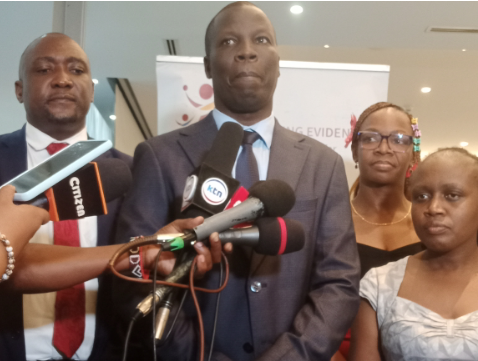
On Friday, health professionals convened by the Kenya Pediatric Research Consortium (KEPRECON) urged parents to ensure that girls aged 10 to 14 years receive the vaccine.
“This will prevent them from getting cervical cancer. We all know how expensive cancer treatment is and cervical cancer has led to the loss of many women in this country,” Moses Matole, President of the Kenya Clinical Officers Association, said.
He appealed to parents nationwide to prioritise prevention.
Dr Tetty Victor from the Kenya Obstetrics and Gynecological Society emphasised the vaccine’s effectiveness, saying it is 98 per cent effective when administered between ages 10 and 14.
“I must insist that it is 98 per cent effective at that age. However, even for those who missed the vaccine earlier, it still offers significant protection, although not at the same level,” he said.
Victor said while the new regimen involves a single dose, those receiving catch-up vaccination may require additional doses.
“The key message is that women do not need to be screened for HPV before receiving the vaccine. We are vaccinating without screening and we are seeing very good results,” he said.
Victor reiterated the urgency of action, saying cervical cancer kills about 3,500 women annually, with about 5,500 new cases diagnosed each year.
“The call right now is for all of us to come out and support this effort,” he said.
Obstetrician and gynaecologist Dr Nelly Bosire, who works with KEPRECON, said misinformation has been a major obstacle to vaccination efforts.
“We have faced challenges having conversations at the community level due to misinformation that has fueled vaccine hesitancy. We need to engage communities, understand their concerns and address their limitations,” she said.
Bosire warned that vaccines are going to waste in some regions.
“The vaccines are available, but some are expiring in regional distribution centres because parents are hesitant,” she said.
Echoing the call for broader support, Collins Otieno, President of the National Nurses Association of Kenya (NNAK), urged men to actively support the campaign.
Cervical cancer is a silent killer. With 5,500 new cases and 3,500 deaths every year, these numbers are unacceptable for a disease that is preventable,” he said.
“The solution to cervical cancer is clear: prevention through vaccination.”
Otieno said health facilities and outreach programmes are committed to vaccinating all eligible girls.
“All girls aged 10 to 14 who come to our facilities—or whom we reach in schools—must be vaccinated. That is the commitment,” he said.
From the community level, Abigail Osindi, a midwife from Vihiga county, highlighted innovative outreach strategies to improve screening and treatment.
“We conduct door-to-door visits for women aged 25 to 49, collect samples and send results via phone. Treatment services are then offered within the community,” she explained.
Osindi emphasised the importance of male involvement, noting that men are key carriers of the HPV virus.
“For anyone who is sexually active, exposure to HPV is likely. We must not leave men out of this conversation,” she said.
Kenya’s transition to a single-dose HPV vaccine supports WHO’s Global Strategy to Accelerate the Elimination of Cervical Cancer, which targets 90 per cent of girls fully vaccinated by age 15.
Globally, widespread HPV vaccination could prevent 60 million cervical cancer cases and 45 million deaths over the next century.