While China has heavily been involved in the economic and infrastructure development of the region through the Lamu port and the wider Lapsset corridor, the US has now launched deliberate efforts to expand its presence beyond security and counterterrorism engagements.
US Africa Command chief Gen Dagvin Anderson reiterated these efforts during the digital press briefing on Tuesday.
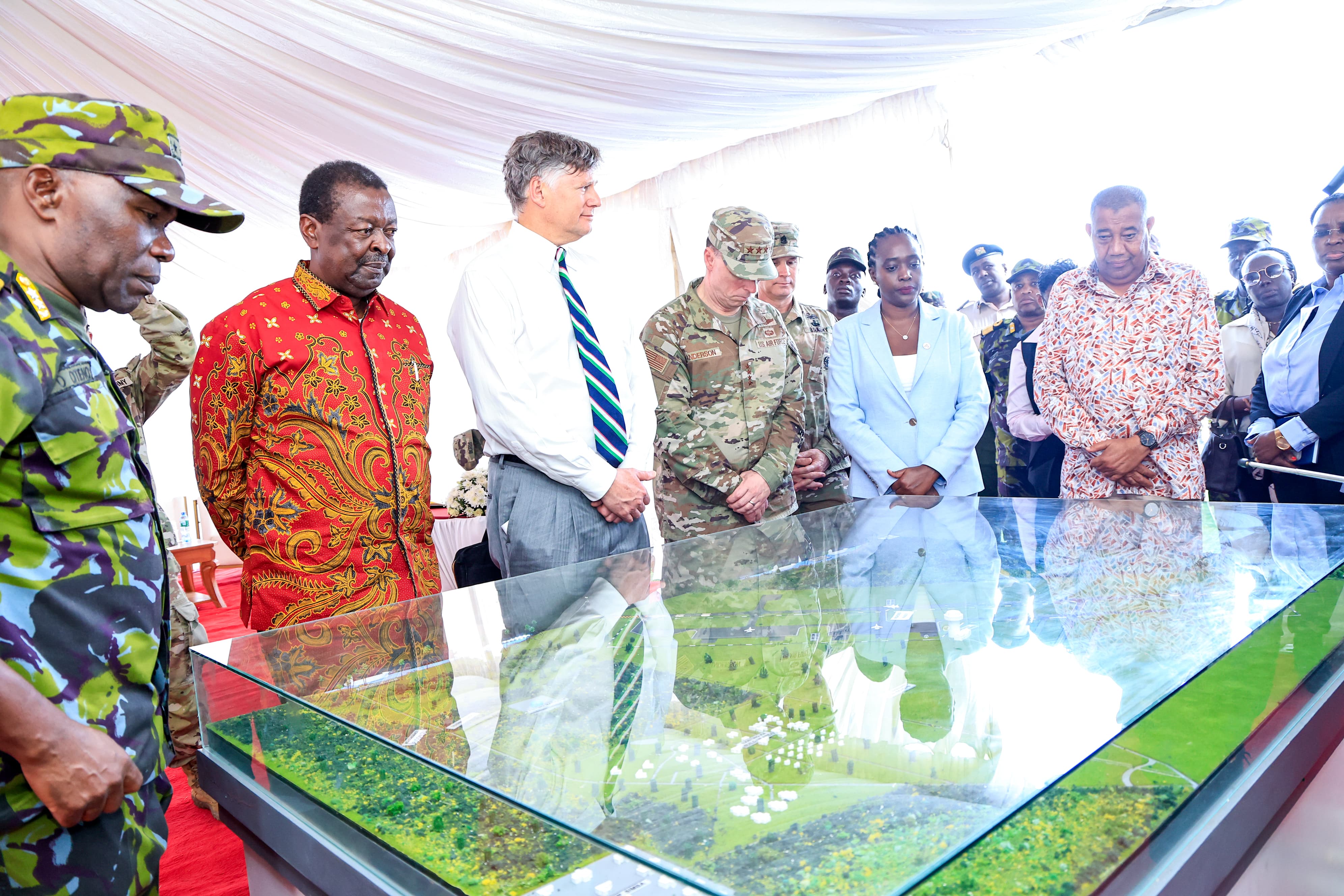
“…we went to Kenya, where I had the great opportunity to accompany the deputy secretary [Christopher Landau] down to Manda Bay for the groundbreaking for the new runway that both the US and Kenya are investing in," he said.
“Again, part of the security investment that is in Lamu county is the head of or the start of an economic corridor as well. So again, the confluence of economics and security and where those come together.”
During his meeting with Foreign CS Musalia Mudavadi, Landau announced fresh impetus by Washington to explore economic and infrastructure interests in the Coast, particularly Lamu, where China has had massive presence.
Speaking about deepening economic cooperation, Landau said there is much that can be done for the prosperity of both states.
“We spoke about some infrastructure projects, different corridors in Mombasa, maybe up in Lamu. We are very excited about the possibilities here in Kenya and believe that having strong economic and commercial relations can be a foundation of building better political and military relations,” Landau said.
Following the groundbreaking, Mudavadi said the expansion of the Kenya Navy base, Manda Bay in Lamu marked a major step forward in Kenya–US. security and development cooperation.
This, he noted, translates partnership into “concrete infrastructure, stronger regional security, and lasting strategic impact”.
China has been the primary partner in the Lamu Port-South Sudan-Ethiopia Transport corridor, with the China Communications Construction Company constructing the first three berths of the Lamu Port.
The $71 billion infrastructure initiative, which is part of Vision 2030, is aligned with China's Belt and Road Initiative and aims to connect Kenya, South Sudan and Ethiopia via railways, pipelines and roads.
Washington language mirrors the strategic logic that has historically defined China’s engagement in Lamu: That infrastructure shapes economic interests, with the departure that the US is incorporating security.
The renewed US focus on Lamu through Manda Bay expansion and infrastructure development proposal places Washington and Beijing in the same location with parallel strategic positioning.
“To counterbalance China, the US needs to enhance diplomatic engagement, increase security cooperation with regional partners, and pursue economic initiatives that offer alternatives to Chinese investment,” Tewodros Woldearegay of Lingnan University opines.
Tewodros argues that this would be a reaction to China’s infrastructure diplomacy and economic integration efforts, which threaten to reorient regional alliances and trade routes, potentially limiting US strategic options.
This competition along the Kenyan Coast extends to critical minerals.
In line with President Donald Trump’s National Security Strategy 2025, Washington has intensified its engagements with Kenya to secure these minerals, which are mainly in Kwale.
Mining CS Hassan Joho is among delegations from 50 states who were on Wednesday hosted for the inaugural Critical Minerals Ministerial at the Department of State in Washington, DC. The State Department said the meeting seeks to advance efforts to strengthen and diversify critical minerals supply chains.
“This historic gathering will create momentum for collaboration to secure these critical components vital to technological innovation, economic strength and national security,” it said.
Joho’s trip comes days after the US-Kenya Critical Supply Chains Conference in Nairobi.
The meeting that coincided with Landau’s visit was convened by the US Embassy and the American Chamber of Commerce to discuss the vital infrastructure, logistics and workforce enablers in the critical minerals supply chains.
Kenya holds significant deposits of critical minerals, including rare earth elements along the Coast and other resources essential for electronics, renewable energy and electric vehicles — sectors central to the global green and digital transition.
On Wednesday, Trade CS Lee Kinyanjui revealed Kenya is advancing a bilateral trade agreement with the US even as it seeks an extension of Agoa. At the centre of this partnership is mineral exploration and processing.
Kinyanjui said Nairobi is positioning Kenya as a critical minerals processing centre for the region and for Africa because of Mombasa being a strategic exit point.
“We are partnering with the US on mineral exploration and processing to avoid exporting raw minerals,” Kinyanjui said.
China, for its part, is a dominant global player in rare earth processing and mineral supply chains. Its infrastructure footprint through Lapsset strategically positions it close to these emerging resource zones, particularly in Northeastern, which are yet to be exploited.