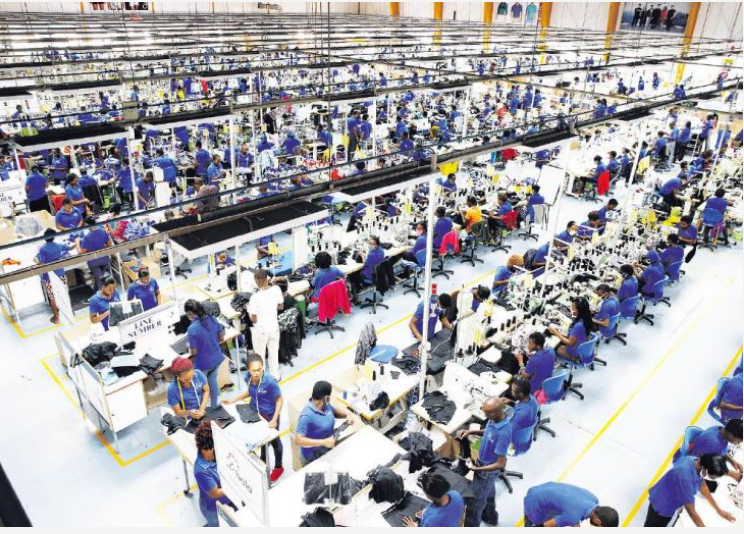
 An Export Processing Zone in Athi River/ FILE
Kenyans in the textile and apparel industry have received a major reprieve after US President Donald Trump extended the African Growth and Opportunity Act for one year.
Trump has signed into law the legislation that reauthorizes AGOA trade preference programme through December 31, 2026, with retroactive effect to September 30, 2025.
US Trade Rep. Ambassador Jamieson Greer, on February 3, said AGOA for the 21st century must demand more from US’s trading partners and yield more market access for US businesses, farmers and ranchers to build upon the benefits it has historically provided to Africa and the United States.
“We must also make sure that the programme enhances U.S.-Africa trade and will work with Congress over the next year to modernise the programme to align with President Trump’s America First Trade Policy,” he said.
Kenya’s private sector has so far welcomed the extension which ensures continuity for Kenyan exporters, albeit for a short period.
Kenya Private Sector Alliance (KEPSA) on Wednesday said the presidential assent solidifies the reprieve for over 66,000 Kenyan workers, particularly within the apparel, textile and agribusiness sectors.
“It underlines the critical importance of this preferential trade framework and underscores KEPSA's advocacy role in positioning Kenya as a crucial trade partner for global markets,” KEPSA chief executive ,Carole Kariuki, said.
She said the signing of the Act provides the immediate certainty required to maintain investor confidence and protect existing jobs.
"While the current extension is shorter than the three years initially passed by Congress, we take note of the U.S. administration's intent to modernise the programme. KEPSA will embark immediately on the Kenya USA trade deal negotiations in collaboration with the government, ensuring mutual economic transformation, aligning with both Kenya and U.S. trade policies,” she added.
Kenya Association of Manufacturers (KAM) said the renewal, which will grant Kenyan products preferential access to the United States under the trade partnership, supports business continuity for both Kenyan and American businesses, as they realign and strengthen their economic, political and social ties.
“The US is one of Kenya's most important trading partners, accounting for about nine per cent of our external market,” KAM chief executive, Tobias Alando, noted.
Kenya's exports to the USA stood at $788.6 million in 2025, compared to imports of $930.8 million. Since 2000, the United States has had a cumulative trade surplus of $ 1.7 billion, exporting goods worth $ 13.3 billion to Kenya while importing goods worth $11.6 billion.
“Through AGOA, Sub-Saharan countries have undergone significant economic development, created opportunities for employment, earned forex exchange, reduced poverty and integrated good governance and political systems within their respective countries,” Alando said.
In Kenya, AGOA has led to socio-economic growth, through employment of approximately 68,000 people supporting close to 700,000 dependents.
AGOA's extension has been granted in accordance with the Act's conditions, requiring compliance with AGOA's eligibility standards, including the establishment or continued progress toward a market-based economy, the rule of law, political pluralism and respect for due process.
Additionally, countries are required to eliminate barriers to US trade and investment, enact policies to reduce poverty, combat corruption and protect human rights.
“To compound on the gains made through AGOA and provide a long-term and sustainable framework, we urge the governments of the United States of America and Kenya to conclude negotiations for the Kenya-US bilateral agreement,” said Alando.
Kenya among other eligible Sub-Saharan African countries have been pushing for an extension of AGOA which expired on September 30, last year.
KEPSA has consistently termed it “the single most effective U.S. policy tool in Africa over the last 25 years.”
For America, AGOA saves $200–$250 million annually on consumer costs for products like jeans and uniforms, promotes stability in Sub-Saharan Africa by reducing conflict and extremism, and creates jobs in logistics, retail and distribution of African imports.