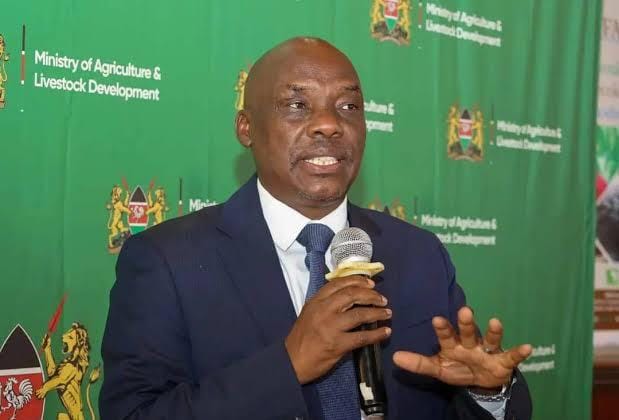
The government has ordered an immediate review of monthly green leaf payments to tea farmers, with Agriculture Principal Secretary Paul Rono directing KTDA-managed factories in the West of the Rift to pay a minimum of Sh26 per kilogram.
Rono said the review of monthly pay is the first and most urgent step in restoring fairness in the tea sector, insisting that farmers must begin to feel the impact of reforms even as wider structural and financial audits continue.
He said it was regretful that while KTDA had issued a clear notice instructing factories to adjust the monthly green leaf payment upwards, some factory boards had gone ahead to ignore the directive and instead resolved to maintain or revert to lower rates, a move he said directly undermined efforts to safeguard farmers’ earnings.
“Last week, KTDA issued a clear directive that factories in the West of the Rift should pay a minimum of Sh26 per kilo of green leaf,” Rono said.
“I have seen some factories go back to Sh23. That must stop. They must immediately revert to Sh26 as we review systems to protect the farmer.”
This, as he warned that continued underpayment will attract tough sanctions.
His remarks follow a January 22 advisory by the KTDA Holdings board, which asked factory boards to consider revised monthly rates capped at Sh30 per kilogram, depending on individual cash flow positions and existing financial obligations.
Under the guidance, factories in the West of the Rift were allowed to pay up to Sh26, while those in the East of the Rift were given a ceiling of Sh30, with the new rates taking effect from February 2026.
However, the directive has met resistance from some factory boards.
On Wednesday, factories in Kericho and Bomet counties, classified as Region Five, announced they would maintain the monthly payment at Sh23 per kilogram after a meeting held at Kapkatet Tea Factory.
In a statement, the boards said their decision followed a review of the financial position of factories in the region. They cited low tea absorption and low prices realised during the 2024/2025 financial year, which they said had negatively affected cash flows.
The boards also noted a reduction in tea volumes and urged farmers to continue delivering their produce to benefit from expected improved earnings in the coming months.
Factories in Nyamira County separately announced they would maintain a rate of Sh24 per kilogram.
Rono rejected the explanations, insisting that the review of monthly pay is non-negotiable and forms the foundation of ongoing reforms in the tea sector.
“The farmer must get not less than 70 per cent of the proceeds from the sale of one kilo of tea at the auction. The remaining 30 per cent is for operations,” he said, adding that the Sh26 monthly rate is a minimum measure as the government works to align earnings with auction returns.
He blamed depressed farmer earnings on a combination of high operational costs and corruption, saying malpractice begins at senior levels and extends to factory clerks responsible for weighing tea.
“Corruption begins at the top all the way to the clerks weighing the tea,” Rono said.
“Because of high operational costs combined with corruption, the farmer remains with almost nothing, except bank loans.”
To address this, the PS said the ministry has directed KTDA to ensure proceeds from tea auctions are deposited directly into factory accounts, giving factory directors controlled authority to manage funds transparently.
He warned that directors are now under strict notice to comply with the 70:30 revenue-sharing formula in favour of farmers.
“If the cost of operation is too high, then factories must reduce excess employees,” he said, accusing some factories of being turned into political zones where directors are pressured to hire beyond operational needs.
Rono also ordered an immediate review of loans taken by KTDA Holdings and individual factories, saying some were acquired unprocedurally and have become a burden on farmers’ earnings. He warned banks that issued such loans that the government may suspend repayments until farmers receive their rightful share.
“I want to give notice to banks that gave loans without proper procedures. If farmers are getting less than 70 per cent because of loans, then those loans will be suspended until farmers’ rights are protected,” he said.
Beyond monthly pay and loans, Rono took aim at alleged manipulation of tea sales, accusing some KTDA directors and brokers of diverting tea from auctions where prices are higher and reselling it to associates at almost half the value.
“That malpractice of removing tea from the auction system and selling it cheaply to friends must stop,” he said.
"We will fight and fight for peace in the teapot until tea farmers can live.”
He further criticised the high cost of warehousing tea in Mombasa, saying KTDA-owned warehouses charge nearly three times more than private facilities despite being funded by farmers.
“These warehouses belong to farmers. The cost should be near zero, or at least half of what the private sector charges,” Rono said, warning that farmers could be advised to seek alternative, cheaper warehouses if costs are not reduced.
Rono said reforms will continue, but stressed that enforcing the Sh26 monthly pay review is the immediate signal that the government is serious about restoring dignity and fair earnings to tea farmers in the West of the Rift.