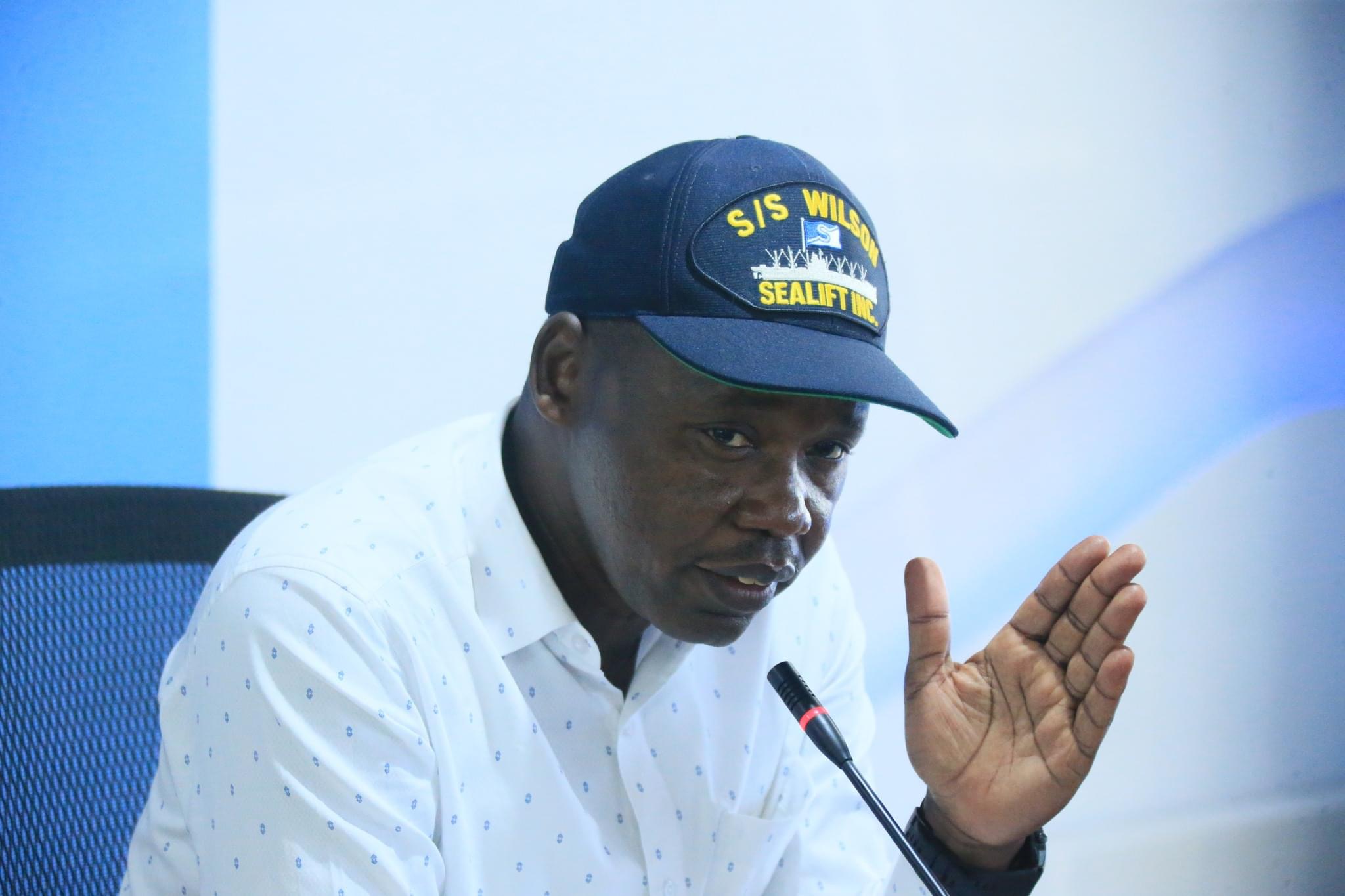
 Kenya Ports Authority (KPA) Managing Director Captain William Ruto./FILE
This reopens the debate over one of the most competitive and politically sensitive offices in Kenya’s parastatal landscape.
Captain Ruto was appointed on March 10, 2023, by then Transport Cabinet Secretary Kipchumba Murkomen for a single three-year term. Under the KPA Act, a managing director may serve a maximum of two terms.
However, history shows that surviving even one full term at the helm of the port authority is no small feat.
The MD’s office has long been regarded as a “hot seat”, weighed down by intense political interest, commercial pressure, labour dynamics and the strategic importance of the Port of Mombasa to Kenya and the wider region.
Since the departure of Gichiri Ndua in 2016, no substantive managing director has managed to serve a full six years.
Ndua, who served from 2010 to 2016, remains the last KPA boss to complete two terms. His tenure was marked by stability and global recognition, culminating in his election as the first African President of the International Association of Ports and Harbours (IAPH).
Those who followed him found the office far less forgiving. Catherine Mturi-Wairi, the first woman to lead KPA, served from July 2016 to June 2018 before resigning after just two years. Her exit ushered in a prolonged period of leadership instability, with successive acting appointments dominating the authority.
Architect Daniel Manduku took over in 2018 and served until 2020. Manduku, now the Nyaribari Masaba MP, was pushed out of KPA over allegations of corruption. He was succeeded by Engineer Rashid Salim, who acted as managing director from June 2020 to July 2021.
Ambassador John Mwangemi later held the position in an acting capacity from July 2021 to March 2023, before Captain Ruto, then operations general manager, was appointed to the role.
Captain Ruto’s first term has been largely smooth. During his tenure, KPA has posted notable operational gains, including a reported 10.9 per cent growth in cargo volumes in 2025, driven largely by improved regional trade flows.
He has also championed automation of port processes, efficiency reforms and stronger alignment of KPA operations with Kenya’s Blue Economy agenda, according to port user Alex Kasuku.
“He has been a hands-on boss. He has proven beyond doubt that he is among the best to lead KPA,” Kasuku said.
Kasuku said Captain Ruto deserves a term extension. “He should be allowed to continue and complete a second term.”
Last month, some KPA workers also backed the extension of Captain Ruto’s tenure, saying he has broken records and significantly improved the working atmosphere at the port.
Paul Abisa, a former Dock Workers Union official, said beyond improved worker morale, the performance of the Mombasa, Lamu and Kisumu ports under Captain Ruto has not gone unnoticed.
“There is a London school that awarded Captain Ruto the Associate Fellow of the Nautical Institute award and the Bear Award, which vividly corroborate his work,” Abisa said.
Last year, the port handled 2.11 million twenty-foot equivalent units (TEUs), up from 2.00 million TEUs in 2024. Overall cargo throughput rose to a record 45.45 million tonnes in 2025, compared with 40.99 million tonnes in 2024, representing a 10.9 per cent increase.
Abisa said KPA’s performance supports jobs, businesses and livelihoods. “When the port is ticking, businesses, jobs and livelihoods are also ticking,” he said.
“That is why those who benefit from the port are waiting with bated breath to hear whether the government will extend Captain Ruto’s contract, not for any other reason but his performance record,” he added.
Abisa said the government’s confidence in KPA management was evident in its allocation of Sh41 billion for port expansion.
“Right now, the port is expanding,” he said, citing several ongoing and recently completed projects.
These include the construction of Berth 19B at the Port of Mombasa, the Shimoni Special Economic Zone, the Shimoni fish port and market and the Dongo Kundu Special Economic Zone, among others.
“If you look at all these initiatives, Captain Ruto deserves another term,” Abisa said.
He attributed the achievements, in a highly competitive global maritime industry, to sound management policies, collaborative partnerships with stakeholders and clients, the acquisition of modern technology, robust marketing strategies and proper human resource alignment.
Last week, KPA released its 2025 results, showing container traffic at the Port of Mombasa grew by 5.5 per cent.
“This marks significant growth in regional trade, which calls for capacity expansion to meet trade demands,” Captain Ruto said.
Imports remained the main driver of growth, rising to 36 million tonnes from 30 million tonnes in 2024, a 20.1 per cent increase. Export cargo recorded modest gains, rising by 1.3 per cent to 5.03 million metric tonnes from 4.96 million tonnes the previous year.
INSTANT ANALYSIS
Captain William Ruto’s looming contract expiry reopens a familiar governance question at the Kenya Ports Authority: can performance outweigh politics? While his tenure has delivered measurable gains, particularly in cargo growth and process automation, the KPA MD’s office has historically been shaped as much by political dynamics as by operational outcomes.