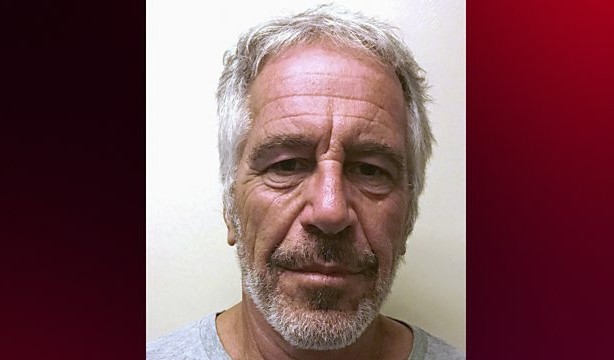
 Despite lacking a degree, Epstein began teaching physics and mathematics at Manhattan’s prestigious Dalton School in 1974.
The release of millions of additional files last week tied to convicted American sex offender Jeffrey Epstein has once again thrust his life, influence and crimes back into public view, reopening questions about the network of wealth and power that surrounded him until his death in August 2019.
Although conspiracy theories continue to circulate, official records state that Epstein killed himself by hanging while awaiting a federal sex-trafficking trial in Manhattan.
His death did not quiet the story, it exposed a sprawling web of associations linking extremely wealthy individuals, prominent politicians and royalty to a long-running operation involving the trafficking and abuse of women and girls, a criminal enterprise Epstein financed.
The so-called Epstein files, which detail who appears in the documents and in what context, have dominated headlines since US lawmakers passed legislation in October requiring the disclosure of all Epstein-related material.
On January 30, the US justice department released more than three million additional pages, including over 2,000 videos and 180,000 images, revealing deeper ties between the multibillionaire and influential figures than previously known.
Humble life in Brooklyn to academic promise
Jeffrey Epstein was born on January 20, 1953 in Brooklyn, New York, the first of two children to Paula and Seymour Epstein, both children of Jewish immigrants.
The family lived in the middle-class neighbourhood of Sea Gate. His mother stayed home while his father worked as a groundskeeper and gardener for the New York City Parks Department.
He attended Lafayette High School in Gravesend, where it is believed he may have experienced antisemitism.
He showed early academic ability and musical talent, becoming a skilled pianist.
After skipping two grades, Epstein graduated in 1969 and enrolled at the Cooper Union for the Advancement of Science and Art.
Two years later, he transferred to the Courant Institute of Mathematical Sciences at New York University, studying for three years but never completing a degree.
An unlikely rise on Wall Street
Despite lacking a degree, Epstein began teaching physics and mathematics at Manhattan’s prestigious Dalton School in 1974.
Many students came from some of the wealthiest families in the US, including future public figures such as Anderson Cooper and Claire Danes.
Students remembered him as charismatic but unconventional teacher who often went against school traditions like attending student parties.
The New York Times later reported that he was the only teacher to attend a party where high-school students were drinking.
During a 1976 parent-teacher conference, he impressed a student’s father, who introduced him to fellow Dalton parent Alan “Ace” Greenberg, then chief executive of Bear Stearns.
Ironically, Epstein would shortly after be dismissed from Dalton during the 1975-76 school year after an evaluation found he lacked teaching skills.
He joined Bear Stearns soon after, a premier investment bank that would later collapse during the 2008 financial crisis, but at the time it was among Wall Street’s elite institutions.
While there, Epstein mixed with some of New York’s most powerful financiers.
However, warning signs appeared early after his behaviour drew scrutiny, including claims that he misrepresented his education on his résumé and billed expensive jewelry purchased for a girlfriend to the company.
Yet his profile continued to rise. In 1980, at age 27, Cosmopolitan magazine named Epstein a “Bachelor of the Month,” and Bear Stearns made him a limited partner.
The following year he left amid an internal investigation into possible violations of Securities and Exchange Commission regulations, though he denied wrongdoing.
By the early 1980s, associates described Epstein as a “bounty hunter” for the ultra-wealthy, recovering stolen money and managing complicated financial matters.
The venture proved lucrative and by 1984, he was already a millionaire and a client of Bear Stearns rather than one of its brokers.
Building wealth and powerful connections
Epstein’s social circles grew alongside his fortune. His charm opened doors among New York’s elite, and his “magnetism,” as some described it, particularly attracted the “beautiful daughters of famous, powerful men.”
In 1987, he joined the board of the New York Academy of Art. A year later he founded J Epstein & Company, offering money-management services to individuals worth more than $1 billion.
His most important client was retail magnate Leslie H Wexner, founder of a conglomerate that owned Victoria’s Secret, Bath & Body Works, Abercrombie & Fitch and Lane Bryant.
Epstein managed much of Wexner’s wealth and benefited enormously.
During the 1990s, he operated largely from St Thomas in the US Virgin Islands, purchasing the nearby island of Little St James and later Great St James.
He also owned what was then the largest private mansion in Manhattan, acquired from Wexner, along with homes in Palm Beach, Paris and New Mexico.
Testimony from an accuser and photographs later revealed hidden cameras in the Manhattan residence, though their purpose has never been fully explained.
At around this time, his social circle expanded to include pop star Michael Jackson, Bill Gates, Harvard academics and Andrew Mountbatten-Windsor, whose royal titles were stripped in 2025 following revelations about his ties to Epstein and accusations of abuse involving minors.
But perhaps two of the most prominent relationships Epstein cultivated were with US presidents Bill Clinton and Donald Trump.
Both signed a 2003 birthday book for Epstein’s 50th birthday, and flight logs show each traveled several times on Epstein’s private plane.
Trump’s relationship with Epstein dated back to the late 1980s, with some describing the pair as close friends.
Trump appears more than 1,000 times in the documents released.
A 2002 New York magazine profile quoted Trump saying: "I’ve known Jeff for 15 years. Terrific guy. He’s a lot of fun to be with. It is even said that he likes beautiful women as much as I do, and many of them are on the younger side."
Years later, Trump said their falling out occurred because Epstein "stole people that worked for me" at Mar-a-Lago.
"I said, ‘Don’t ever do that again.’ He did it again, and I threw him out of the place, persona non grata,” Trump said.
Other reports suggested the relationship soured after a dispute over a $41 million Palm Beach property, a suit Trump ultimately won.
Sexual assault allegations and death
The first accusations surfaced in 2005 in Palm Beach, beginning with claims involving a 14-year-old girl.
More reports followed, and by the time federal prosecutors began assembling a case, roughly 40 victims had been identified.
Among the most outspoken accusers was Virginia Giuffre, who had worked as a spa attendant at Trumps' Mar-a-Lago estate.
In 2008, Epstein avoided federal charges but pleaded guilty to two state offenses: soliciting prostitution and soliciting a minor for prostitution.
He served 13 months in jail but was allowed to spend six days a week working from his Palm Beach office.
However, civil suits mounted and in 2018, a Miami Herald investigation identified about 80 alleged survivors of abuse by Epstein or his associates, renewing scrutiny and prompting fresh federal charges.
He was arrested in July 2019 at Teterboro Airport in New Jersey on sex-trafficking charges and held without bail.
Weeks later he was found injured in his Manhattan cell after an apparent suicide attempt.
He was taken off suicide watch shortly afterward and on August 9, his cellmate was removed.
For about three hours that night, guards failed to check on him, violating jail protocol, and cameras outside the cell malfunctioned.
The next morning, August 10, Epstein was found dead after hanging himself.
His family disputed the official autopsy and suggested murder, fueling widespread conspiracy theories.
However, no credible evidence has ever emerged to support that claim.
The files that refuse to fade
After his death, the Epstein files became a political flashpoint, resurfacing prominently during the 2024 presidential campaign.
Trump initially promised their release, then said he did not want lives disrupted by “phony stuff in there.”
By 2025, pressure from survivors, estimated to number more than 1,000 girls and young women, intensified.
Heavy media coverage helped silence arguments that making the files public would harm survivors.
In November 2025, Democratic members of the House Oversight Committee released emails obtained from Epstein’s estate, with some suggesting Trump may have known about Epstein’s activities.
In one message, Epstein wrote that Trump had “spent hours at my house” with one of Epstein’s victims.
About two hours later, Republican members released roughly 20,000 additional documents.
Soon afterward, Trump reversed his position and backed the Epstein Files Transparency Act, which mandated disclosure of Justice Department records, with exceptions for ongoing investigations, national security and survivor identities.
The bill passed Congress on November 18 and was signed into law the next day.
However, the Justice Department cautioned that “Some of these documents contain untrue and sensationalist claims made against President Trump.”
On January 30, 2026, the deputy attorney general announced what he described as the final major release: about three million pages, 2,000 videos and roughly 180,000 images.
For many survivors, the disclosures brought fresh pain rather than closure. In a joint statement, a group of 18 women said: “Once again, survivors are having their names and identifying information exposed, while the men who abused us remain hidden and protected.”