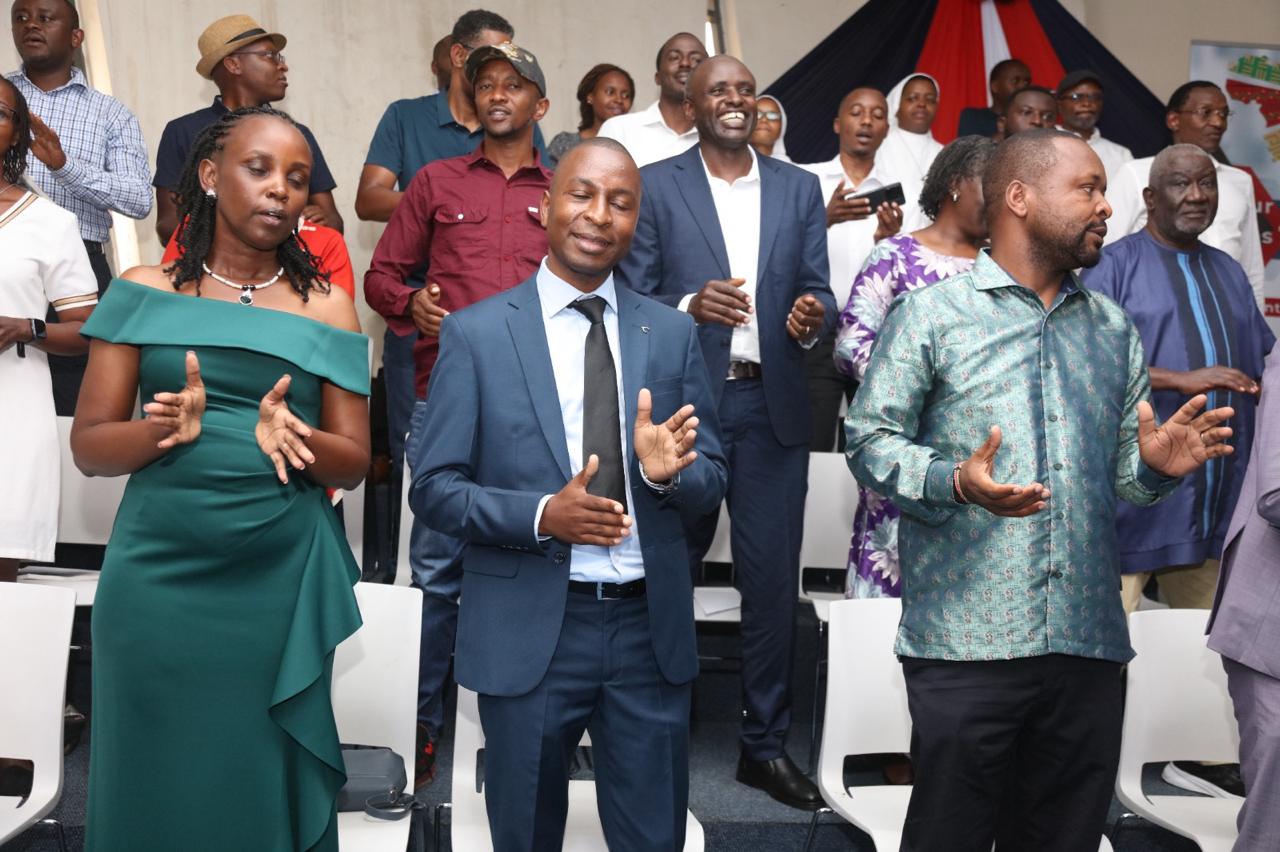
 Dr Bundi Karau (centre) with his wife Winny Mueni and elder brother KeBS Quality Asssurance Director Geoffrey Muriira during the launch of memoir Escort-In-Chief in Nairobi on 31, 2026/COURTESY
Every year, Kenya celebrates its top performers in the Kenya Certificate of Secondary Education (KCSE) examinations with fanfare, headlines and promises of a bright future.
Yet, once the applause fades, most of these names quietly disappear from public view.
Years later, little is known about where they went, what paths they chose, or how their early brilliance translated into life beyond the classroom.
Dr Bundi Karau is one of the rare exceptions.
When he emerged as the top KCSE candidate in 2002, Karau joined a long list of high achievers whose futures were widely speculated upon but seldom tracked.
Unlike many before him, however, his journey did not vanish into anonymity.
Instead, it unfolded steadily and visibly through university lecture halls, hospital wards, research laboratories, and, most recently, the pages of a reflective book that interrogates medicine itself.
On Saturday, at the Kenya National Library in Nairobi, Karau stood before an audience that included former DCI boss George Kinoti, former assistant minister for Education Kilemi Mwiria and lawyer Muthomi Thiankolu to launch Escort-In-Chief.
Others were scholars as Prof Lukoye Atwoli, KEBS quality assurance director Geoffrey Muriira among students, colleagues, family and readers curious to understand medicine through the eyes of a physician.
The moment offered a rare opportunity to trace, in real time, what becomes of a KCSE top performer when academic excellence is matched with purpose, humility and public engagement.
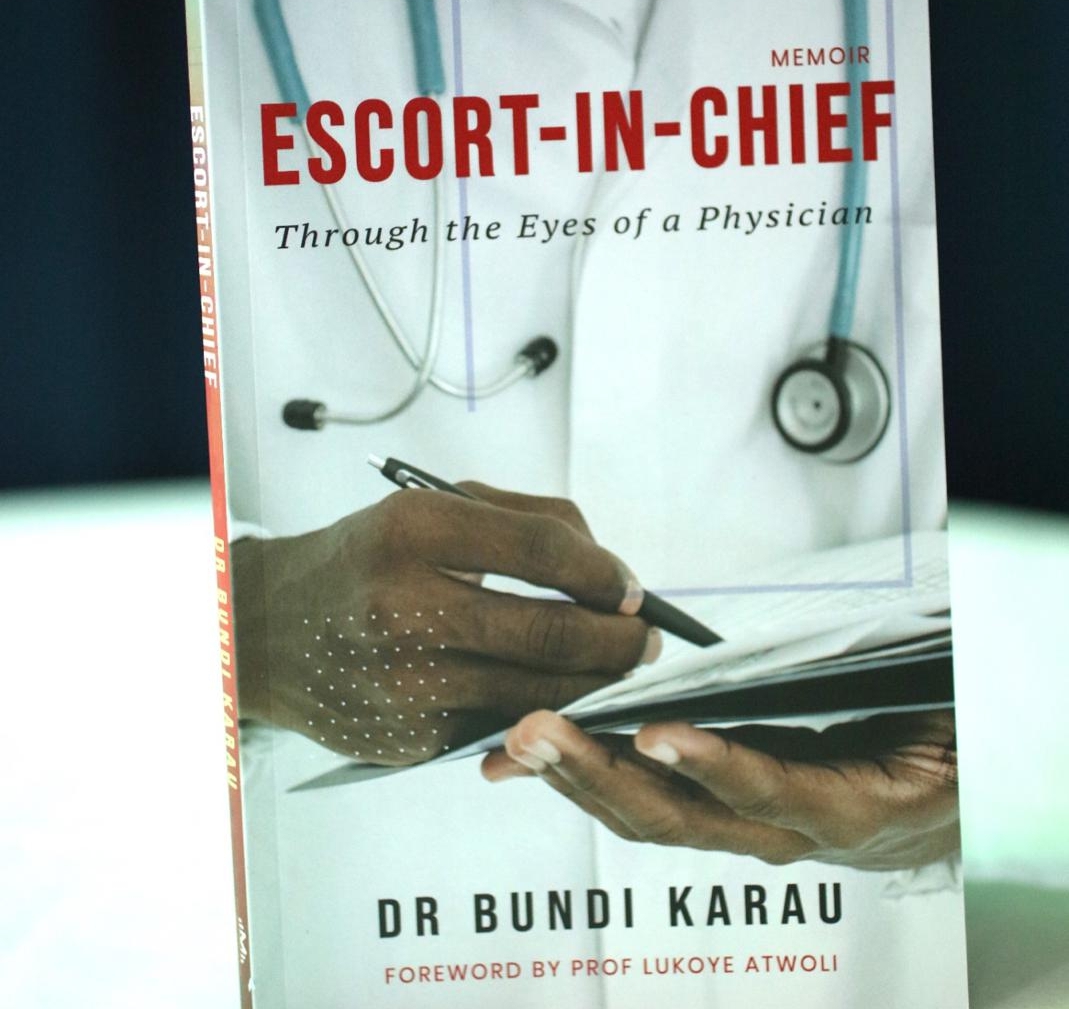 Cover page of the book Escort-In-Chief authored by Dr Bundi Karau/COURTESY
The memoir steps away from medicine as a collection of procedures and protocols, and instead presents it as a lived, uncertain, and deeply human experience.
In his opening reflections, Karau framed the book not as a medical manual but as a meditation on vocation.
“Every career, everybody, every profession is both a blessing and an honour,” he said.
“But what brings honour to a profession is how professionals carry themselves, how they approach their work with passion and education, and how they conduct themselves with humility, knowing that we are neither the first nor the last in our professions.”
That sense of humility, rare in narratives that often celebrate exceptional achievement, has defined Karau’s trajectory.
After his KCSE performance at Kanyakine Secondary School, he pursued a Bachelor of Science in Human Anatomy, followed by a Bachelor of Medicine and Bachelor of Surgery (MBChB), a Master of Medicine in Internal Medicine, and a PhD in Human Anatomy (Neurosciences), all at the University of Nairobi.
He later undertook a subspecialist fellowship in Neurology at St John’s Medical College in Bangalore, India, adding global exposure to a career rooted in Kenyan institutions.
Yet Karau insists that academic excellence alone does not explain his path.
“Life itself is a test,” he told the audience.
Quoting a maxim he attributed to a great thinker, he reflected, “The true path is hard to find. Don’t be quick in your decisions, and never give up searching. Even today, as we launch this book, we are still searching for what is proper, and we must never give up the search.”
It is that philosophy of continuous inquiry that underpins Escort-In-Chief.
The book traces the patient’s journey through the eyes of a doctor, confronting the uncomfortable truth that medicine, despite its scientific foundation, is profoundly imperfect.
Disease does not follow rules neatly, bodies respond unpredictably, and outcomes often defy expectation.
One of the book’s most striking themes, echoed repeatedly during the launch, is the randomness of illness.
Karau challenges the instinct to blame patients for their conditions, pointing instead to chance, genetics, and still-unexplained biological mechanisms.
He reminded the audience that out of ten smokers, only one may develop lung cancer, and not necessarily the heaviest smoker.
The implication is not to dismiss risk factors but to recognise the limits of certainty.
“Health,” he said, “is one of life’s biggest tests,” noting it is a test defined by pain, worry, fear, uncertainty, and sometimes hopelessness, yet it can also be a test of courage, faith, steadfastness, and even joy.
Between the extremes of good health and chronic disease lies the reality most people will confront at some point: vulnerability.
To illustrate this, Karau recounted an ancient parable about death: a servant who flees his master’s home after encountering Death in the garden, only for Death to later explain that the encounter was not a threat but a surprise; the servant’s appointment with death was elsewhere.
The story, Karau explained, is not about fear but about perspective.
“Death is inevitable, but we must not obsess over it. Life is meant to be lived,” he stated.
As a physician, Karau’s reflections challenge the heroic mythology often associated with medicine.
While high-performing students are frequently drawn to medicine by images of dramatic interventions and lifesaving feats, he argued that this represents only a fraction of the profession.
Over 90 percent of what doctors do, he said, is about listening, affirming, explaining, encouraging, and simply being present.
This insight forms the conceptual core of Escort-In-Chief.
Karau describes the doctor not as a conqueror of disease, but as an escort, accompanying patients through uncertainty, pain, and decision-making.
Almost everyone, he noted, will require such an escort at some point in their lives.
The metaphor extends beyond clinical skill.
An effective escort, Karau said, must cultivate resilience, patience, and adaptability.
They must keep learning, because medicine is boundless. And crucially, they must step beyond hospital walls.
“Any practitioner who confines themselves only to the hospital is neglecting a core component of the profession,” he argued.
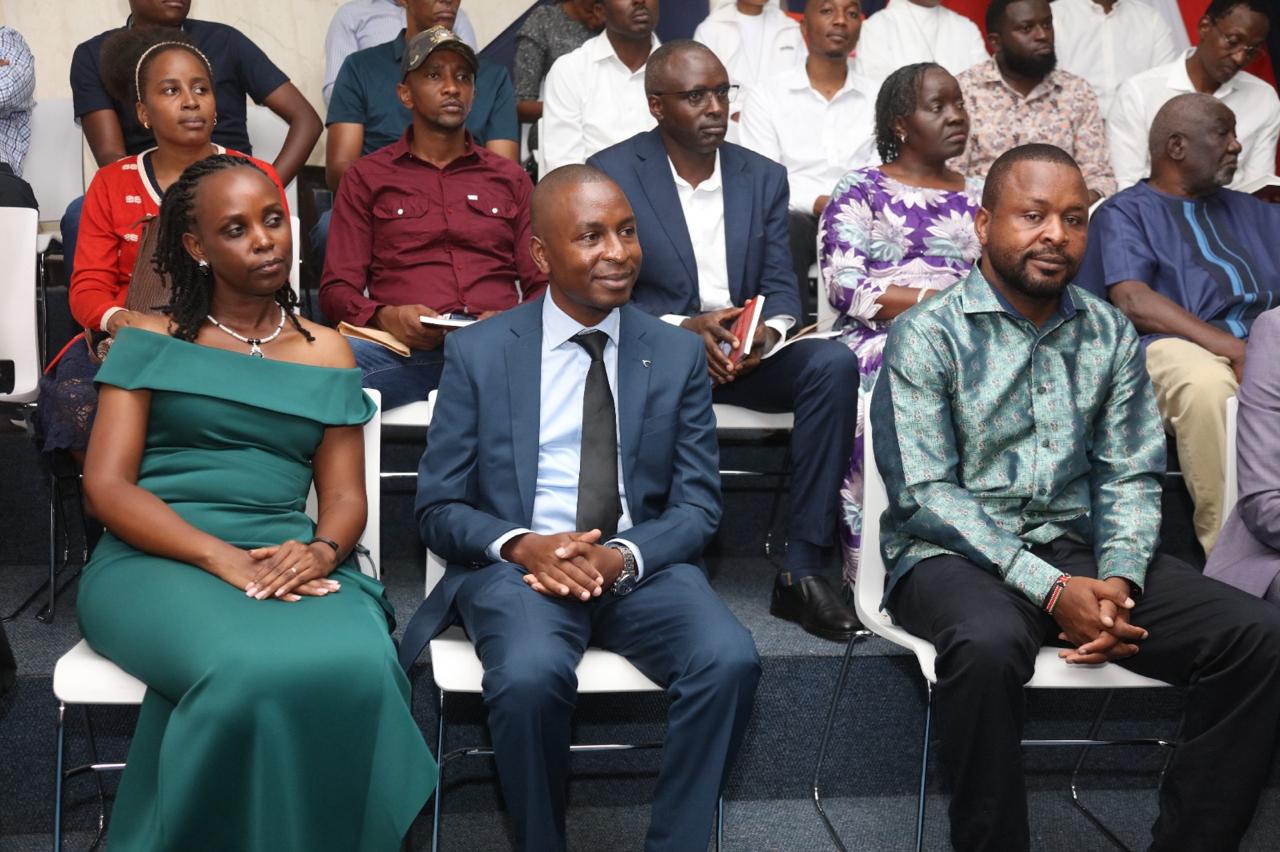 Dr
Bundi Karau (centre) with his wife Winny Mueni and elder brother, KeBS
Quality Asssurance Director Geoffrey Muriira during the launch of memoir
Escort-In-Chief in Nairobi on 31, 2026/COURTESY
Dr
Bundi Karau (centre) with his wife Winny Mueni and elder brother, KeBS
Quality Asssurance Director Geoffrey Muriira during the launch of memoir
Escort-In-Chief in Nairobi on 31, 2026/COURTESYThat broader responsibility explains Karau’s turn to writing.
He sees doctors as natural advocates for health systems reform, uniquely positioned to identify where policy fails patients.
Writing, speaking, and engaging the public, he said, are not optional extras but professional obligations.
The launch audience, which included educators and policy thinkers, resonated with this call.
Mwiria noted the significance of doctors contributing to national discourse beyond their clinical roles, while Prof Lukoye highlighted the value of reflective writing in an era increasingly dominated by technical specialisation.
Lukoye also encouraged other physicians to follow in the footsteps of Karau and tell their own stories "from a different perspective" so that the profession and the public at large can benefit.
His wife, Winny Mueni, described Karau as a hero.
He said balancing family, writing academia, and doing community work is no mean feat.
"The Escort has managed to balance them perfectly. I invite you in the world of a physician through this book, and these stories are experiences told in a creative manner," she said.
Karau’s decision to write is also rooted in a concern about historical memory.
He observed that African societies have relied heavily on oral tradition and that much professional knowledge is lost when it is not recorded.
“Putting down what we know in writing,” he said, “is a gift to someone 500 years from now,” Karau said.
He acknowledged, however, that writing demands courage.
Self-doubt, he said, afflicts even the greatest authors.
The fear that one’s thoughts may not be worthy of an audience is universal, yet he believes that every story, when honestly told, carries value.
Today, Karau serves as a senior lecturer in Internal Medicine at Kenya Methodist University, an Honorary Consultant Physician at Meru Teaching and Referral Hospital, and Chief Physician and Neurologist at Oregon Health Services.
When not seeing patients or mentoring students, he journals about his travels and reflections, hoping to inspire others.
From KCSE top candidate to neurologist, teacher and author, Karau’s journey illustrates a deeper truth: that excellence is not an endpoint, but a responsibility.
And that the most meaningful careers are not defined solely by achievement, but by service, humility and the willingness to keep searching.