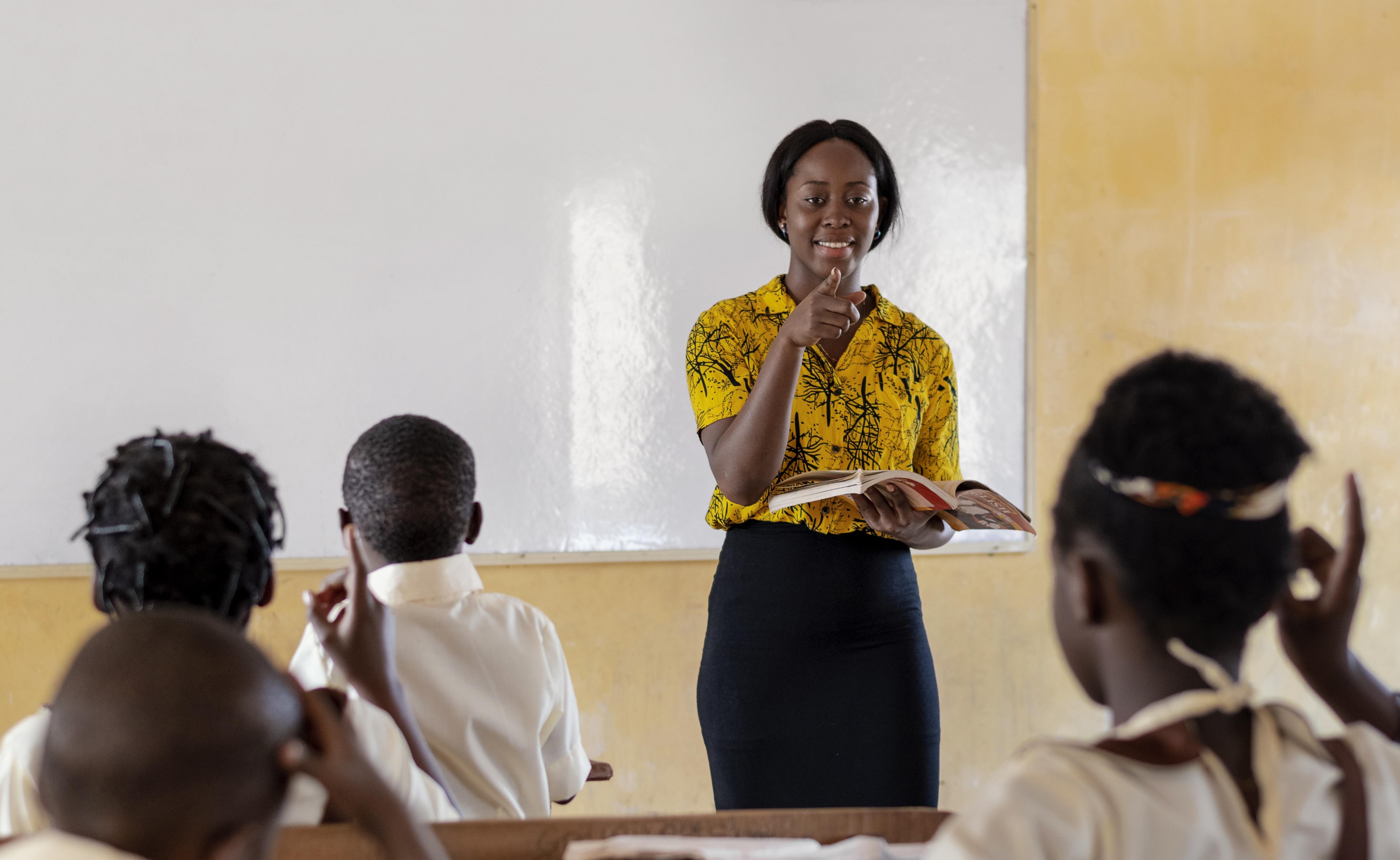
The number of teachers in public primary schools fell by 3.2 per cent between 2023 and 2024, at a time when teacher-to-student ratios were critical, as the Competency-Based Education (CBE) system transitioned its first cohort of Grade 6 learners to Junior school.
Data from the Kenya National Bureau of Statistics (KNBS) Economic Survey 2025 shows that the teacher population stood at 219,727 in 2023 but dropped to 212,602 in 2024, partly due to retirements, study leave, natural attrition and dismissals over disciplinary issues.
This means 7,125 teachers exited the primary school system within 12 months—the sharpest decline since 2020.
By 2024, Kenya had 24,213 registered public primary schools with a combined primary and Junior school learner population of 10.7 million.
The overall teacher population had previously risen from 218,077 in 2020 to 222,443 in 2021, before dipping slightly to 221,510 in 2022, when 933 teachers left the service.
The decline is most pronounced among teachers with bachelor’s degrees.
While there were 28,226 degree-level teachers in 2023, their number fell by 20.5 per cent to 25,257 in 2024—a loss of 2,969 teachers.
This follows a rapid rise from 17,930 in 2020 to 27,324 in 2023.
A similar trend is observed among teachers with certificate qualifications, whose numbers dropped from 148,525 in 2023 to 146,500 in 2024.
The reduction can partly be traced to 2017 reforms by the Teachers Service Commission (TSC), which introduced new promotion pathways for P1 teachers, encouraging many to pursue diplomas.
Teacher training surged, with trainee numbers increasing by 18.3 per cent to 41,154 in 2024. Enrollment in public primary teacher colleges (P1) jumped from 24,262 in 2023 to 36,282 in 2024.
The number of diploma-level teachers rose from 21,632 in 2020 to 38,878 in 2021, peaking at 40,916 in 2023, before dipping slightly to 38,917 in 2024, reflecting a likely transition of some of the tutors to junior school.
In 2024, the total number of Junior school teachers was 20,495, with those holding bachelor’s degrees accounting for 92.4 per cent (18,942), Masters and Doctorate degrees 94, and Postgraduate Diplomas 18.
Student numbers stood at 8.2 million in public primary schools and 2.5 million in Junior schools, bringing the total to 10.7 million.
The decline in degree-level teachers comes as the CBE system, particularly its STEM pathways, faces a shortage of an estimated 58,600 teachers for Senior school transition, with 35,111 needed in technical subjects.
Over 60 per cent of students opted for STEM following the inaugural Kenya Junior School Education Assessment, but there is a severe lack of teachers in specialised areas such as Aviation, Marine Science, Physics and Chemistry.
Initial retooling sessions for teachers were considered too brief by many, underscoring the need for more intensive upgrading to manage modern laboratories, IT equipment and project-based learning.
The data shows a broader trend of teachers seeking higher qualifications in an apparent response to the increasing technical demands of teaching under CBE, particularly in preparing learners for STEM-focused Senior school pathways.
Between 2020 and 2024, bachelor-level teachers in secondary schools and teacher training colleges grew from 108,109 to 111,702, while diploma holders rose from 3,310 to 13,401.
Masters and Doctorate holders increased from 1,725 in 2020 to 6,224 in 2023 before dropping to 5,715 in 2024.
The Ministry of Education indicated that a new batch of 24,000 teachers would be hired this year, bringing the total number to 100,000 over the past three years.
"The government has employed a historic 76,000 teachers in two years. A further 24,000 teachers are to be employed by January 2026, making a total of 100,000 teachers in a record three years," Education Cabinet Secretary Julius Ogamba said during World Teachers’ Day celebrations at Kasarani stadium on October 5, 2025.
“The senior secondary phase will focus on nurturing learners’ intellectual abilities through a more personalised and holistic approach to education, preparing adaptable, innovative professionals who can thrive in an ever-changing job market,” he added.
He said the planned recruitment would reduce pressure on existing staff and improve learning outcomes, noting that the government had allocated Sh1.6 billion for teacher capacity building and Sh1 billion for the promotions.
The CS added that the government was committed to bridging the teacher shortage gap, particularly in remote and marginalised areas where many public schools continue to face high student-to-teacher ratios.
But while apprising MPs on the status of education in the country last week in Naivasha during the legislative retreat, Ogamba highlighted a funding gap of Sh48 billion, a shortfall that threatens seamless implementation of CBE.
He said primary education received Sh7 billion against a requirement of Sh9.7 billion, resulting in a Sh2.7 billion deficit.
Junior secondary education was allocated Sh28.9 billion against a requirement of Sh49.7 billion, leaving a shortfall of Sh20.8 billion, while senior secondary education received Sh51 billion against a requirement of Sh76 billion, creating a Sh24 billion gap.
This is despite the government allocating Sh702.7 billion to education in the 2025–26 financial year, with a significant portion (Sh387.2 billion) going to the Teachers Service Commission, including Sh7.2 billion for intern teachers.
“So from where we stand as a ministry, we’ve done our part,” Ogamba told MPs.