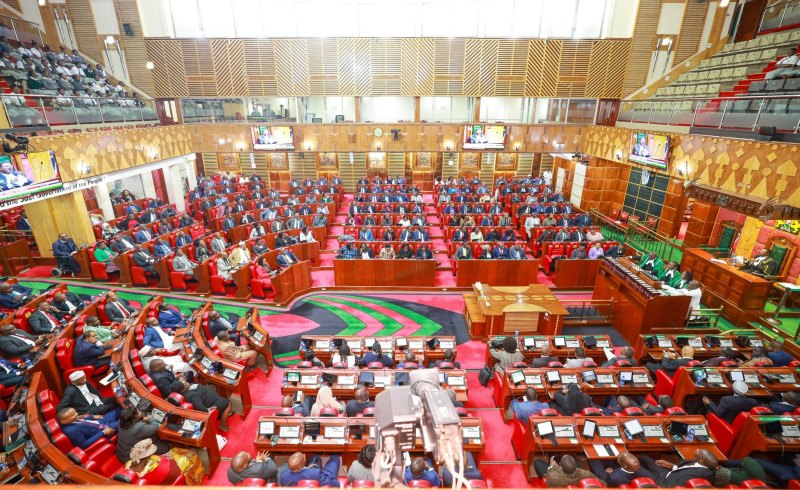
President William Ruto is scheduled to launch the country’s National Electric Mobility Policy this afternoon, as Kenya seeks to reduce its reliance on fossil fuel and move to green energy.
The Ministry of Roads and Transport is launching the National Electric Mobility (e-Mobility) Policy at the Kenyatta International Convention Centre.
The government says the need to promote electric mobility stems from several considerations pertaining to the country’s environmental, economic, social and technological challenges and opportunities.
The global transport sector is predominantly driven by fossil fuels and accounts for 23 per cent of total human-made carbon dioxide (C02) emissions worldwide.
According to Article 6 of the synthesis report of Intergovernmental Panel on Climate Change (IPCC), 70 per cent of direct transport emissions in 2019 came from road transport, with 15, 11 per cent and 125 coming from rail, shipping and aviation, respectively.
Kenyans are embracing, albeit slowly, electric motor vehicles (EVs), according to the Ministry of Roads and Transport.
Data shows that despite the low number of EVs, the number of new EV registration have been growing significantly from 0.022 per cent in 2028 to 1.62 per cent in 2023.
The National Transport and Safety Authority
(NTSA) registered over 1.8 million vehicles between 2018 and 2023, of which 3,753
were EVs.
By the end of 2025, the number of EVs stood at 24,754.
Transport Cabinet Secretary Davis Chirchir, in his message on the launch of the ‘Status of E-mobility in Kenya’, says that the country has developed a framework for prompting the development of electric mobility technologies.
The state, according to the CS, seeks to build the necessary infrastructure and foster innovation and investment in the industry.
“The policy is anchored on Kenya’s commitment under the Bottom-Up Economic Transformation Agenda, Vision 2023 and National Determined Contributions (NDCs),” he said.
CS Chirchir added, “Its implementation will support the creation of green jobs, reduce dependence on fossil fuels and enhance the competitiveness of Kenya’s economy while safeguarding environmental sustainability.”
On his side, PS Mohamed Daghar said the policy provides a framework to guide the introduction, regulations and scaling-up of mobility solutions in Kenya.
“It outlines measures to support investments in infrastructure, incentive adoption promotes standards and regulations, and builds technical capacity across the public and private sectors,” PS Daghar states.
Electric Mobility Association of Keya (EMAK) chairperson Hezbon Mose says electric minibuses and buses are gaining traction, with registration rising from three units in 2022 to 160 units in 2025.
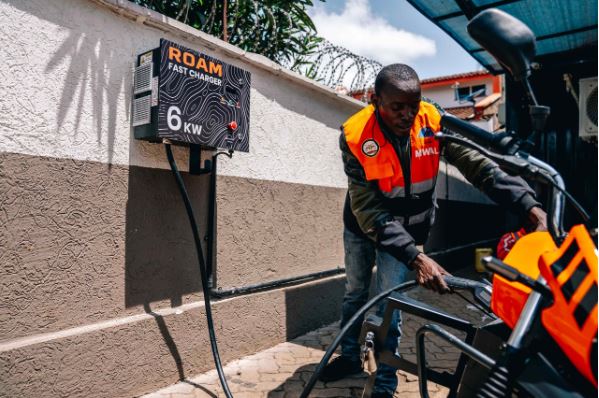
EMAK says electric motorcycles recorded the most notable growth, increasing from 678 registered units in 2022 to approximately 24,000 units in 2025.
“This growth has been supported by zero import duty and value-added tax exemptions for locally assembled units. The presence of electric buses currently operating within Nairobi reflects this shift, offering reduced costs, quieter journeys, and measurable improvement in urban air quality,” Mose adds.
The 2018-2022 National Climate Change Action Plan (NCCAP) and its 2023-2027 successor identify the uptake of electric vehicles (EVs) as one of the key climate change actions in the transport and energy sector.
Similarly, the National Energy Efficiency and Conservation Strategy (NEECS) envision that by 2025, 5% of all registered vehicles in Kenya will be electric-powered.