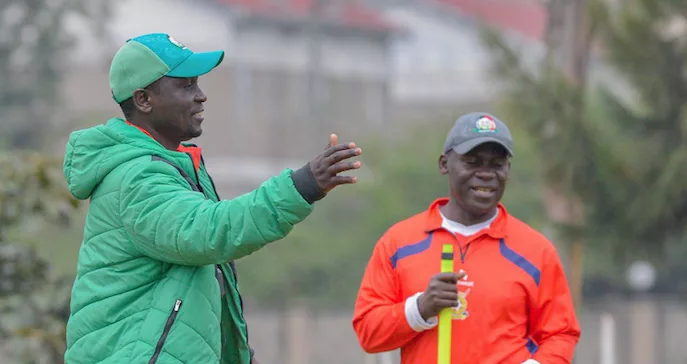
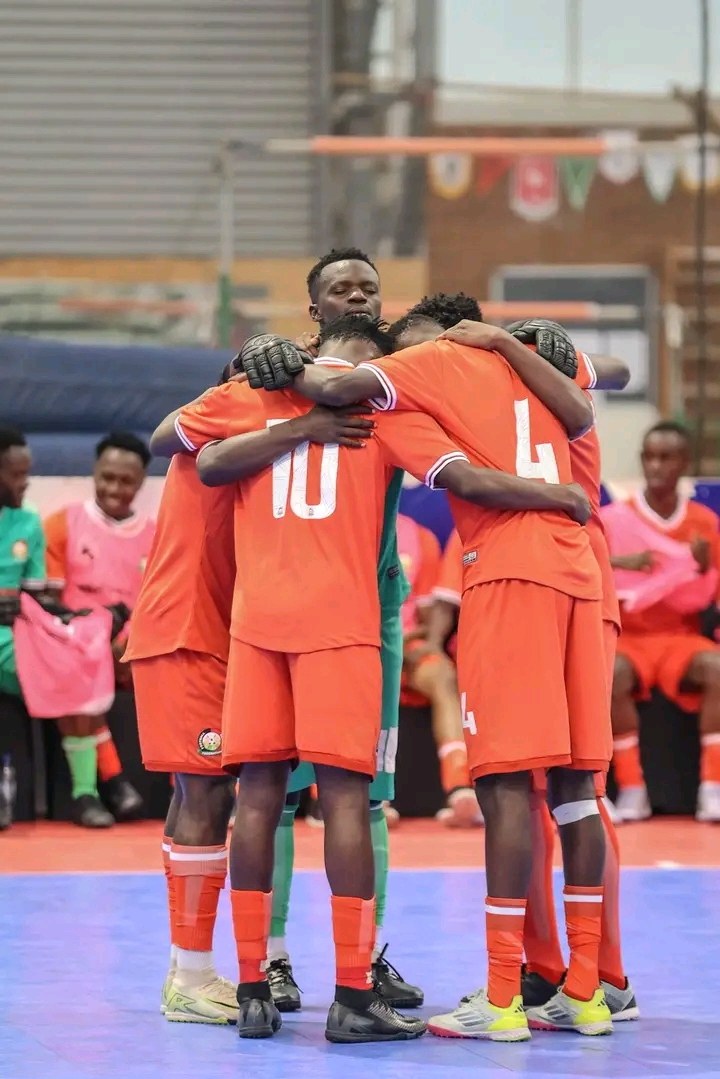
 Kenya Futsal Team before their match against Namibia/FKF
Kenya’s recent exit from the 2026 CAF Futsal Africa Cup of Nations qualifiers at the hands of Namibia may look like a setback on the scoreboard.
But the true significance of the Harambee Sambas’ journey stretches far beyond results. Bowing out 18–11 on aggregate, the national futsal team achieved something more enduring than qualification: it laid the foundation for the growth of a new sport in Kenya—one with immense potential for youth development and the broader sporting ecosystem.
Head coach James Omondi was quick to put the defeat into perspective, pointing to Namibia’s 15-year head start in organised futsal. That experience gap was evident. Namibia boasts a structured, competitive league that offers players regular exposure at a high level—an advantage Kenya does not yet have.
Omondi’s post-match reflection was as honest as it was instructive: “Now we need to invest more in futsal here at home, and definitely improvement will be there.”
His words capture the core lesson from the qualifiers—talent alone is not enough without structure, consistency, and investment. In that context, the Football Kenya Federation deserves credit for taking a bold and necessary step.
In a sporting landscape dominated by football, rugby, and athletics, launching a national futsal programme is neither easy nor risk-free. Growth in sport requires vision and the courage to venture into unfamiliar territory.
The Harambee Sambas’ participation signals that Kenya is ready to explore new pathways for talent development and international competitiveness.
But participation must be the beginning, not the destination. For Kenya to genuinely compete in futsal, deliberate action must follow. First and foremost, a national futsal league is non-negotiable.
Regular, high-quality competition is the lifeblood of player development, sharpening technical ability, tactical awareness, and game intelligence. Second, grassroots investment must start immediately.
Schools, community centres, and youth academies provide fertile ground for futsal’s growth. The earlier children are introduced to the sport, the faster Kenya can build a sustainable pipeline of skilled athletes.
Third, the game needs support structures—coaching education, referee development, and basic sports science integration. These elements separate casual participation from professional progress and are standard in successful futsal nations. Beyond futsal, the Sambas’ experience offers a wider lesson for Kenyan sport.
The time is ripe for federations to diversify. Success cannot come from relying solely on traditional disciplines. Exploring new avenues—handball, volleyball, table tennis, and even emerging sports like e-sports—can unlock hidden talent, offer youth alternative pathways, and expand Kenya’s footprint on the international stage.
The Harambee Sambas may not have advanced in the qualifiers, but their journey marks a milestone—a symbolic and practical declaration that Kenya is capable of competing beyond tradition.
The challenge now is to turn lessons into action, enthusiasm into structure, and potential into achievement. As Omondi rightly observes, consistency is the missing link. With vision, investment, and sustained support, the Sambas—and other emerging national teams—can thrive.
In sport, as in life, boldness deserves recognition, but foresight demands follow-through. FKF has taken the first courageous step.
The responsibility now rests with all stakeholders—government, sponsors, clubs, and communities—to ensure Kenya’s sporting landscape evolves with the same energy and ambition shown on the futsal court. Only then will the Harambee Sambas’ pioneering journey become the spark that ignites a broader renaissance in Kenyan sport.