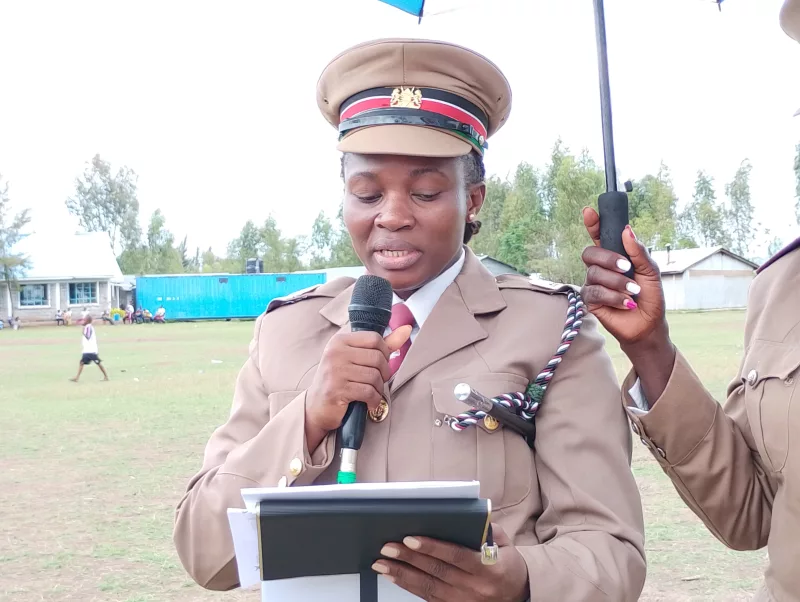
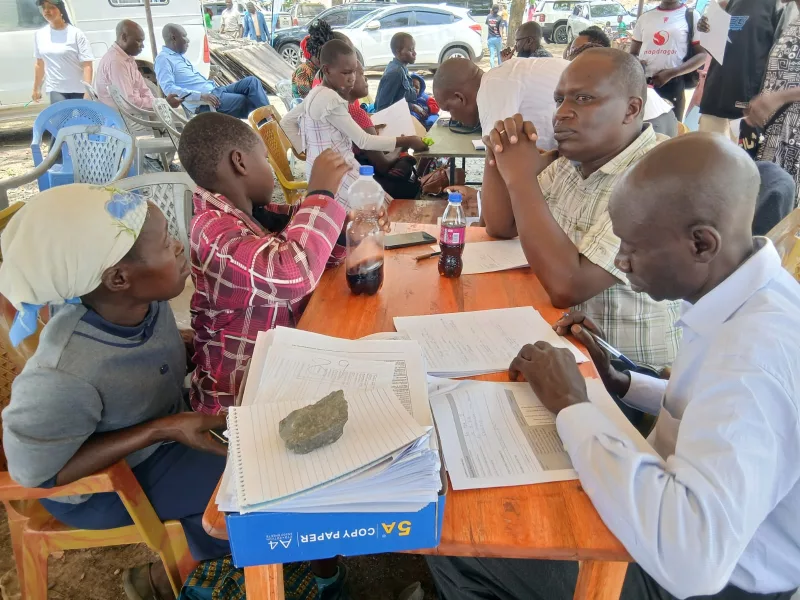
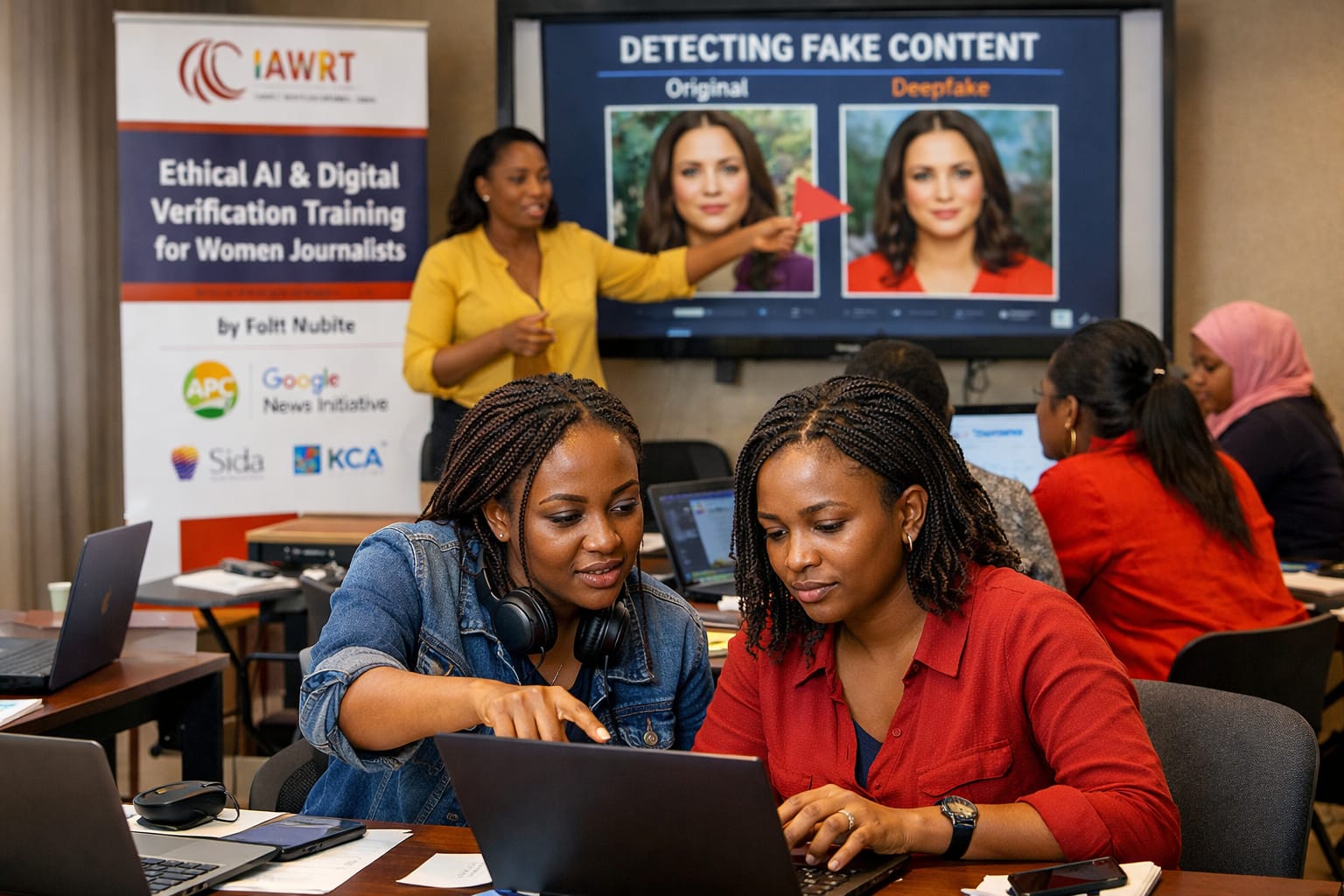
 Women journalist during a class session./AI ILLUSTRATION
The International Association of Women in Radio and Television (IAWRT) Kenya is equipping women journalists with practical skills on the ethical use of Artificial Intelligence (AI) and digital verification tools, as newsrooms confront rising cases of misinformation, deepfakes and coordinated online manipulation.
The training brought together women journalists from print, broadcast and digital platforms to strengthen fact-checking and verification skills, with a focus on ensuring technology enhances rather than undermines public trust in journalism.
IAWRT said the initiative is part of its broader mission to bridge the digital divide in the media sector and ensure women journalists remain competitive and credible in a rapidly evolving news environment.
The programme is supported by the Association for Progressive Communications (APC), the Google News Initiative (GNI), Sida and the Kenya Correspondents Association (KCA).
Digital verification trainer Nelly Moraa cautioned journalists against overreliance on technology, noting that no tool can independently determine the truth.
“No technology tool can automatically verify user-generated content with 100 per cent certainty, but at the same time, traditional journalism alone is no longer enough,” Moraa said.
“Verification today is a process that combines digital tools, credible sources and strong editorial judgment.”
She said journalists must begin by establishing the origin of social media content, warning that fake tweets, impersonation accounts and manipulated verification badges are increasingly used to mislead audiences.
The training emphasised careful scrutiny of social media profiles, including account history, posting behaviour, follower patterns and linked platforms, to determine authenticity.
Participants were also trained in photo and video verification using reverse image search and video analysis tools, as visual content is often reused, edited or stripped of context.
“User-generated videos are sliced, reposted and presented in new contexts,” Moraa said.
"A journalist’s responsibility is to establish what the content truly shows by asking who created it, when, where and why.”
Journalist Celine Abuga, who attended the training, said the sessions reshaped how she approaches AI in her work, particularly during politically sensitive periods.
“I used to view AI tools with a lot of suspicion. I thought they were shortcuts. But learning how to use them ethically has helped me respond faster to misinformation without compromising accuracy.”
She said tools such as reverse image search, Google Gemini, and document analysis platforms have become critical in verifying viral claims, adding that AI is most effective when used as a support tool rather than a source of truth.
“The biggest lesson for me was that the quality of the output depends on the quality of the questions you ask,” Abuga said.
“AI does not replace verification it strengthens it when you already know what to look for.”
The training also addressed Coordinated Inauthentic Behaviour (CIB) organised online campaigns that use fake or newly created accounts to amplify misinformation.
Journalists were trained to identify warning signs such as identical captions, synchronised posting times and accounts posing as independent voices.
AI-assisted tools were demonstrated to help track hashtags and engagement patterns, though trainers stressed that suspicious activity flagged by technology must always undergo deeper human analysis.
Participants were further guided on the responsible use of generative AI tools such as ChatGPT and Google Gemini, with emphasis placed on verifying claims through authoritative Kenyan sources including the Kenya National Bureau of Statistics (KNBS), the Kenya Gazette, IEBC and fact-checking organisations such as Africa Check and PesaCheck.
IAWRT Kenya said the training aims to strengthen public trust in journalism by ensuring women journalists are equipped with ethical AI skills that support accuracy, accountability and the public interest.
As misinformation becomes more sophisticated, the association noted that effective fact-checking will continue to rely on a combination of digital tools, credible sources and human judgment.