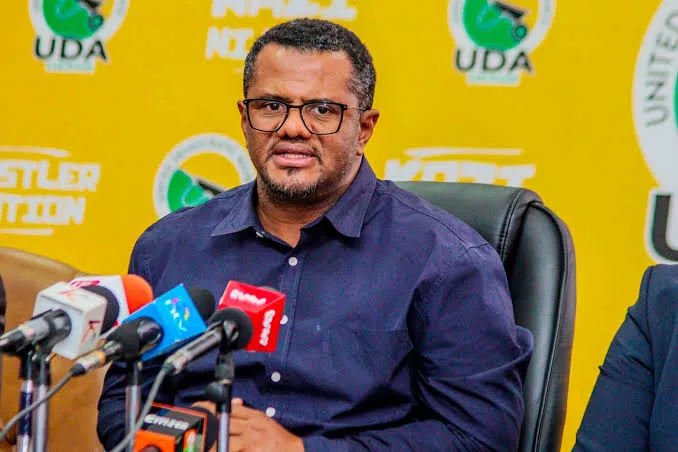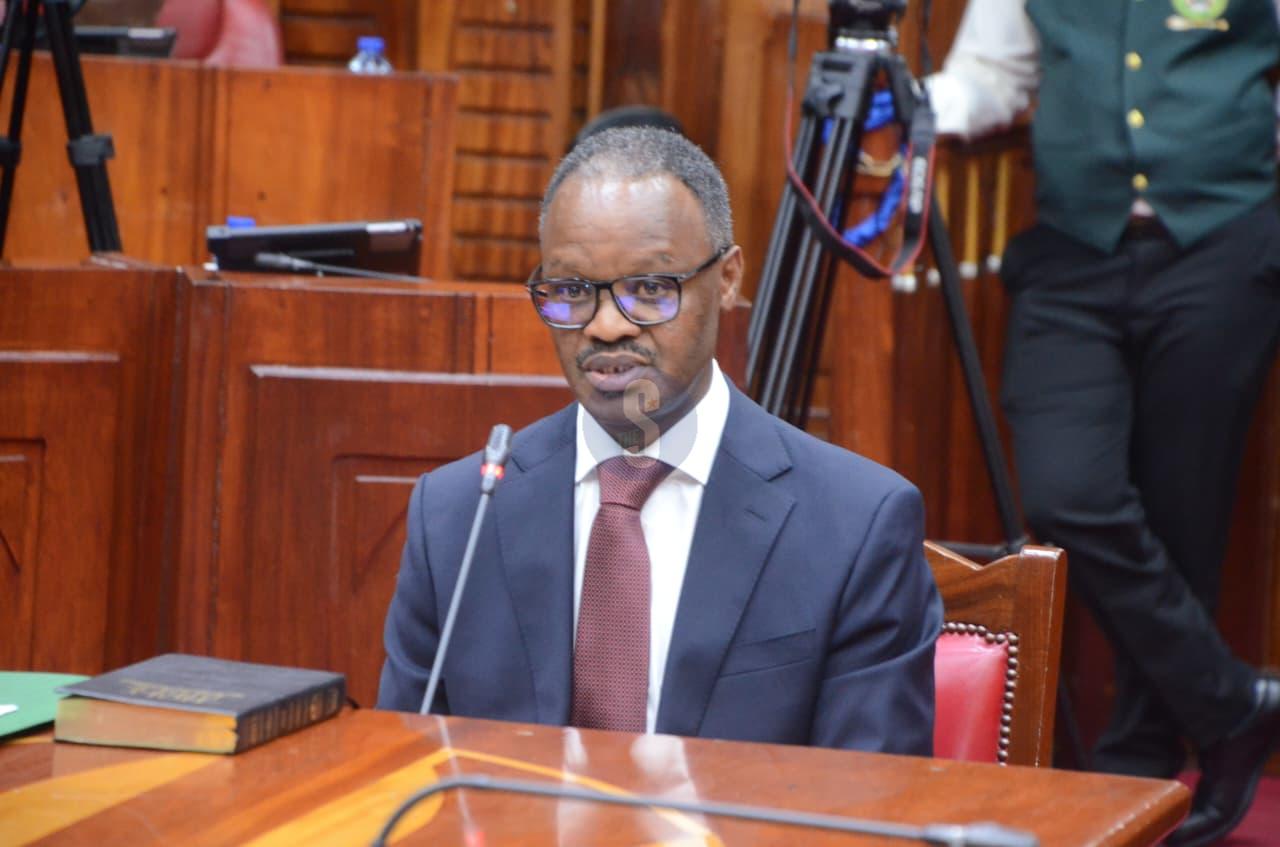
President William Ruto has appointed a senior intelligence official to lead the charge against money laundering, colloquially known as "wash-wash", in a direct response to the country's damaging return to an international financial watchlist.
Treasury Cabinet Secretary John Mbadi nominated Naphtaly Rono, deputy director of counterintelligence at the National Intelligence Service (NIS), as the new Director-General of the Financial Reporting Centre (FRC).
His nomination, pending parliamentary approval, comes at a critical time as Kenya fights to salvage its international financial reputation.
The urgency of his appointment stemmed from Kenya's grey-listing by the Financial Action Task Force (FATF) in February 2024.
The FATF, the global watchdog for financial crime, placed Kenya under increased monitoring due to deficiencies in its systems for combating money laundering and terrorist financing.
The status, which persisted through the FATF's latest review in October 2025, signals to the world that the country's financial systems are vulnerable.
The consequences of grey-listing are severe. Research indicates that it can reduce foreign direct investment by up to 3 per cent, increase the cost of doing business, and restrict access to international capital, tarnishing the country's reputation as a stable financial hub.
Perhaps the Kenya Kwanza administration settled on Rono to handle the crisis based on his background.
A lawyer by training, he brings deep institutional knowledge from his decade-long role as head of legal affairs at the NIS and his prior experience on the taskforce that previously worked to remove Kenya from the FATF grey list.
If approved, his immediate mandate will be to steer the FRC, which is the primary financial intelligence unit, in executing a national action plan to address the FATF's 21 concerns, of which 11 remain unaddressed.
The process involves strengthening the country's legal framework, which has already begun with MPs enacting the Anti-Money Laundering and Combating of Terrorism Financing Laws (Amendment) Act, 2025.
The newly amended law, signed by President Ruto in June 2025, is hailed as the "cornerstone of the government's response."
It aims to seal loopholes in property transactions and the misuse of shell companies for illicit flows.
Crucially, the new law introduces a standalone offence for financing terrorism and enhances the regulatory oversight of high-risk sectors like real estate, mining, betting, and non-profit organisations.
However, legal reform alone is insufficient. The FATF and civil society groups emphasise that Kenya's exit from the grey list ultimately hinges on demonstrating tangible results.
Top of the list is a sustained increase in the investigation, prosecution, and conviction of high-profile money laundering cases. Whereas government officials have decried prevalent money laundering crimes, none has been prosecuted successfully.
Therefore, as MPs said during his vetting on Monday, Rono's success will be measured by his ability to transform the FRC into a more effective hub for financial intelligence.
MPs say he must ensure the centre can analyse complex financial data and disseminate actionable intelligence to law enforcement agencies to secure convictions.
This task is made more pressing by a secondary, consequential listing. Just days before the new law was signed, the European Commission formally added Kenya to its own list of high-risk third countries for financial crime deficiencies.
The EU designation imposes stricter due diligence requirements on European businesses dealing with Kenyan entities, further elevating the country's risk profile among global investors and banks.
As the potential new chief of the FRC, Rono is tasked with operationalising new laws, coordinating intelligence, regulatory, and law enforcement bodies, and delivering the sought-after prosecutions.
Rono said he will strive to provide leadership that will facilitate information sharing.
"These can be structured in terms of developing tools for information sharing, memorandum of understanding and creating opportunities for agencies to share information face to face," he said.
The nominee said there was a need to develop a culture of integrity and use of information in a way that fosters trust.
On challenges traders face when transacting, he said it requires adherence to the monitoring requirements.
"This is not amounts involved but whether there is economic value and whether they raise suspicion as being from economic crimes," Rono said, arguing that small transactions should be monitored "as people evading the AML net can move money in small amounts".
He said that since Kenya is largely cash- based, the law requires that they be reported for those exceeding $15,000. MPs decried that some banks are stuck at the previous Sh1 million threshold for reporting.
Molo MP Kuria Kimani said there was a live threat of pushing the country back to a cash economy.
Rono said the appointment will enable him to implement the change the country needs, lead "crime prevention".
"I have been in collections, dissemination and analysis..now is an opportunity to lead these efforts at a strategic level," he said.
When asked by MPs about what he would do if some of the money laundering suspects could be govt officials, he said;
"The law gives the centre operational autonomy and independence. If a decision touches on a government official, we will process it within the law. We will be guided by the law, which requires us to investigate suspicious transactions in the bank, and we'll share the information with law enforcement agencies and supervisory bodies, and we will act, including freezing of the said accounts."