
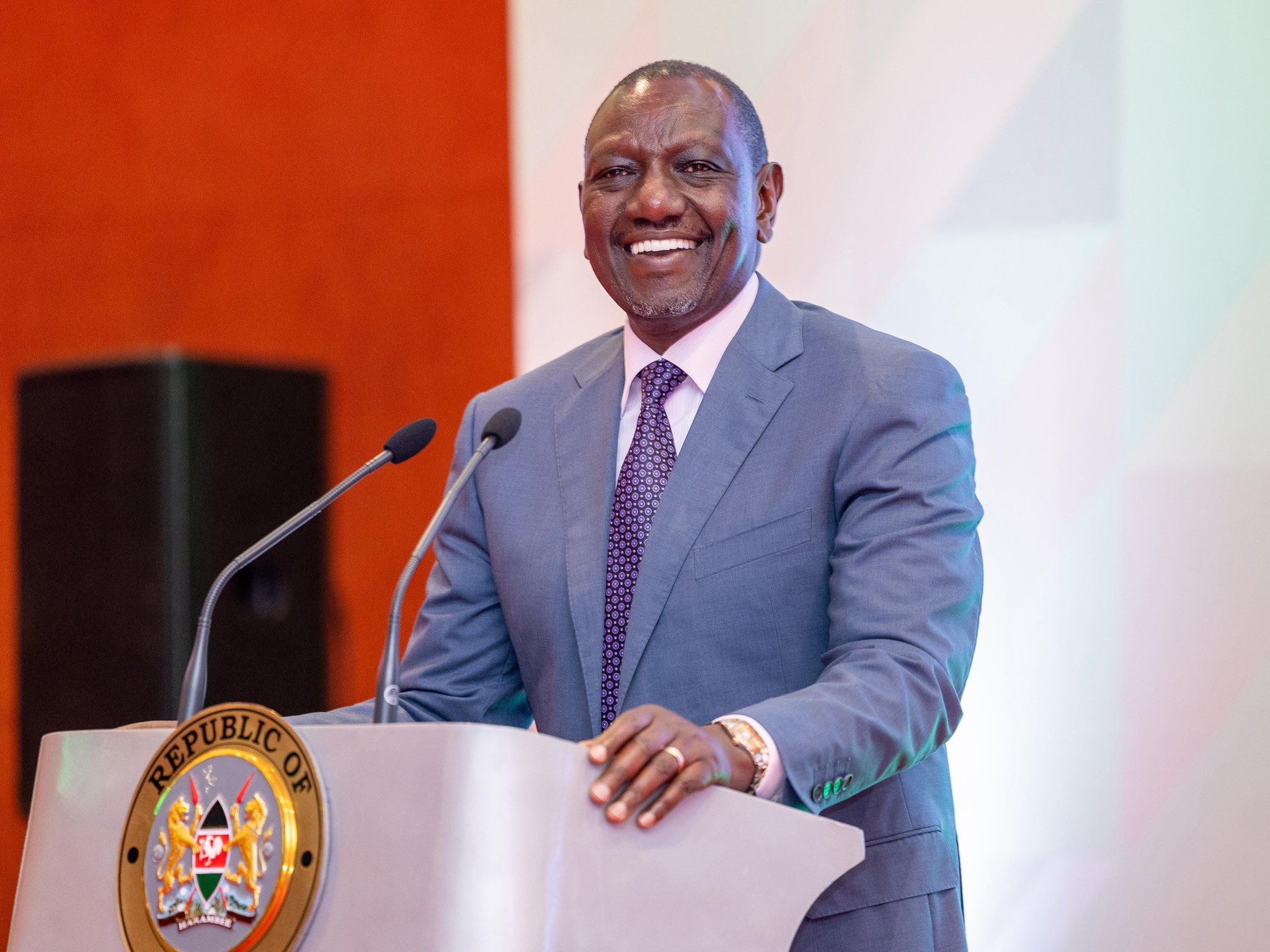
 President William Ruto
President William Ruto on Sunday took his political message to church, linking the “tutam” chants widely associated with his political supporters to biblical teachings about the second coming of Jesus Christ.
Speaking at the Pentecostal Evangelistic Fellowship of Africa (PEFA) Church in Gikomba, Nairobi, the president told congregants that the phrase should not only be understood in a political sense but also as a reminder for spiritual preparedness.
Ruto explained that according to the Bible, Jesus Christ will return for a second time, and believers are expected to be ready for that moment. Drawing a parallel with the chant often used by his supporters, he said “tutam” carries both an earthly and a heavenly meaning.
“Let me teach you God’s ways. The Bible teaches us that Jesus will come back for the second time. So the moment you guys chant ‘tutam,’ you should know there is tutam for Jesus coming and you should be prepared,” Ruto said, adding that Christians should not be found unprepared when that time comes.
He went on to note that while many people associate the chant with political mobilisation, there is also a spiritual dimension that calls on believers to align their lives with God’s will.
“There is earthly tutam and heavenly tutam. Prepare yourselves for the heavenly tutam and the earthly one will get in line,” he told the congregation, while inviting the church bishop to correct him if his interpretation was inaccurate.
The remarks drew applause and laughter from worshippers, many of whom appeared amused by the blending of religious teachings with the political slogan.
Ruto's comments have sparked mixed reactions among Kenyans online, with some praising the president for grounding leadership in faith, while others criticised the use of religious spaces to advance political messaging.
The “tutam” chant has become a common rallying call among Ruto’s supporters, symbolising momentum and continuity of his leadership agenda.
As the president continues his nationwide engagements, his Gikomba address highlighted how religion and politics remain closely intertwined in Kenya’s public life.







