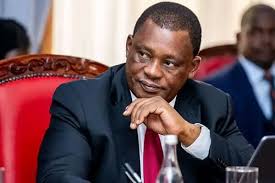
Former Attorney General and Democratic Party (DP) leader Justin Muturi has criticised Parliament for passing the Government-Owned Enterprises Act to pave the way for privatisation of state agencies.
He says the Bill that became law late last year, was hastily passed without any meaningful public participation and is now turning to be a threat to Kenya’s sovereignty.
“A state that converts public wealth into corporate assets without national debate is not governing. It is transferring. It is not reforming. It is retreating. It is not building capacity. It is outsourcing sovereignty,” Muturi said.
He says the Act was passed and assented to quietly and gazetted without national debate having been buried beneath by-elections and political noise.
“Yet this single piece of legislation has fundamentally altered the ownership structure of the Kenyan state. Sixty-five public corporations, airports, ports, power utilities, development banks, sugar factories, financial institutions and strategic national assets, have been converted into limited liability companies,” Muturi said.
He said the Act centralises power over appointments, funding flows, governance structures, and oversight in ways that bypass Parliament, weaken public accountability, and blur the line between public interest and executive discretion.
The former AG said philosophically, public assets are not just economic instruments but moral constructs that represent collective sacrifice across generations.
“Kenya’s founding generation understood this instinctively. When our population was under 20 million, with a weaker tax base and limited infrastructure, they built airports, ports, power stations, banks, sugar mills and development corporations. They did not outsource sovereignty. They pooled it. They did not privatise the future. They invested in it,” Muturi said.
He said at stake now is not simply the ownership of institutions, but the ownership of the future.
According to Muturi a society that sells its infrastructure before exhausting its collective capacity to build it is not modernising but surrendering.
A nation that turns public goods into corporate goods without citizen consent is not reforming, but is privatising citizenship itself, he said.
“And this is perhaps the deepest wound: the erosion of democratic consent. Kenyans were not consulted on this transformation. There was no national debate. No referendum. No white paper. No public hearings of consequence. No moral persuasion. Only procedural passage. Only gazettement. Only silence,” Muturi said.
The opposition chief who also served as National Assembly Speaker for 10 years said, “History teaches 'us that nations rarely lose their wealth through invasion but they lose it through legislation.”
“Not in war rooms, but in committee rooms. Not through conquest, but through compliance. Not with violence, but with silence. Kenya is at such a moment.”
“The question is not whether this Act is legal. It is whether it is legitimate. Because when public assets become corporate assets, citizenship itself becomes a diminishing shareholding and democracy becomes a spectator sport. That is not reform. That is quiet dispossession. And history will remember who spoke and who did not.”