
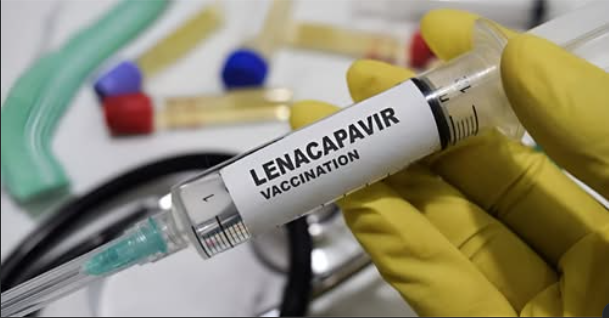
 A new twice-yearly injectable HIV vaccine / FILE
A growing number of Kenyans say they would rather buy HIV prevention medicine from a pharmacy than receive it free at a public hospital.
The issue for them is not the price tag but the long wait times in public hospitals, limited privacy and being judged even when the service is free.
New research suggests this preference is becoming stronger as Kenya prepares for the arrival of Lenacapavir, a long-acting injection that prevents HIV for six months.
A peer-reviewed study published in BMJ Global Health shows the interest comes from clients, pharmacy providers and health stakeholders.
The study was conducted in Kisumu and Kiambu counties and explored views on long-acting injectable pre-exposure prophylaxis(PrEP), including cabotegravir and lenacapavir.
These medicines protect a person from HIV for two or six months with a single injection, respectively.
Limited doses of the two drugs will be rolled out in select health facilities from next month.
“Providers and stakeholders noted the need to establish how pharmacies would procure LAI (long-acting injectable) PrEP and at what price, anticipating that high cost and an overly burdensome procurement process could hinder pharmacies’ uptake,” the authors said.
Privacy emerged as one of the strongest reasons people preferred pharmacies over public facilities.
“The goal should be to subsidise the cost of their LAI PrEP products to almost zero. That way, pharmacies do not have to pass all of the cost [on] to a client. They can … charge [clients] for the service, but not for the products,” one pharmacy professional said.
The study, published on Wednesday, is titled “Implementing long-acting injectable HIV pre-exposure prophylaxis services at private pharmacies in Kenya: client, pharmacy provider and key stakeholder perspectives on potential challenges and opportunities.”
This proposed shift matters because Kenya’s HIV programme is entering a period of strain. Donor funding is declining, and public facilities are overstretched.
Pharmacies, which are widely available, familiar and open for long hours, are increasingly seen as complementary.
The researchers are from the Kenya Medical Research Institute, Jomo Kenyatta University of Agriculture and Technology, Partners in Health and Research Development, theUS’s Fred Hutchinson Cancer Centre, Hennepin Healthcare and University of Washington.
The study conducted in 2023 involved 49 in-depth interviews with pharmacy clients, private pharmacy providers and health system stakeholders.
Researchers used the interviews to assess views on the acceptability, feasibility and risks of delivering long-acting injectable PrEP through private pharmacies in Kenya.
One provider recommended that pharmacies be equipped with an automated SMS appointment reminder system.
“Human beings are prone to forgetting. So we don’t want somebody writing on a book that, ‘I need to remember to call this person after six months’. There’s a high likelihood that they will not remember. So how do we leverage digital systems to support with [appointment] reminders?” the provider said.
The interest in pharmacy-based HIV prevention comes as Kenya increasingly turns to the private sector to sustain health amid declining donor funding.
Kenya has about 11,000 licensed pharmaceutical technologists, 2,600 licensed pharmacists and about 7,400 registered pharmacies, most of which operate on out-of-pocket payments.
Existing evidence shows that pharmacies are already central to sexual and reproductive health.
The 2022 Kenya Demographic and Health Survey found that 42 per cent of people who used male condoms, 52 per cent who used contraceptive pills and 87 per cent who used emergency contraception obtained them from private pharmacies.
Head of Nascop Dr Andrew Mulwa said the evidence demonstrates that pharmacy-based PrEP delivery is feasible, acceptable and effective in increasing PrEP uptake, particularly among key populations.
“Community pharmacy models represent a promising pathway to expanding equitable access to PrEP and accelerating progress toward reducing new HIV infections in Kenya. This is how we move closer to our national prevention goals—through evidence, innovation, and partnership,” Dr Mulwa said.
He said findings will now help guide policy and practice.
“The findings from these studies will guide refinement of the national Community Pharmacy Model Toolkit for prevention, provider training, data reporting, and quality assurance mechanisms, as we responsibly scale up innovative prevention models.”
Dr Mulwa said Kenya’s HIV response is guided by the Kenya Aids Integration Strategic Framework, which prioritises client-centred, differentiated service delivery and strong engagement of the private sector.
“Community pharmacies are well-positioned to support these goals. They are accessible, trusted and convenient, with extended operating hours and greater privacy. Pharmacy-based PrEP delivery expands choice, reduces structural barriers, and reaches populations who may not routinely access facility-based services,” he said.