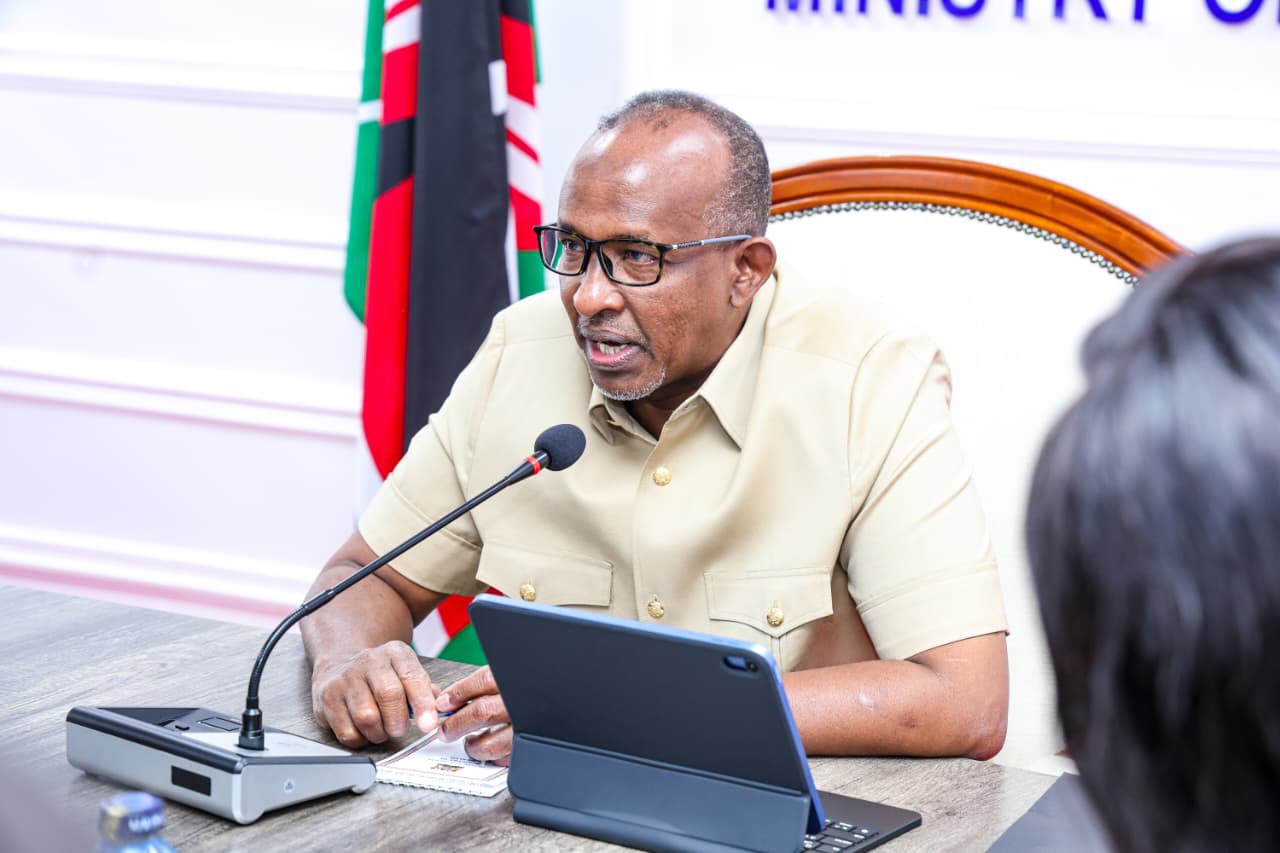
 Health Cabinet Secretary Aden Duale /MoH
The Ministry of Health plans to vaccinate nine out of every 10 girls against cervical cancer before they reach Form 4 by 2030.
This will cost the ministry Sh414.4 million over the next five years.
The jabs will be part of a broader strategy aimed at controlling the disease by 2030.
The National Cervical Cancer Elimination Action Plan 2025–30 was launched by Health CS Aden Duale on Thursday.
The full plan will cost Sh1.2 billion, which includes costs of screening, diagnosing and treating the disease.
About 6,000 Kenyan women are diagnosed with cervical cancer every year, making it the second most common cancer after breast cancer among women.
“To implement the health system strengthening interventions proposed in this action plan, Sh1.2 billion will be required over five years. Of this, 27 per cent is for interventions to be implemented primarily by counties, 16 per cent by the national government and 57 per cent is shared by the two levels of government,” Health director general Dr Patrick Amoth said.
He said immunisation will be offered through dispensaries, health centres and periodically in schools.
The action plan targets are aligned to the World Health Organization’s global elimination strategy: vaccinating at least 90 per cent of girls by age 15, screening 70 per cent of women using high-performance HPV tests, and ensuring 90 per cent of those with precancer or invasive cancer receive treatment by 2030.
Vaccination with the HPV vaccine can prevent up to 90 per cent of cervical cancer cases.
Kenya launched the free vaccine for girls aged 10 to 14 years in 2019, but has struggled to deliver the two doses. Girls nowadays only need one dose.
By 2023, only 54.7 per cent of girls aged 10–14 had received one dose, and 44.3 per cent had completed two doses.
Screening, which refers to testing healthy people to find disease early before symptoms appear, is equally sluggish.
“Although 48 per cent of women targeted for screened in 2024 were actually screened, only six per cent were screened using HPV testing. Of those eligible for treatment, only 43 per cent were actually treated. These gaps reveal that Kenya’s journey toward cervical cancer elimination is still incomplete and requires focused attention,” the document says.
Challenges include weak school attendance by eligible girls in some regions, logistical constraints, poor integration into existing health systems, and delays in adopting a cost-effective single-dose regimen.
Duale said Kenya transitioned from a two-dose to a single-dose HPV vaccination schedule in November last year.
He accused some hospitals of charging HPV vaccine, leading to the low uptake.
“We are going to create and make it mandatory in all our facilities, public, private, and faith-based, that there must be a charter displayed in all those facilities that the citizens can see that the following items are free, and nobody should go charge them. How do you charge vaccinations? Not only cervical vaccinations, all vaccinations,” the CS said.
He also promised to ensure the ministry ringfenced the required funds to buy vaccines and facilitate the efforts.
“We have ring-fenced the national government component of the resources for vaccinations, they will not be at the altar of, you know, supplementary changes. So what is budgeted for in a financial year will be there, because we need to protect our citizens, particularly our young people, from any preventable disease by making sure that vaccines are available,” he said.
Kenya’s vaccination programme is heavily dependent on Gavi support, and faces an unclear transition strategy when Gavi stops buying vaccines for Kenya in 2029.
The action plan also identifies multiple barriers that continue to block access, particularly outside urban centres.
“Barriers include limited facility infrastructure, inadequate trained personnel, long distances to screening sites, and lack of integration of services. Though thousands of providers have been trained and equipment distributed, HPV testing still accounts for less than six per cent of screenings due to lack of funding for commodity procurement.”