The Commission on Administrative Justice (CAJ) has recommended disciplinary action against senior officers in the National Police Service and top officials at the National Employment Authority (NEA) following investigations into the controversial oversea jobs probe in Uasin Gishu county.
In a detailed report triggered by complaints from affected youths and human rights groups, the commission said it found evidence of administrative failures in the handling reports linked to the recruitment scheme.
According to CAJ, some police commanders in Uasin Gishu County failed to adequately act on multiple complaints, while complainants reported intimidation and a lack of protection.

He noted that, according to the findings, this lack of response created an environment in which the alleged scheme continued operating and discouraged victims from seeking redress.
“Our investigations revealed clear negligence and failure to act on credible complaints, which allowed the fraudulent scheme to thrive at the expense of vulnerable job seekers,” Dulo said.

“Public officers entrusted with protecting citizens must be held accountable when their inaction or misconduct enables exploitation and injustice,” he added.
The commission has directed the National Police Service Commission to commence disciplinary processes and submit a progress report within six months.
It also raised concerns over oversight at the NEA, faulting senior officials, including the director-general and the head of labour migration, for regulatory gaps that allowed the agency and other unregistered recruiters to operate without effective checks.
CAJ further asked the Ministry of Labour and Skills Development to take appropriate administrative action regarding the cited NEA officials and to formally communicate the steps taken.
Rights activists and individuals who lodged complaints welcomed the recommendations, saying they represent a significant step toward institutional accountability for failures that affected many young Kenyans seeking opportunities abroad.
The investigation followed widespread complaints that the agency received substantial cash payments from applicants after promising overseas employment and study placements that did not materialise.
The Vice Chairperson and Commissioner in charge of Access to Information, Ms. Dorothy Jemator also re-emphasized the need for the Commission to be adequately resourced in order to achieve its strategy of taking Ombudsman services to the grassroots.
Using the North Rift Regional Office as an example, she noted that the office serves Uasin Gishu, Nandi, Turkana, Elgeyo-Marakwet, West Pokot, Trans Nzoia, Nakuru, Kericho, Baringo, and Bomet—an expansive region that presents significant operational challenges.
She called on partners and relevant agencies to support the Commission with sufficient resources to enhance service delivery at the county level.
Ms. Jemator also noted that the Commission is undertaking the State of Openness Report, which will assess how transparent national and county government institutions are in service delivery and in facilitating access to information.
The Commissioner in Charge of Complaints and Investigations, Hon. Charles Njagua, reaffirmed the Commission’s commitment to bringing services closer to the people, noting that a strong grassroots presence is critical to empowering citizens to know their rights and hold public officers accountable.
Representing the Governor, the Deputy Governor of Uasin Gishu County, Hon. Evans Kapkea, welcomed the Commission to the county and conveyed the support of the Governors of the North Rift Economic Bloc.
He committed that the County Government would collaborate with the Commission, support the regional office, and strive to remain responsive in order to minimize complaints lodged against the county.
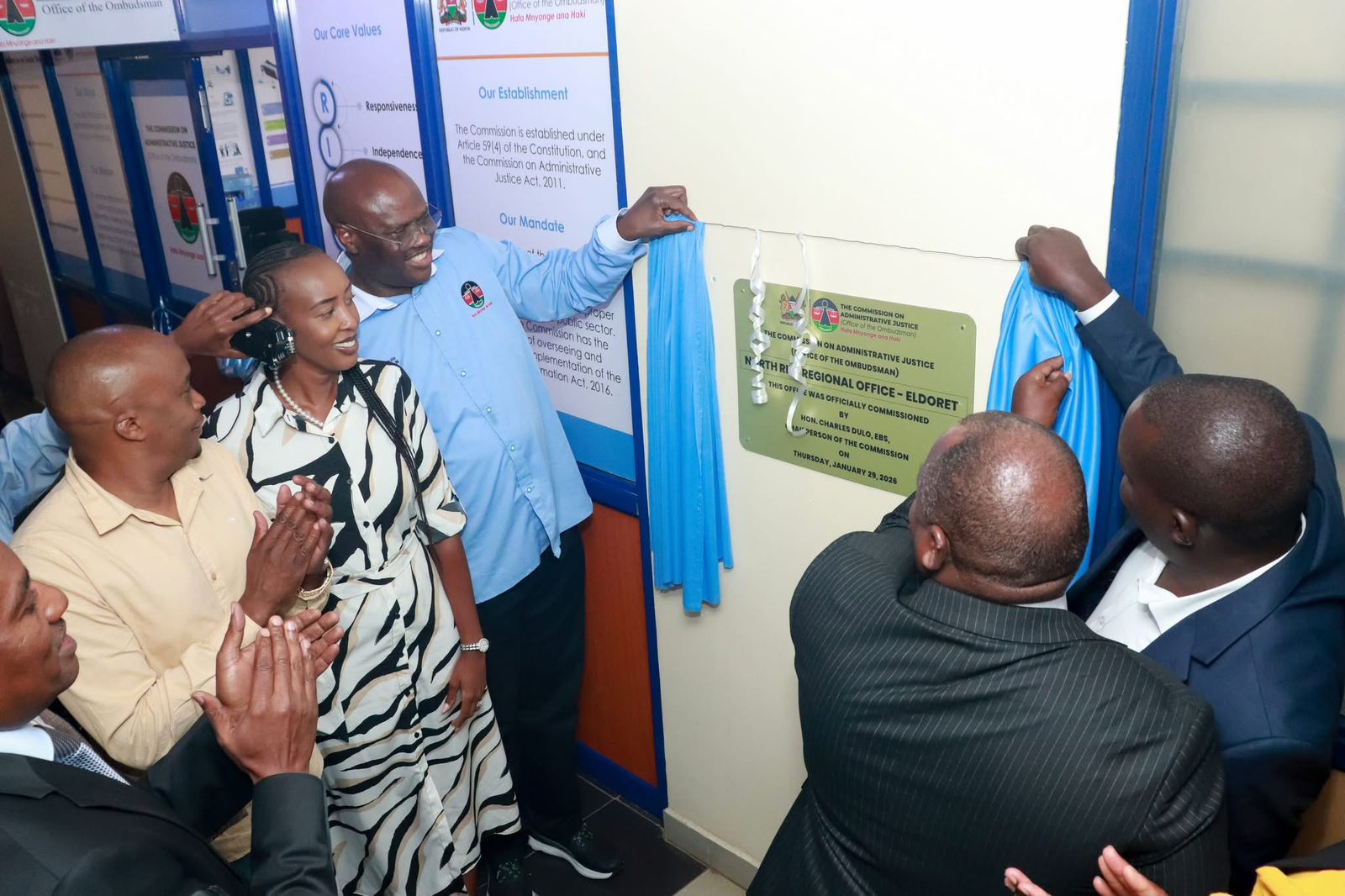
The Commissioners later commissioned the Ombudsman North Rift Regional Office, issuing strong calls to devolve Ombudsman services to the grassroots, adequately resource the Commission, and intensify public awareness so that citizens can effectively access justice and hold public institutions accountable.