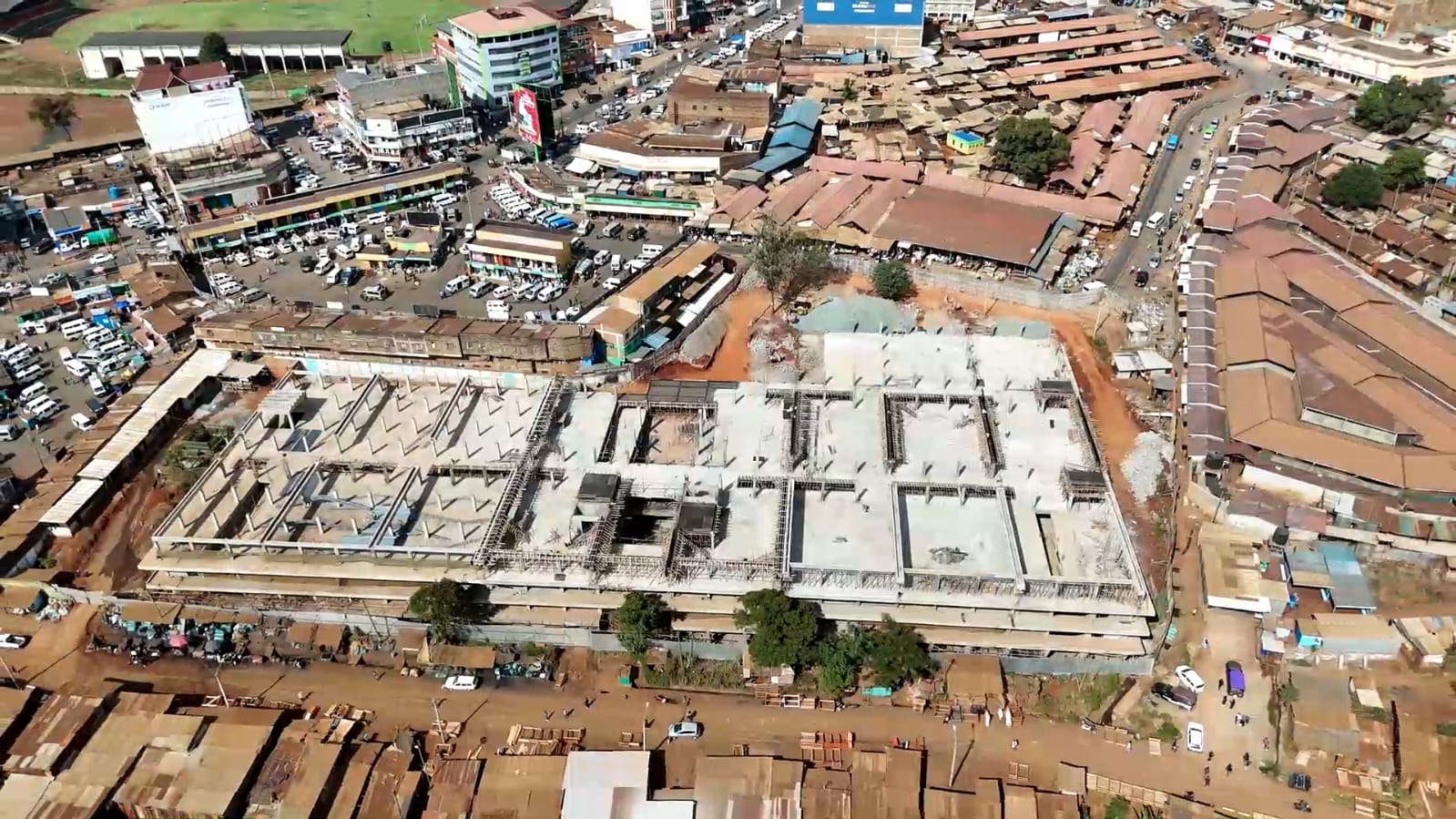
 Embu town that hosts the headquarters of Embu county./ALICE WAITHERA
The project, which started in 2024, is scheduled for completion by June 2026 and is expected to accommodate about 3,500 traders.
Once completed, the facility will replace the old market that was widely criticised for congestion, limited space and poor sanitation, forcing many vendors to operate along streets and in overcrowded open-air sections.
Initially funded with Sh900 million by the national government, the project’s budget was later increased to Sh1.04 billion to allow for expansion and additional facilities.
The three-storey structure will feature elevators for shoppers and traders, cargo lifts, cold storage rooms to preserve perishable goods, ICT hubs, food courts, meeting rooms and offices for county revenue and enforcement staff.
Embu Traders Association chairperson Robert Mugendi said the market will also be fitted with other amenities such as lactation rooms for breastfeeding mothers and daycare facilities to support working parents.
“This market will have ample space for traders, including mothers, to conduct their businesses with comfort,” he said.
Mugendi said it will also address the challenge of congestion that traders have grappled with as the town grew while the modern design will improve hygiene and security.
He urged the government to ensure the facility is completed in the stipulated time, saying timely completion will boost business confidence and create employment opportunities for the town’s growing population.
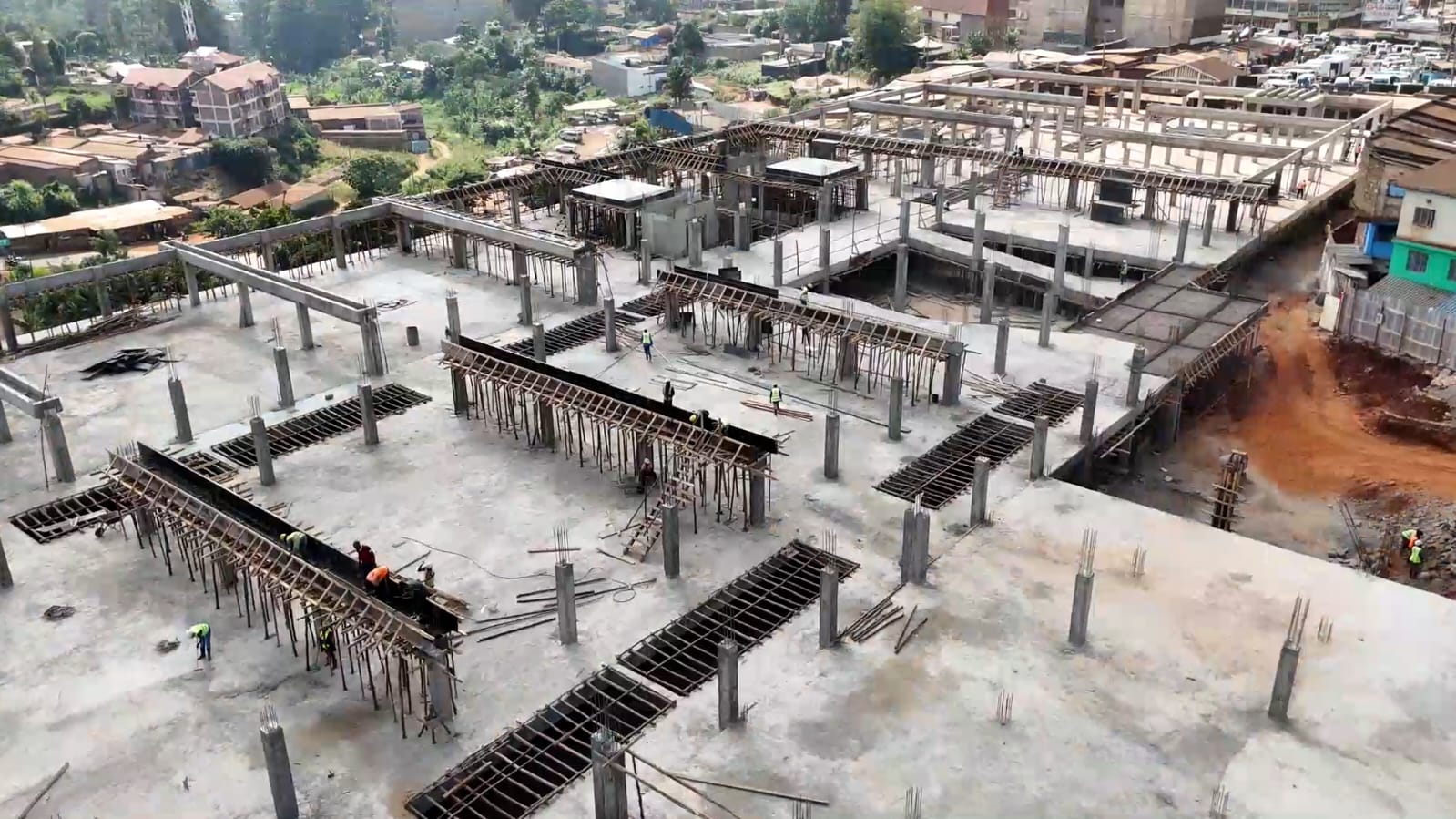 Construction workers building the Sh1 billion Embu modern market in Embu town./ALICE WAITHERA
He expressed optimism the new facility will provide better trading conditions and allow more vendors to operate legally within a structured space.
“This market will have a huge impact on this town. Once complete, the streets will be cleared of all the traders currently occupying them, especially clothes vendors,” Njiru said.
In the market, there will be a section for wholesale trading that will be closed down at a set time to allow the retail market to thrive.
Roads and public works executive Francis Ndwiga said the market is expected to serve as a regional commercial hub, attracting traders and buyers from neighbouring counties such as Kirinyaga and Tharaka Nithi.
He said the inclusion of cold rooms will help reduce post-harvest losses and offer farmers a reliable outlet for their produce.
Ndwiga said construction is progressing as planned and the county is working closely with the public works department to ensure it is delivered on schedule.
Upon completion, the complex will comprise 2,144 stalls, 450 shops and several hotel spaces.
Other modern markets that have been established in the county include Mbuvori, Runyenjes, Karurumo and Ishiara, while more will be built in Kathageri Kiritiri, Mutuabare and Siakago, with the aim of stimulating local economies.
Embu county’s economy is largely driven by agriculture, with tea, coffee, maize, dairy and horticulture forming the backbone of household incomes.
The town serves as a key trading centre linking farmers to markets in the Mt Kenya region and the eastern corridor.
In recent years, the national and county governments have invested in infrastructure projects aimed at strengthening local commerce, including modern markets as well as road upgrades to improve access to rural production zones.
Ndwiga expressed confidence that such investments will position Embu as a competitive commercial destination while enhancing livelihoods for thousands of residents.